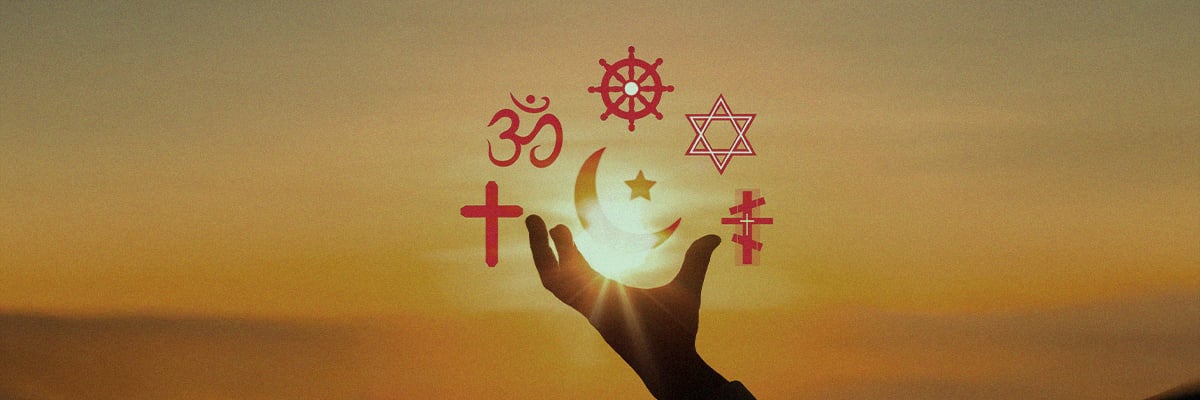

Isn’t it deeply unsettling to recognize that most people fail to think critically enough to reach the ultimate truth? Isn’t it profoundly troubling to consider that countless individuals wander through life without ever finding their way to righteousness, lingering on paths that lead them astray?
At first glance, this disparity feels like a cosmic injustice. How can so many remain oblivious to what is right and true? How can the world tolerate such a vast divergence in understanding and purpose? But before delving into the matter of religious belief, let us step back and consider a broader question: does everyone in life receive all they desire? Does everyone achieve all they strive for?
The answer is evident: the world is not a place of perfect equity where every wish is granted. Let us take a closer look at the realities around us.
The Inevitability of Inequality
How many billionaires exist in the world? A minuscule fraction of humanity.
How many people dream of such wealth? The overwhelming majority.
Why, then, is it that so few achieve it?
How many possess an extraordinary beauty that stops people in their tracks? Only a rare few.
How many desire such beauty, either for themselves or in others? Nearly everyone.
Why, then, isn’t such beauty universal?
How many wield power over nations or hold commanding positions of influence? Only a handful.
How many yearn for such authority? Countless.
Why, then, does this power elude the majority?
Even something as fundamental as having a modest home—a safe and secure place to live with family—is far from guaranteed. There are millions around the world who live without this basic necessity.
What about health? Who doesn’t wish to remain robust and healthy until their final days? Yet hospitals are always bustling, overflowing with those battling sickness. Each day, new health crises arise, and countless people succumb to ailments, unable to fulfill their dreams of long, vibrant lives.
The Pattern of Diversity
This is the natural order of the world. It is not one of uniformity or universal fulfillment. Instead, the diversity we observe is woven into the fabric of existence. Look closely at the natural world.
Some creatures are herbivores, thriving on plants alone. Others are carnivores, relying on meat for sustenance. Some inhabit dense forests, while others roam vast savannahs, swim the oceans, or glide through the skies. Even within humanity, the differences are striking: some people have dark skin, others light; some speak one language, while others speak hundreds of different tongues.
Why doesn’t everyone speak the same language? Why isn’t everyone born into the same set of circumstances? Because diversity is not a flaw—it is the foundation of the world’s beauty and balance. It is what gives life its complexity and richness, allowing for a kaleidoscope of experiences that define existence.
The Limits of Universality
This reality extends beyond material or physical differences. No matter how many motivational speeches you deliver, no matter how many self-help theories you develop, and no matter how many "guaranteed success" seminars you host, it remains an undeniable truth: not everyone can achieve everything.
If you pause and reflect deeply, you will begin to see the intricate forces at work behind these disparities. These are not accidents but manifestations of deeper truths—subtle mechanisms that even the sharpest human intellect struggles to grasp fully.
True knowledge lies not in claiming to have unraveled every mystery but in recognizing that there is always more to learn, always more beyond our understanding. As the saying goes, the greatest wisdom is to know how much you do not know.
Faith and the Divine Order
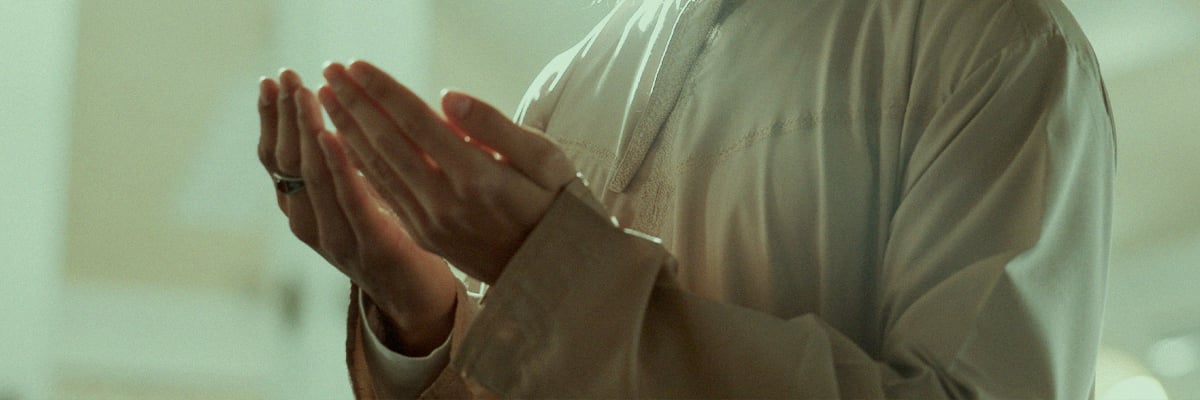
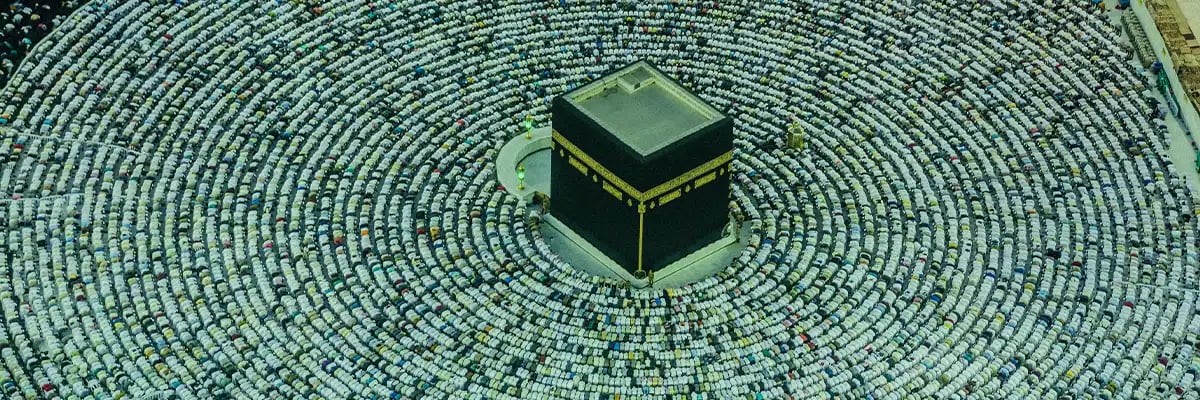
Now let us return to the realm of belief. When we turn to the Qur’an with these unanswered questions, we find clear and assertive answers. The Qur’an explains that the Creator, who designed this intricate world, did not will that everyone should walk the path of truth”. Belief is not imposed on all, but is bestowed upon those whom Allah chooses to guide. Belief is not something imposed on all but something bestowed upon those whom Allah chooses to guide.
"You cannot guide those you wish to guide. It is Allah who guides whomever He wills."
(Qur’an 28:56)
This is not a statement of exclusion but a profound truth that reflects the realities of human life. Just as not everyone can achieve material success, not everyone is destined to embrace the truth of faith.
This understanding applies to all aspects of life. Some people are blessed with wealth, beauty, or power, while others are not. Similarly, some are guided to the truth, while others remain in darkness. This is not an accident or an oversight; it is part of the divine order, a balance that sustains the universe.
The Wisdom Behind Disparity
The world’s inequalities—whether in wealth, beauty, power, or faith—are not without purpose. They invite us to reflect on the greater wisdom that underlies existence. Why are some given more and others less? Why do some succeed while others struggle? These questions remind us that life is not about achieving uniform outcomes but about embracing our unique roles in a vast, interconnected design.
For those who struggle with the apparent inequities in faith, the Qur’an offers clarity. Belief is a gift, not a guarantee. Even the most eloquent teachers and the most compelling arguments cannot guide those who are unwilling or unready to receive guidance. This is not a limitation of the truth but a testament to the complexity of human will and divine wisdom.
"No matter how much you strive to teach, you cannot guide those who are determined to stray. Guidance lies with Allah alone." (Adapted from Qur’an 28:56)
Embracing the Mystery
This may seem unsettling at first, but it is a truth we must accept. The world was not designed for uniformity but for diversity, and within that diversity lies the beauty and meaning of life. Not everyone will walk the same path, but each path serves a purpose in the grand scheme of existence.
The task before us is not to lament these disparities but to understand them. The Creator’s design is not arbitrary but deeply intentional, a reflection of divine wisdom that far exceeds human comprehension. In acknowledging this, we find peace—not in forcing uniformity but in celebrating the complexity of life and the countless ways it points us back to the truth.
For those willing to look beyond the surface, the universe reveals itself as a masterpiece of balance and harmony, a testament to a Creator who weaves together the threads of difference into a rich fabric of purpose. This understanding calls us to humility and gratitude, to seek truth not in comparison but in reflection, and to embrace the journey of faith as a deeply personal and profoundly meaningful endeavor.