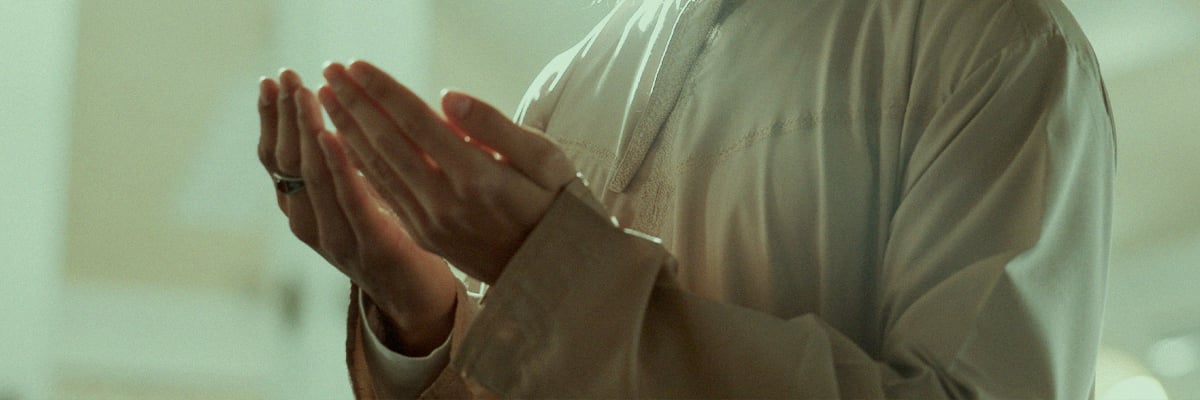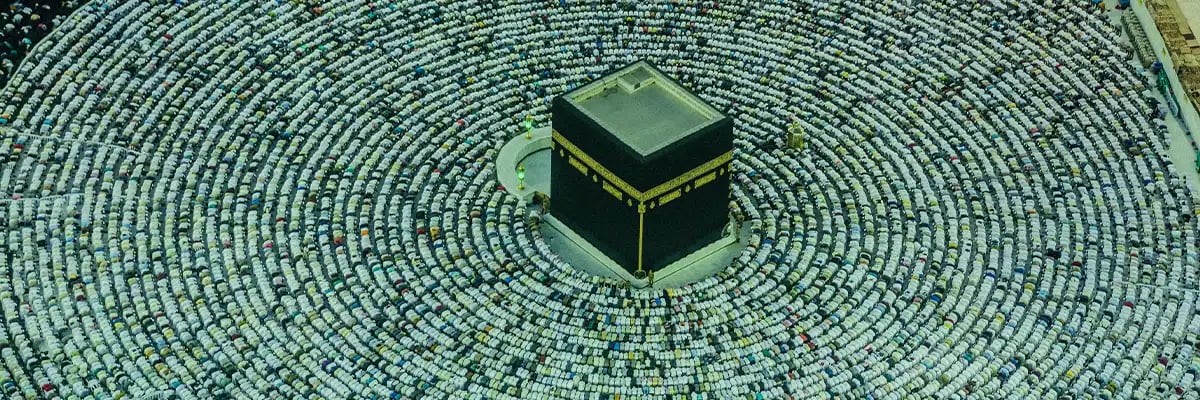

Now the narrative arrives at its culmination: the singular mission of Prophet Muhammad ﷺ as the seal and summation of the prophetic tradition. If the previous pages traced the rise and fall of ancient civilizations and the forgotten prophets who guided them, the final section illuminates the arrival of a Prophet whose message was not bound by time, tribe, or territory—but intended for all of humanity, across all ages.
Unlike earlier prophets whose teachings were often confined to a specific people or region, the Prophet Muhammad ﷺ was sent as a universal messenger. The Qur’an affirms this with a clear declaration: “Say: O mankind! Indeed, I am the Messenger of Allah to you all.” (Sūrat al-Aʿrāf: 158). This verse marks a decisive turn in the history of revelation—from the local to the global, from the partial to the complete.
With this universality came a parallel reality: unprecedented preservation. As the essay pointed out, the Prophet’s ﷺ life is the most meticulously recorded in human history. Every word he spoke, every action he performed, every silence, every prayer, every tear is preserved—through the witness of thousands of companions, the labor of hundreds of scholars, and the memorization of generations of believers. From the garments he wore to the emotions he felt, from the intricacies of statecraft to the hush of his night vigils, his biography is not merely a record of the past—it is a living curriculum. When ʿĀʾishah رضي الله عنها was asked about his character, her answer was unhesitating and complete: “His character was the Qur’an.”
And the Qur’an itself, unlike the scriptures associated with previous prophets, remains preserved—in its language and text, in its context and function. It was not separated from its messenger, but rather embodied by him. Every verse finds its echo in his life: in his responses, in his patience, in his strategic silence, and in his radiant humility. The Qur’an declares, “Indeed, We have sent down the Reminder, and indeed We will guard it.” (Sūrat al-Ḥijr: 9). This promise of divine preservation finds its twin in the Prophet’s Sunnah, which is not a parallel text but the realization of the Qur’an itself.
This is why he ﷺ is described in the Qur’an as “a mercy to the worlds” (Sūrat al-Anbiyāʾ: 107). The wording is deliberate and sweeping. Not just a mercy to the believers, or to the Arabs, or even to humankind alone—but to all the worlds. His mercy permeated every realm: the physical and the unseen, the temporal and the eternal. It was not limited to the 23 years of revelation, but extended to the hearts of all who would come after, seeking divine pleasure and illumination.
In light of this, the concept of the seal of prophethood (khatm al-nubuwwah) becomes a metaphysical necessity. The Qur’an declares: “Muhammad is not the father of any of your men, but he is the Messenger of Allah and the seal of the prophets.” (Sūrat al-Aḥzāb: 40). This sealing is not simply a chronological closure, but a spiritual completion. The perfection of a universal message, delivered by a perfect exemplar, and preserved with perfect integrity—leaves no room, and no need, for another revelation. As long as the Qur’an is recited and the Sunnah is remembered, the guidance remains fresh, living, and unexhausted.
Thus, to deny the finality of prophethood is to deny the coherence of the prophetic enterprise itself. It is to suggest that the sun is still incomplete after all the stars. But this sun—Muhammad ﷺ—has risen, and it shall not set. His finality is not an end, but a beginning. By concluding the chain of prophets, he opened the path for every soul to inherit their legacy, distilled in him. His example became the axis around which all human striving toward God would now orbit.
The Prophet ﷺ does not stand outside the prophetic tradition, but above it. In him, all its strands converge and are brought to harmony. The truthfulness of Ibrāhīm, the courage of Mūsā, the chastity of Yūsuf, the forbearance of Nūḥ, the grace of ʿĪsā—all are found in him, and more. Earlier prophets carried parts of the truth; he ﷺ brought the whole. Hence, to follow him is to enter the final, universal community of divine guidance. “Whoever obeys the Messenger has obeyed Allah.” (Sūrat al-Nisāʾ: 80).
And “ Say (O, Prophet): if you love Allah, then follow me, Allah will love you (back)” (….)
But there is yet more. The Prophet ﷺ is not only the final link in a chain—he is the very purpose of the chain itself. Islamic cosmology, as preserved in many classical sources, transmits the divine utterance: “Lawlāka, lawlāka mā khalaqtul-aflāk”—“Were it not for you, were it not for you, I would not have created the heavens.” Though the precise chain of transmission is discussed, its meaning lives in the heart of the ummah: that he ﷺ is the reason for creation, the beloved of the Divine, the axis mundi around which the universe itself was willed.
The great mystic-poet al-Būsīrī writes in Qaṣīdat al-Burda:
Muḥammadun sayyid al-kawnayn wa-th-thaqalayn,
wal-farīqayn min ʿurbin wa min ʿajami.
“Muḥammad is the master of the two worlds and of both realms—
of humans and jinn, of Arabs and non-Arabs.”
He is the one who wept for us before we were born. The one who stood in prayer until his feet swelled, out of love—for God, and for us. The one who forgave his enemies, even when he had the power to crush them. “I was not sent to curse,” he said, “but as a mercy.” His sweat smelled of musk, his gaze brimmed with compassion, his hands never struck in anger, and his tongue never lied. He taught by silence and by word, by presence and by prayer.
To know him is to love him. And to love him is to know the Divine. He is not divine—but he is the mirror in which divine beauty is most perfectly reflected. He is not the object of worship—but the beloved of the One who is worshipped. One poet said it simply: “The Throne, the Pen, and the Tablet—were all created for the sake of Aḥmad.”
Thus, in Muhammad, the story of prophethood is not just closed—it is crowned. All the light that once fell in scattered rays now converges into a single beam—unbroken, universal, and complete. The prophetic mission, which began in the earliest human communities, scattered across deserts and valleys and rivers, now finds its fulfillment in one man, one message, one community.
And that man is Muḥammad ﷺ—forever the last. Forever the greatest. Forever the mercy.
اللهم صلِّ وسلِّم وبارك عليه عدد خلقك ورضى نفسك وزنة عرشك ومداد كلماتك.