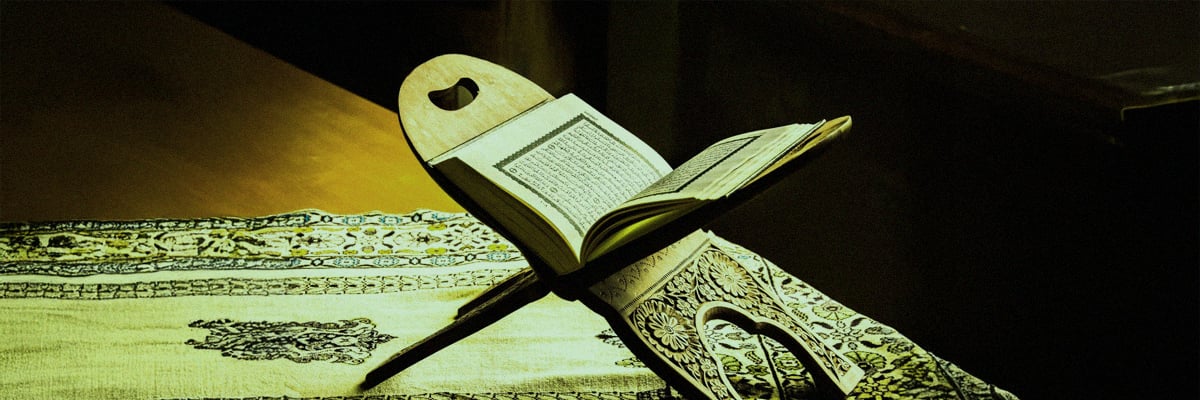
Canadian mathematician and lecturer in religious studies, Gari Miller's journey began when he started studying the Quran, a turning point in his life. His book, 'The Amazing Quran,' explores how the Quran transforms people.
In the first chapter, Miller recounts an incident he heard while living in Toronto. A Canadian trader, who traveled by ship daily, was gifted a copy of the Quran by a fellow passenger. The trader, with no prior knowledge of Islam, was astonished by the Quran's descriptions of the sea and winds. He asked the person who gave him the book, "Was the Prophet Muhammad a sailor?" The person replied that he was not; he lived in the desert. That information alone was enough for the trader to convert to Islam. He had experienced firsthand the truth of the verse in Surah An-Nur, which speaks of "waves upon waves with clouds above them."
Miller continues by describing another Quranic wonder: its detailed description of honey. Modern science has since confirmed the medicinal properties of honey, and the Quran's account of the wondrous life of bees has been proven accurate.
Miller explains that a clear, scientific approach can be developed from the Quran. The Quran explicitly states many things that other religious texts do not. Scientists and the public are primarily interested in how the world works, and the Quran's perspective on knowledge is highly relevant. The book constantly urges its readers to conduct further research. For example, after describing the formation of the human body, the Quran encourages people to investigate it further so that every reader can understand how precisely these matters are mentioned in the book.
Miller then recounts another incident: a group of scholars from Saudi Arabia compiled all the Quran's statements on embryology and presented them to Dr. Keith Moore, a professor of embryology at the University of Toronto. Moore, who had also written a book on the subject, was amazed by the Quranic descriptions. He even revised the next edition of his book to include Quranic verses.
Later, Miller interviewed Moore for a television channel. During the interview, Moore revealed that even embryology experts were unaware of the Quran's revelations about the embryo just thirty years prior. The Quran's use of the term 'Alaq' to describe the earliest form of the embryo was new information for him. Moore later titled a chapter in one of his books, Clinical Embryology, "Amazing Findings from an Ancient Prayer Book," referencing the Quranic descriptions. When a journalist asked Moore about this, he replied that the information in the Quran could not have come from anyone but God.
Dr. Marshall Johnson, a geology professor at the University of Toronto, learned of this from Professor Moore. Realizing the accuracy of the Quran's statements on embryology, he asked for a compilation of the Quran's references to his field, geology. The information he received also astonished him.
Seeing the light of the Quran, Gari Miller converted to Islam. He gave lectures on the Quran's authenticity in many parts of the world. After one such lecture in South Africa, an angry man approached him and said, "I'm going home today and I will find at least one mistake in the Quran." However, he never returned with a challenge, confirming the book's authenticity, which, according to Miller, proves that it is the word of God.
Miller also talks about those who are still undecided about the Quran. The 'New Catholic Encyclopedia' notes that while many theories have emerged about the Quran's formation over the past centuries, none have been widely accepted. Anyone who studies the Quran with the preconceived notion that it is not of divine origin will fail to grasp the truth of its formation. Through his book, Gari Miller shares how the Quran illuminated his life on multiple levels.
Anjelika Neuwirth: Insights into Quranic Studies
Anjelika Neuwirth became interested in the Quran while studying in Jerusalem, particularly drawn to its melodic recitation. Jerusalem is a significant city for three major religions: Islam, Christianity, and Judaism. The sound of the Quran deeply attracted her, and she set out to understand its meaning. She soon realized that the Quran recounts events mentioned in the scriptures of the other two religions with greater precision and originality. Anjelika, who now focuses on Islamic studies, is a professor in the Quranic Studies Department at the Freie University of Berlin.
She has authored several books based on her extensive research. A point she often highlights is the Quran's extraordinary linguistic and literary nature. She quotes Al-Jahiz, a great Arabic language and literature scholar from 8th-century Iraq, who stated that the Quran's greatest wonder is its linguistic excellence. Anjelika has since conducted specific research on this topic. In her paper, "The Two Faces of the Quran," she writes, "Each prophet was given various signs of prophethood. Prophet Musa was given the ability to turn a staff into a snake. Prophet Isa was given the miraculous ability to bring the dead back to life. However, Prophet Muhammad was able to demonstrate a linguistic and formal wonder through the Quran's astonishing literary beauty."
When she began her Quranic studies, European universities' systems were incomplete, particularly concerning the Quran's interpretation. Due to misinterpretations of the Quranic commentaries, European scholars often reached incomplete and contradictory conclusions. Many Western scholars viewed the Quran as a mere sub-version of the Bible, unwilling to accept it as an original text.
'Scripture, Poetry, and the Making of a Community: Reading the Qur’an as a Literary Text' is one of Anjelika's major works. The negative portrayal of Prophet Muhammad and the Quran in Western society following the Crusades began to change in the 19th century. People started to realize that the Quran was a source of cultural excellence and civilizational advancement. Theodor Nöldeke, a German Orientalist who led this movement in its early stages, regarded the Quran as a great literary and philosophical work by Prophet Muhammad. Subsequently, academic studies in the early 20th century were mostly focused on the life of Prophet Muhammad. The inability of European non-Muslim scholars to fully appreciate the Quranic language and its literary power delayed the development of original Quranic studies.
In the 20th century, European academics, most notably the American historian John Wansbrough, concluded that the Quran was not authored by Prophet Muhammad. However, even he had doubts about the exact timing and stages of the Quran's revelation. Because the Quran discusses events mentioned in earlier prophetic scriptures in detail and with clarity, scholars like John Wansbrough tried to create a narrative that linked it to an earlier time, but this approach failed to gain acceptance.
Anjelika mentions that the Quran's poetic nature and linguistic uniqueness are examples of an extraordinary text. Citing historians and commentators like Tabari and Ibn Ishaq, she shares descriptions of places like Jerusalem, which are mentioned in the Quranic verses.
Anjelika refutes the criticism from some European scholars who claim that the Quran's purpose is solely moral improvement and that its descriptions are not historical, unlike the Talmud or the Bible. She explains how the story of Prophet Musa—his growth, his call to prophethood, his relationship with Pharaoh, and the hardships he faced—is presented across various chapters. She highlights that the Quran's revelation, linguistic uniqueness, and the way it presents a panoramic view of events in different chapters make it stand out.
The reason for presenting events in stages is to instill piety and historical lessons in the people of Prophet Muhammad. The lesson is that no one should exhibit the same contempt and arrogance as Pharaoh did toward Prophet Musa. For instance, the Quran describes Prophet Musa's life in various chapters: his covenant with Allah, his hesitation about completing his mission, his fear and how he overcame it, and his finding the strength to overcome hardships. Anjelika says that the Quran mentions all this to aid Prophet Muhammad in fulfilling his mission. She stresses that the criteria we use to analyze history should not be applied to the Quran. To understand its non-linear historical descriptions, one must understand the era, the prophetic mission, and the location where each chapter was revealed.
Maurice Bucaille: The Bible, the Quran, and Science
Dr. Maurice Bucaille was a well-known French gastroenterologist. He became acquainted with the Quran through an incident. The mummies of the Pharaohs discovered in Egypt were transported to France for further study, and the most important one was received with the grandeur of a king.
Maurice was one of the doctors tasked with examining the mummy. He determined that the person had drowned and was later preserved with balms to prevent decay. He investigated further and found a verse in the Quran about it. This mummy was discovered in 1898.
In Surah Yunus, it is explicitly stated that Allah would preserve the Pharaoh's body as a sign for the world. Maurice saw this very condition firsthand. He then studied the life of the Prophet and was amazed at how the Quran could have revealed such precise information 1400 years ago. He then searched the Torah for parts that describe the history of Prophet Musa, but he found no such specific information as in the Quran.
Shortly after this, Maurice was invited to a medical anatomy conference in Saudi Arabia. He shared his findings about the Pharaoh's body. A man at the conference immediately took out a Quran and explained the verse. After this, Maurice converted to Islam. He returned to France and his research centered on the Quran. After years of investigation, he published a book titled 'The Bible, the Quran, and Science: The Holy Scriptures in the Light of Modern Knowledge.' The 190-page book, originally in French, has been translated into various languages.
He methodically compiles the Quran's and the Bible's statements about the origin and evolution of the universe and human society, explaining why the Quran's descriptions are highly accurate. Maurice also wrote another book titled 'Reflections on the Quran.'
Marmaduke Pickthall and the Quran Translation
Marmaduke Pickthall was a linguist and writer who produced a beautiful English translation of the Holy Quran. It was a poetic translation. Born in London in 1875 into a Christian clerical family, Pickthall was fascinated with the East from a young age. He left London and traveled to Islamic countries, where he fell in love with their culture and way of life. He wrote novels about Eastern cultures. Gradually, his attention turned to the Quran, and in 1930, he published his translation, 'The Meaning of the Glorious Quran.'
In the introduction, Pickthall wrote about the captivating effect of the Quran: "The unusual rhythm of the Quranic recitations alone is enough to bring a man to tears or joy." Linguists consider Pickthall's work to be the first comprehensive English translation of the Quran. The Quran is rich with a unique rhythm and linguistic style. Pickthall's translation also shows a new style, deviating from traditional prose.
Pickthall converted to Islam in 1914. The Nizam of Hyderabad invited him and encouraged him to translate the Quran. He spent years in deep contemplation to complete the work. A paper he wrote in 1919 for the publication 'The Islamic Review' became a catalyst for this project. In the paper, he translated a few Quranic verses into English and described their aesthetic aspects. He also criticized the existing English translations of the time, saying, "The current Quranic translations are prosaic in nature, focus on the content, and include unnecessary words. But the Arabic of the Holy Quran is poetic, astonishing, and its words gush forth. Some translations are very poorly done, and some include absurd footnotes."
This critical article received great feedback from readers, and many encouraged him to translate the complete Quran. Before Pickthall's translation, there were three types of English Quran translations: those prepared by Orientalists, those by the Qadiyani sect, and those by Indians with insufficient linguistic knowledge. All three had the problems he mentioned.
Pickthall's critique was very valid. Many who attempted to translate the Quran did not set out to appreciate its intrinsic beauty. Instead, they were the results of investigations prepared as part of the Western hostility toward Muslims following the Crusades. Alexander Ross, an Orientalist scholar who produced the first Quran translation in the 16th century, did not even know Arabic. For Orientalists, the Quran was an imitation of the Bible, and this narrative is reflected in their translations. This interpretation was challenged in the 20th century when some Indian scholars ventured into translation. Their works were defensive, focusing on providing the correct content rather than linguistic beautification.
With Pickthall's brilliant translation, English speakers learned more about the Quran. They were amazed by its content, and the Holy Book gained immense popularity in Western countries. So far, over two hundred editions have been published, and it has been available on Amazon Kindle since 2014.
Kristina Nelson's Quranic Research
Kristina Nelson's research book, 'The Art of the Reciting Quran,' is a unique work published in modern times in the field of Quranic studies. It is based on a detailed research project she submitted at the University of California. After two years of research in Egypt, she realized that the influence of Quranic recitation on its followers is stronger than that of any other religious text on its followers.
Previous Western studies on the Quran have focused on its written form. As a result, non-Muslims in the West have mostly come to know the Quran as a written divine text. Academics were not very aware of its recited melody or sweetness. The studies that did exist were mostly based on the Quran's explanation, language, literature, and orthography.
Kristina attests that Quran recitation ceremonies are widespread in Egypt. These ceremonies demonstrate how deeply its recitative nature has influenced believers. "The popularity of the Quran in Egypt is not limited to that country alone. It has a great influence in all societies where Muslims live. Historically, however, great importance has been attached to the recitation of the Quran in Egypt. The transmission of the Quran there was primarily through oral tradition. The sound and rhythm of the Quran mean that it is meant to be heard. That is, recitation and listening are two indispensable components of the Quran. Young children begin their relationship with the Quran by listening to it."
When non-Muslims who have no prior connection to the Quran first hear it, they notice its sweet sound. They find it to be an extraordinary piece of music. However, Quranic scholars say that the style of recitation should not be approached as music. This view is primarily based on the divine nature of the Quranic verses. The rhythm, vocal quality, and pronunciation accuracy of the Quranic recitation all came in the order they were revealed to Prophet Muhammad and therefore have a divine basis. Comparing the Quran to music would be a disservice to the text's originality and extraordinary uniqueness. While Islamic religious tradition analyzes various types of music, scholars have considered the Quran's vocal rhythm to be separate from them.
Studies on the Quran by Muslims, especially those focused on its recitation style, have primarily centered on two areas: Tajweed, Qira'at, and Tafsir. Secondary subjects include Arabic grammar, rhetoric, and orthography. Tajweed is the codification of the rules for the recitation of the Quran, including the rhythm and structure of the vocal style. Qira'at are the recitation styles arranged according to the rules of Tajweed.
Tajweed and Quranic recitation are very close to the lives of Muslims. Many who practice professional Quranic recitation have studied Tajweed extensively. My interest in Quranic recitation also came after I experienced its sound. I wanted to know how that sound was formed and how it works on people. That's how I immersed myself in the Egyptian tradition of Quranic recitation.
My two years of fieldwork were centered in Cairo. I received joyful support from the people of Cairo for this project. Although I was apprehensive about how the locals would react to a non-Muslim woman doing this, I soon realized that there was nothing to worry about.
Several factors make Egypt unique regarding Quranic recitation. The long tradition of knowledge centered at Al-Azhar University is the most important. Students from many countries worldwide come there to study. Because Azhari scholars have a good reputation in Egypt and abroad, there are many centers in Cairo that teach the Quran. Making the Quranic recitation melodious is the goal of every Azhari. The people of Cairo love and appreciate the sweetness of the voice. The most melodious Quranic sounds inspire them. There are Qaris (reciters) who recite the Quran melodiously at public and private ceremonies. They recite for a long time, and those who have come with a spiritual mind listen.
After the radio and television came to Egypt in the 1930s, Quranic recitations became a major program. Reciters with sweet, melodious voices quickly gained attention. The demand for their cassettes increased. The fame of these reciters spread beyond Egypt. As a result, a new category of professional Qaris emerged. Prominent Qaris gained a celebrity status and were highly respected in society. Reciting the Quran at ceremonies in major mosques and elsewhere was as important as a performance. Each recitation expert had their own style and method.
Many centers in different parts of Egypt taught the Murattal style (as it is the style of recitation for prayers). This style, however, was not broadcast on the media. The media featured the Mujawwad style, which gave more importance to melodiousness. As part of her Quranic studies, Kristina studied Qira'at from expert teachers in Egypt and carefully understood the rules of Tajweed.
Moving beyond mere research, her deep love for the Quran led her to this field, and her study is rich with original and fascinating findings.