
David A. King, a distinguished British academic, is one of the foremost scholars who has undertaken a rigorous and foundational study of Islamic science, history, and civilization. His groundbreaking work on Islamic astronomy, particularly his two-volume study, In Synchrony with the Heavens: Studies in Astronomical Timekeeping and Instrumentation in Medieval Islamic Civilization, provides an exhaustive account of the scientific advancements made by Muslim scholars. In the introduction to the first volume, he challenges long-standing misconceptions about Islamic scientific contributions:
“A widely held belief among certain historians of science and the general public is that the scientific advancements of Muslims were not original. The prevailing notion has been that they merely translated classical works into Arabic and restated their contents.”
King methodically dismantles this Eurocentric narrative, demonstrating that while Muslims did inherit the intellectual traditions of the Greeks, Persians, and Indians, they did not simply preserve and pass them on unchanged. Instead, Muslim scholars built upon, refined, and expanded these traditions, pioneering entirely new scientific disciplines and methods. Their discoveries continued uninterrupted until the 15th century, and their influence persisted well into the 19th century, particularly in Eastern Islamic centers such as Baghdad and Cairo.
The Impact of Islamic Science on the European Renaissance
King further argues that the so-called European Renaissance of the 19th century was, in fact, a direct result of the earlier scientific and technological advancements made by Muslims. He highlights the intellectual curiosity of 19th- and 20th-century European scholars who, upon studying the Arabic manuscripts and Islamic scientific achievements, were astonished at the sophistication and breadth of knowledge developed centuries before the European Enlightenment. When comparing the supposed scientific breakthroughs of post-15th-century Europe with the discoveries made by Muslims centuries earlier, the contrast is striking—Muslim advancements were often far superior.
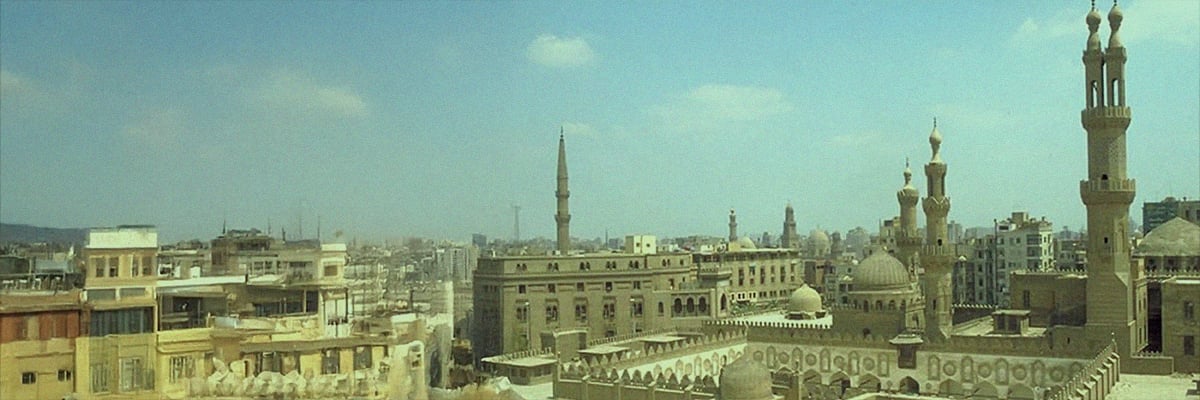
King’s meticulous research spans over a decade, during which he traveled extensively to major centers of Islamic scholarship such as Cairo, studying manuscripts, libraries, and archival collections. His dedication to uncovering the true depth of Islamic contributions to science sets him apart from many Orientalist scholars, who have often approached Islamic history with preconceived biases. Unlike them, King’s work is marked by an exceptional level of precision and scholarly integrity.
Islamic Astronomical Instruments and Their Influence
In the second volume of his study on Islamic astronomy, King explores the remarkable range of astronomical instruments developed by Muslim scientists between the 9th and 19th centuries. He reveals that all major astronomical instruments used in Europe until 1550 had their origins in Muslim scientific advancements. For instance, the 16th-century European development of the stellar distance-measuring device can be traced directly to the 9th-century research conducted in Baghdad by Muhammad ibn Musa al-Khwarizmi.
After establishing the depth of Islamic scientific innovations, King critiques the limitations of Eurocentric knowledge paradigms, which have historically sought to erase or obscure the influence of Islamic science. He openly challenges the Western narrative that positions Europe as the sole inheritor of scientific progress while rendering Islamic achievements invisible. He acknowledges, however, that his findings may not be readily accepted by those committed to maintaining this Eurocentric worldview.
Yet, research into Islamic intellectual history continues to thrive. In Germany and France, extensive studies have been conducted on Islamic scientific instruments, leading to the publication of a comprehensive 16-volume work on the subject in Frankfurt. King provides a detailed list of European scholars who have contributed to these efforts, demonstrating that the recognition of Islamic scientific contributions is slowly gaining traction in academic circles.
Islamic Cartography and the Science of Direction
Another of King’s major works, World-Maps for Finding the Direction and Distance to Mecca: Innovation and Tradition in Islamic Science, delves into the historical development of Islamic cartography. Structured across ten chapters, this book traces how Muslim scholars pioneered the art of map-making, particularly in their efforts to determine the qibla—the direction of Mecca. Since Mecca serves as the spiritual center for Muslims worldwide, scholars across the Islamic world devoted immense effort to calculating distances and mapping land and sea routes leading to the city.
Nearly a millennium ago, the works of al-Biruni provided precise guidelines for constructing world maps, offering remarkably accurate geographical calculations long before the West began systematically studying geography. It was only in the 16th century that European scholars began to seriously engage with geography, largely by studying Islamic texts. French travelers like Jean Chardin and Jean-Baptiste Tavernier journeyed to Iran in the 17th century to learn from Muslim scholars, gaining insights into latitude, longitude, and geographical positioning. In 1712, Oxford University published Nasir al-Din al-Tusi’s astronomical tables, further solidifying the impact of Muslim scientific traditions on European knowledge.
King’s Legacy in the Study of Islamic Science
Despite being a scholar born and raised in the Western intellectual tradition, David A. King has made some of the most significant contributions to the study of Islamic civilization. His work has been instrumental in bridging the gap between modern scholarship and the often-overlooked achievements of Muslim scientists. His research, widely available online in English, serves as an invaluable resource for those seeking an accurate and comprehensive understanding of the Islamic scientific legacy.
King’s scholarship underscores a vital truth: the scientific and technological foundations of the modern world were not built in isolation by Europe but were deeply influenced by centuries of Islamic discovery. By meticulously documenting these contributions, King has played a crucial role in restoring the rightful place of Muslim scientists in the annals of world history.