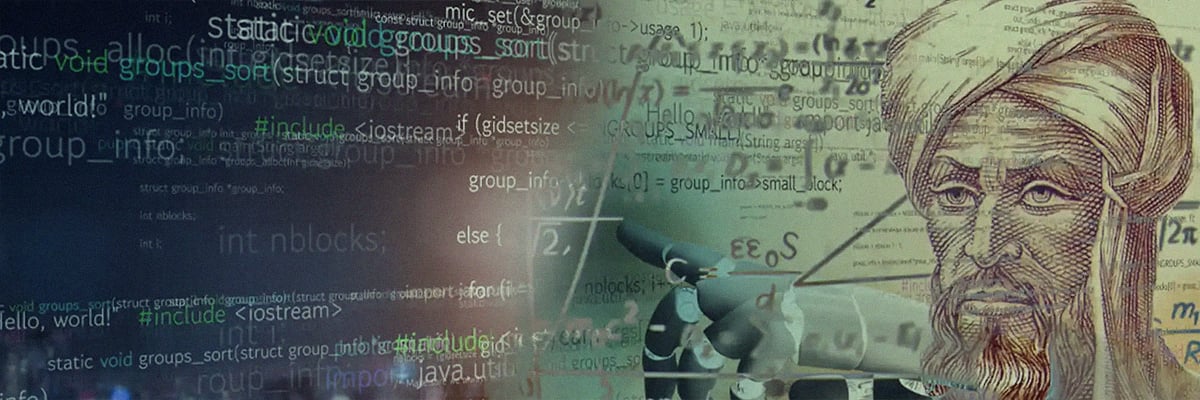

The American historian and mathematician George Saliba devoted much of his research to understanding how the European Renaissance became possible. Following his studies at Columbia University, he turned his focus to how scientific ideas evolved from antiquity to the modern era. His deep engagement with the intellectual history of Islamic civilization led him to uncover the contributions that Muslim scholars had made to the scientific revolution. His most renowned work, Islamic Science and the Making of the European Renaissance, published in 2007, was released by the Massachusetts Institute of Technology (MIT) Press, highlighting its significance in the field of science and technology studies.
Saliba’s research demonstrates that the influence of medieval Muslim scientists extended far beyond their time, shaping scientific developments well into the modern era. He presents compelling examples to illustrate how discoveries made by Muslim scholars laid the foundation for later advancements in the West. One of the most striking revelations in his work builds upon the studies of Otto E. Neugebauer, one of the most important mathematicians and historians of science of the last century. While investigating the works of Copernicus, Neugebauer encountered the writings of the 14th-century Syrian astronomer and engineer Ibn al-Shatir. Intrigued by Ibn al-Shatir’s treatise Nihayat al-Sul fi Tashih al-Usul (The Final Quest for the Rectification of Principles), which contained detailed astronomical analyses, Neugebauer recognized an uncanny resemblance between Ibn al-Shatir’s models and those later attributed to Copernicus.
Lacking proficiency in Arabic, Neugebauer sought the assistance of his colleague Edward Kennedy, a professor at the American University of Beirut, to carefully read and analyze Ibn al-Shatir’s work. The more they examined the text, the clearer it became: centuries before Copernicus, Ibn al-Shatir had already theorized detailed models regarding the positions and motions of the sun and the moon. Neugebauer was so convinced by this discovery that he wrote a dedicated paper titled The Solar-Lunar Theory of Ibn al-Shatir, in which he meticulously demonstrated the similarities between their findings. Despite the 200-300 years that separated them, the intellectual link between Ibn al-Shatir and Copernicus was undeniable. Yet, Neugebauer could not help but wonder—who had buried this truth for so long?
The Link Between Copernicus and Nasir al-Din al-Tusi
Neugebauer’s discoveries led him further down the path of inquiry. His next major investigation revolved around Tadhkirat fi ‘Ilm al-Hay’a (Memoir on Astronomy), a work by the 13th-century Iranian polymath Nasir al-Din al-Tusi. One of the book’s key contributions was the mathematical model known as the “Tusi Couple,” which describes a geometric method for generating linear motion from two circular motions. When Neugebauer compared Tusi’s work with that of Copernicus, he found striking parallels. Even more intriguing was the realization that some of the unresolved challenges in Tusi’s astronomical models were also left unresolved in Copernicus’ work, suggesting a direct intellectual inheritance.
Further confirmation of this link came from the German historian of science Willy Hartner. In his 1973 study, Hartner conducted a detailed comparison between Copernicus and Nasir al-Din al-Tusi. He noted an astonishing similarity between the works of the two scholars. His findings revealed that while the letters used to label the diagrams were different—Tusi employed the Arabic letter alif, while Copernicus used the Latin letter A—the models themselves were nearly identical. Hartner ultimately concluded that Copernicus must have had access to Tusi’s work, likely through Latin translations of Arabic manuscripts. Even the diagrams they sketched bore only minimal differences.
Erasing the Contributions of Islamic Science
Following the Crusades, a systematic effort emerged in Europe to erase the contributions of Islamic civilization to human knowledge. The dominant historical narrative portrayed Europe as the singular center of learning, with intellectual roots tracing back only to ancient Greece and Rome. The achievements of Muslim scientists, mathematicians, and engineers were deliberately obscured. However, by the 20th century, rigorous scholarship in the history of science began uncovering the long-buried evidence of these contributions.
Today, as Western scientists delve deeper into the origins of key scientific breakthroughs, they are increasingly astonished by the pioneering work of scholars like Nasir al-Din al-Tusi and Ibn al-Shatir. Their discoveries, once overshadowed or attributed solely to European figures, are now being acknowledged for what they truly are—monumental contributions to the progress of human knowledge. The scientific advancements that transformed the world did not emerge in isolation; rather, they were built upon centuries of knowledge passed down through the intellectual traditions of the Islamic world.