
Let’s get straight to the point. We are stuck at a crossroads, unable to make a decision. This is precisely why I invite all of you to actively participate and propose practical solutions.
There’s an institution—functioning, yes—but not quite thriving. Things are not as satisfactory as they should be. There are cracks and gaps everywhere. It remains largely disconnected from the public, and its programs lack widespread appeal. The result? It feels isolated.
The First Issue: Drawing People In
The foremost need is to organize events that attract the public. We need people to flood in. Suggestions abound: some propose a musical night, others a storytelling session, and a few even suggest a circus! Some argue for an exhibition, saying, “Just get some snakes—people will gather.” Another faction suggests lectures, which others immediately dismiss: “Who has the patience to sit through long-winded speeches anymore?” A few enthusiasts want a dance night. Another group claims, “If it’s a food fest, people will definitely come.” And so on—opinions pile up, some even deemed too sensitive to disclose here.
So, what do you think? Which event will best attract crowds and make the institution more engaging?
The Second Issue: The Lack of Deliberation
One major reason for the institution’s stagnation is the absence of regular discussions and evaluations. Those in charge seem scattered in different directions. To rectify this, a decision has been made—change is non-negotiable. The key to revival lies in structured management meetings and in-depth deliberations. But how frequently should these meetings be held?
One person suggests, “At least once a month.” Another counters, “Twice a month.” Someone else insists, “Once a week.” Another objects, “Not enough—twice a week is necessary!” Then someone boldly declares, “Every alternate day!” Just as we recover from that, someone else exclaims, “Daily meetings are a must!” And before we can blink, another voice chimes in, “No, no! We need two meetings a day!” When we think we’ve hit peak absurdity, another insists, “Five meetings a day should be the norm!”
Now, tell me, is this even remotely practical? Can we justify meeting five times a day? Even at zero percent feasibility?
A Journey 1400 Years Back
Now, fasten your seatbelts and travel back in time. Muhammad, the Prophet, emerges with a transformative message. Islam is not a new invention of the 6th century—it is the continuation of divine guidance that began with Adam. It is simply the latest revelation, tailored for humanity’s present and future.
The context is crucial. The Prophet enters a society deeply entrenched in indulgence—alcohol, gambling, promiscuity, and tribal violence reign supreme. For his message to take root, he needs people around him. They must find meaning in what he preaches. It must resonate, feel adoptable.
Without this connection, people would dismiss him. They would turn away, saying, “At least he should have made it more palatable!” Even his closest allies would whisper, “I knew it—this was too much at once.” And they would argue that entertainment—music, festivals, performances—would have been a better strategy to win people over.
The Structure of Worship in Islam
But now, reflect on the structure of Islamic worship. In the 6th century, the Prophet did not resort to spectacle. No music festivals, no theatrical plays, no dance performances, no euphoric celebrations. Instead, the earliest acts of worship introduced in Islam were disciplined and deeply spiritual.
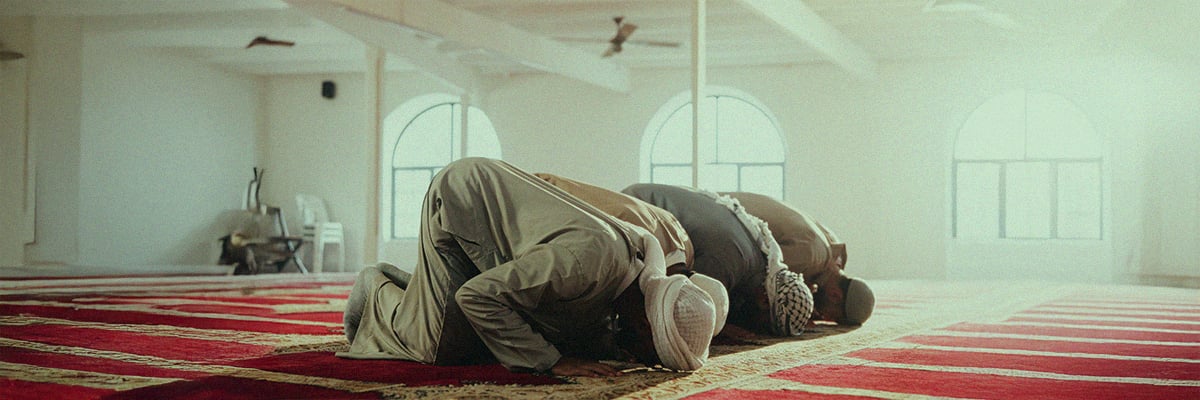
Take prayer (salah), for instance. It was never a gradual process—first monthly, then biweekly, then weekly, and finally daily. From the very beginning, it was mandated five times a day. In fact, the original command was for fifty daily prayers! Only through Prophet Musa’s intervention was it reduced to five. Imagine the sheer rigor of such a command in a society where people were accustomed to laziness and indulgence.
Had we been the decision-makers, we would have faced immediate resistance: “Five times a day? That’s ridiculous! People won’t accept it.” Yet, for 1400 years, across continents, millions have adhered to this daily commitment without fail.
The Practicality of Worship
Many newcomers to Islam, and even those studying it academically, may wonder: “Is praying five times a day really practical?” Ironically, while an institution’s committee finds it absurd to meet five times daily, a believer finds deep fulfillment in meeting their Creator five times a day. It is an undeniable truth—salah has stood the test of time as a profoundly practical spiritual discipline. Mosques continue to be built, new believers continue to embrace Islam, and congregational prayers continue to be performed worldwide.
The experience of salah is not one of fleeting enjoyment. It is not passive entertainment. It is an act of conscious engagement—detaching from the world, focusing solely on the Divine. It demands effort. It requires presence. It is not something designed for surface-level pleasure, like a musical night or a dance fest. Yet, billions have submitted to its rhythm over centuries, proving its profound practicality.
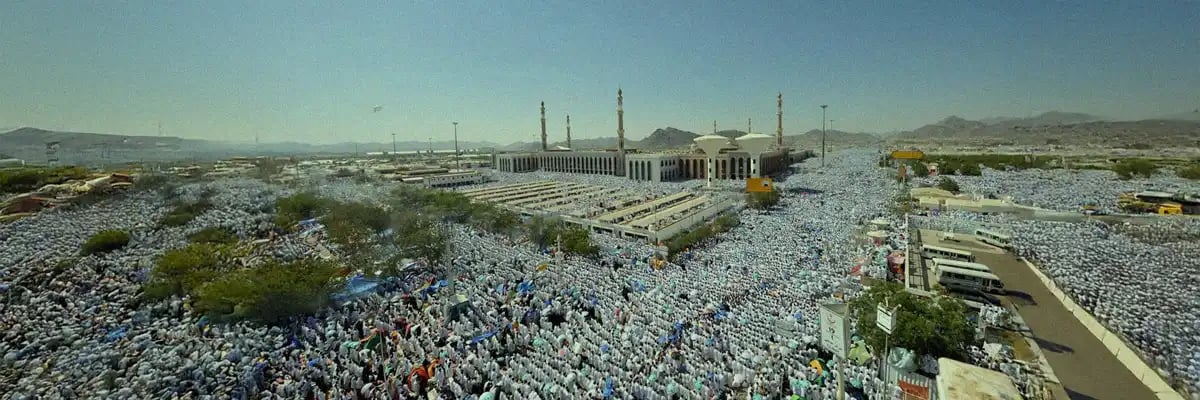
To witness the sheer scale of this devotion, one only needs to visit the two holiest mosques in Islam—Masjid al-Haram in Mecca and Masjid an-Nabawi in Medina. Before each call to prayer, worshippers pour in from every direction, filling every inch of space. In mosques across the world, from grand urban centers to the smallest villages, the faithful gather five times a day, forming an unbroken chain of devotion that transcends time and geography. The sight of believers rushing to prayer, responding to the call from towering minarets, is a testament to the power of salah. No matter the country, no matter the setting, the rhythm of prayer continues, undisturbed, unwavering, uninterrupted.
Fasting: A Test of Discipline
Now consider fasting (sawm). Let’s again step back and imagine proposing this idea in an ancient Arab society where indulgence was a way of life. No food or drink from dawn to dusk? No sensory pleasures? Complete restraint? Such a demand seems unimaginable. If this had been debated in a meeting, many would have dismissed it outright: “No way! This won’t work. Give people something enjoyable instead.” And yet, Ramadan is observed with unwavering dedication worldwide.
This is not about amassing followers through incentives or pleasures. Islam never lured people with spectacle. It asked them to commit. It asked them to discipline themselves. And those who truly understood its essence embraced it wholeheartedly.
Zakat: The Economics of Generosity
Then there’s zakat—the act of giving wealth away. Unlike modern wealth accumulation strategies—interest, stock speculation, hoarding, profiteering—zakat demands the exact opposite. A faith that commands its followers to distribute their wealth, rather than amass it, seems counterintuitive. And yet, people obey. It defies conventional logic, yet it thrives.
Hajj: The Ultimate Pilgrimage
Finally, Hajj. Unlike luxurious vacations, this pilgrimage leads to the scorching Arabian desert—not to scenic beaches or lush valleys. No comfort, no leisurely sightseeing. Just rigorous rituals amidst the heat, dust, and overwhelming crowds. No designer clothes, just two simple white garments. No lavish accommodations, just tents in the desert. And yet, millions embark on this journey every year.
Islam’s Approach to Devotion
Islam’s acts of worship were never designed for temporary thrills or external excitement. They were never meant to be distractions from reality. Rather, they were meant to shape a person’s very essence—to instill discipline, purpose, and devotion beyond the material world.
Life has room for laughter, music, festivities, and enjoyment. Islam does not deny this. But it also teaches that life is more than that. Some people reduce life to mere amusement—where pleasure is their only pursuit. Islam challenges this notion. It demands something deeper. It asks its followers to rise beyond the superficial and embrace a life of meaning.
The reality is clear: Islam does not entice followers with superficial gratification. It calls upon them to recognize a higher truth. It welcomes only those willing to dedicate themselves fully.
Now, think deeply. The discipline of worship is not about momentary pleasure—it is about lifelong transformation. For those who seek meaning, the signs are everywhere.