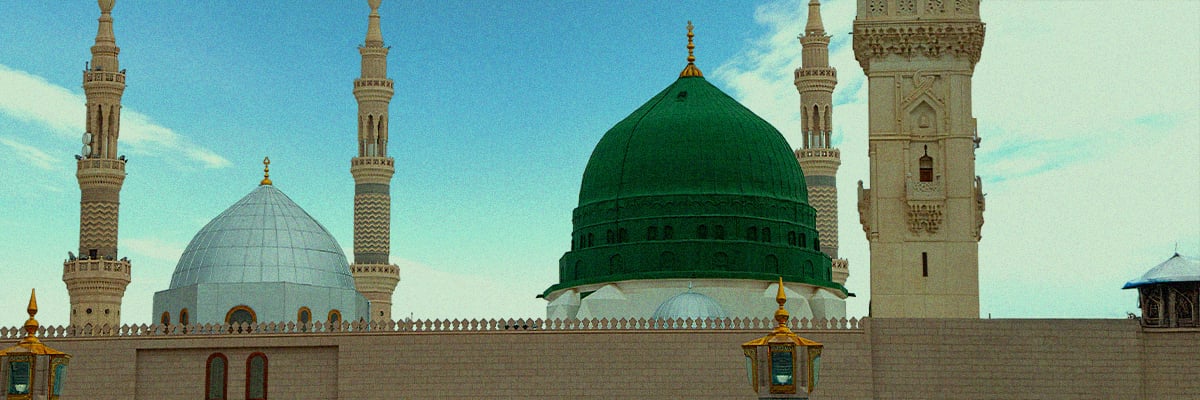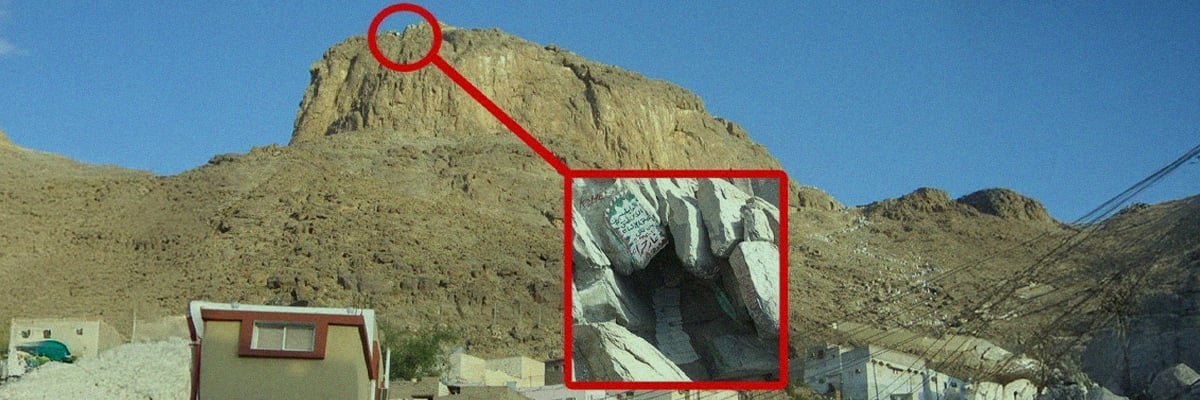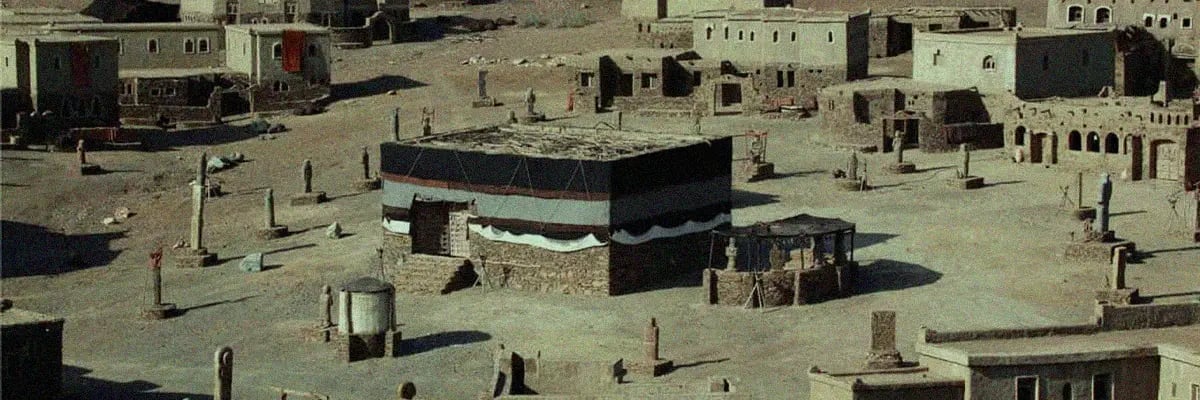

It was the sixth year of Hijrah. The Messenger ﷺ was leading a caravan of 1,500 companions from Madinah to Makkah with the noble intention of performing Umrah. As the journey progressed, the caravan reached Al-Abwa, a place laden with memories buried deep in his heart.
For the Messenger ﷺ, this was not just a resting point. It was a journey back in time. Fifty years earlier, he had traveled this same road—not as a leader of men but as a six-year-old boy, nestled close to his mother, Amina bint Wahb.
The First Teacher, The First Home
Amina bint Wahb—her name carried the fragrance of motherhood and the legacy of the noblest womb to grace the earth. She was the daughter of Wahb, a noblewoman from the Banu Zuhrah clan.
It was her milk that first nourished him, her arms that first cradled him. His earliest memories were of her gentle touch and her soothing voice. The Messenger ﷺ, who would one day be sent to teach humanity, first learned love, warmth, and compassion from her.
She had carried him with honor, a pregnancy marked by signs that she would later recall with wonder. She experienced none of the usual pains or difficulties of childbirth. Prophets of old appeared to her in dreams, heralding the child she carried as the leader of humanity. On the day of his birth, a radiant light emanated from her, illuminating the distant palaces of Busra in Syria.
From the very beginning, her child, Muhammad ﷺ, was accompanied by signs of his future greatness. Yet, Amina’s life with her son was brief, and her sacrifices profound.
The Journey to Madinah
When Muhammad ﷺ was six years old, Amina decided to travel to Madinah. Accompanying her were her young son and their faithful servant, Baraka who would later come to be called as Ummu Ayman. The stated purpose of the journey was to visit Abdullah’s relatives, the Banu Najjar, but the trip carried deeper emotions.
Amina had never remarried after her husband Abdullah’s death. Unlike other widows of her time, who often remarried quickly, she had remained devoted to his memory. This journey was not just about reconnecting with family; it was a pilgrimage to visit the grave of her beloved husband, who had passed away in Madinah while on a trade expedition.
In Madinah, they stayed at the house of Nabigha from the Banu Najjar clan, a place that would later come to be known as Dar al-Nabigha. There, Amina found herself surrounded by memories of her husband. Her young son played nearby, his innocent laughter echoing in the courtyard.
Years later, the Prophet ﷺ would fondly recall those days:
"I stayed in that house with my mother. I learned to swim in the pool of the Banu Adiyy bin Najjar. I played with my friend Aneesa, and we flew a bird together."
However, even amidst the warmth of family, Amina faced moments of unease. Jewish scholars in Madinah, intrigued by her son’s noble features and the signs of prophethood, would approach her. Some examined him closely, murmuring, “This is the Prophet of this nation.” Others warned her to protect him.
These encounters left Amina with a mother’s natural fear. The responsibility of raising this extraordinary child weighed heavily on her heart.
The Return and an Irreplaceable Loss
As the small group made their way back to Makkah, Amina began to feel unwell. The symptoms of her illness worsened when they reached Al-Abwa, a small settlement just 180 kilometers from Makkah.
Weak and aware that her end was near, Amina held her son close. Her voice, now faint, carried the weight of her love and foreknowledge:
"If the visions I have seen are true,
You are the one sent to all creation.
Be loyal to the path of your forefather Ibrahim,
Worship Allah, shun the idols,
And never befriend them or their worshippers."
Her words, though soft, seemed to echo in the boy’s soul. She continued, her tone shifting to a profound acceptance of her fate:
"Every new thing perishes, every great thing dies.
I am departing this world, but I leave behind the greatest blessing.
You are pure, and through you, purity will prevail."
Amina passed away in Al-Abwa, leaving her son an orphan. He buried his face in her lifeless embrace, the warmth of her love lingering even as the harshness of reality set in.
A Journey Back in Time
Now, fifty years later, the Prophet ﷺ stood once again at Al-Abwa. The memories of his mother flooded back, vivid and piercing. He sat by the gravesite, silent and unmoving. His companions watched from a distance, puzzled but respectful. What was holding him there? Why did he not move or speak?
For hours, the Prophet ﷺ remained seated, lost in thought and prayer. As the day wore on, he finally rose and began walking among the graves, his steps purposeful yet heavy. He stopped at one specific grave and knelt beside it.
Tears began to flow, first silently, then uncontrollably. His shoulders shook as he wept, the grief of fifty years breaking free.
The companions, witnessing this rare display of raw emotion, approached cautiously. “O Messenger of Allah, what makes you weep so?” they asked.
He looked at them, his face wet with tears. “This is my mother’s grave,” he said, his voice heavy with sorrow. “I sought Allah’s permission to visit her, and it was granted. I sought permission to pray for her forgiveness, but it was not granted.”
The Prophet’s grief that day was a testament to the depth of his love and the enduring connection between a mother and her child. Though Amina’s time with her son had been brief, her influence was eternal.
Some have misunderstood the Prophet’s inability to pray for her forgiveness, assuming it implies a lack of salvation. But the Qur’an clarifies:
“And We do not punish until We have sent a messenger.”
(Surah Al-Isra: 17:15)
Amina lived during the Fatrah, the period between Jesus (AS) and Muhammad ﷺ when no prophets were sent. According to Islamic scholars, those who lived in such times will not be punished for their ignorance of divine guidance.
Amina, who bore the best of creation in her womb and nurtured him with unparalleled love, belongs to this category. Her legacy is not one of judgment but of honor, as the mother of the final Messenger ﷺ.
The Most Blessed Womb
Let us conclude this note on the beloved mother of the Messenger of Allah with a poetic reflections on her role by Dr. Muhammad Abdu Yamani:
O blessed Amina, how honored you are
to have been the mother of the most noble Prophet ﷺ!
Yours was the womb chosen to carry the best of creation.
Your lap cradled him, your love nourished him.
Those who speak ill of you know not your sanctity,
nor the favor Allah bestowed upon you.
Indeed, the earth is sanctified where the Prophet ﷺ is buried, but how much more so the womb that bore him, the arms that held him, and the heart that loved him.