
“Where is our Sa‘alaba?”
The Prophet’s inquiry.
“He hasn’t been seen for several days.”
“Umar, Salman, you both must leave at once. Search for Sa‘alaba among the hills between Mecca and Medina. Find him. He is running away in fear of Hell.”
The two companions set out and reached those hills.
They met a shepherd named Dhufaf and questioned him.
“Are you looking for someone fleeing in fear of Hell?” Dhufaf asked.
“What makes you say that?” they responded.
“Every night, a man appears in these hills,” Dhufaf explained.
“He cries out, ‘Oh Allah, take my soul! Do not delay my punishment to the Hereafter.’
Then he places his head in his hands and runs.”
“That must be him!” they concluded.
The sun had set, and the night draped its dark veil.
A voice rang out:
“Oh Allah, take my soul! Do not delay my punishment to the Hereafter.”
Yes, it was Sa‘alaba.
They approached him, and he asked them desperately,
“Did the Prophet learn of my sin?”
You might be wondering, What was this great sin?
One day, while passing by an Ansari’s house, Sa‘alaba saw a woman bathing.
Though it was accidental at first, he deliberately looked again, once or twice.
That was all.
Suddenly, the remembrance of Allah overwhelmed him.
Believers are like that: if they fall into temptation, they quickly turn back to Allah, regaining their inner clarity.
But Sa‘alaba’s thoughts consumed him:
How can I face the Prophet with these eyes that sinned? How can I look upon his noble face?
He decided never to return to the Prophet’s assembly.
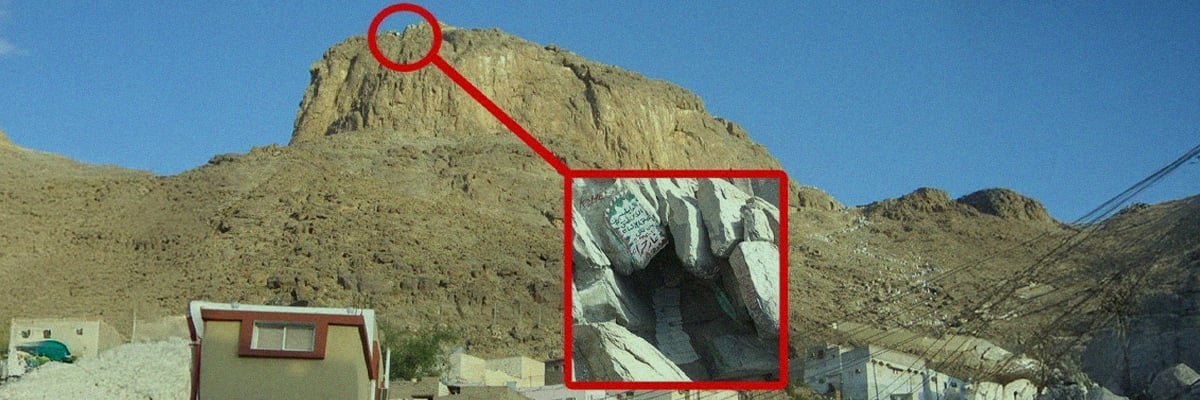
Instead, he sought refuge in the hills between Mecca and Medina.
There, he planned to repent until he died in solitude.
Days later, divine revelation came to the Prophet ﷺ:
Sa‘alaba was to be sought out. Based on this, the Prophet sent two companions to find him.
When they found Sa‘alaba, he made only one request:
“Bring me to the Prophet, but only when he is in prayer. I cannot bear to look directly at him!”
During the Prophet’s Fajr prayer, they arrived.
The Prophet recited the verse:
“Indeed, the hearing, the sight, and the heart will all be questioned.”
Hearing this, Sa‘alaba fainted.
After the prayer, the Prophet asked,
“Where is Sa‘alaba?”
“Here he is, lying on the ground,” they replied.
The Prophet called him, and Sa‘alaba opened his eyes.
“Where were you all this time? Why did you hide from me?” the Prophet asked.
“Because of my sins, O Prophet,” he confessed.
“Shall I not teach you words that can erase sins?” the Prophet offered.
“Our Lord, give us good in this world and good in the Hereafter, and protect us from the punishment of Hell.”
“But my sins are greater than that, O Prophet!” Sa‘alaba protested.
“Never! Allah’s words are greater than any sin,” the Prophet assured him.
The Prophet instructed the companions to take Sa‘alaba home.
A few days later, Salman suggested,
“Shall we visit Sa‘alaba at his house?”
The Prophet went and cradled Sa‘alaba’s head in his lap.
But Sa‘alaba moved his head away.
“Why are you doing that?” the Prophet asked.
“This head, filled with sin, is unworthy of your noble lap,” Sa‘alaba replied.
“What do you desire?” the Prophet inquired.
“To have my sins forgiven,” Sa‘alaba pleaded.
“Jibreel has already informed me that Allah has forgiven you,” the Prophet said.
Hearing this, Sa‘alaba uttered a sound and passed away.
When Sa‘alaba’s body was taken for burial, the Prophet walked on tiptoe.
When asked why, he explained,
“The angels have crowded here, leaving no space for me to step on the ground.”
We are reflecting on how the Prophet ﷺ interacted with his companions, and it is in this context that we come across this thought-provoking story.
From this account, we can understand the depth of the Prophet’s love, care, and attention for his companions, the extent to which he nurtured and guided them, and how profoundly he influenced their hearts. Additionally, this story reminds us of the significance, methods, and outcomes of sincere repentance.
When the Prophet ﷺ departed this world, history records that he had over a hundred thousand companions. Alongside the beauty of the principles he brought, it was his noble character and conduct that endeared him to his followers and won a place for him in their hearts.
Despite having a large number of followers, the Prophet ﷺ would inquire if someone was missing.
Anas ibn Malik narrated:
The verse,
"Believers, do not raise your voices above the voice of the Prophet, nor speak loudly to him as you do to one another, lest your deeds become nullified while you are unaware" (Surah Al-Hujurat: 2),
was revealed.
Upon hearing this verse, Thabit ibn Qays, a companion known for his loud voice, stopped coming to the Prophet’s gatherings. He stayed at home, lamenting, “I must be destined for Hell,” as he believed his loud voice had invalidated his deeds.
Concerned, the Prophet ﷺ asked Sa‘d about Thabit:
“What has happened to Thabit? Is he unwell?”
Sa‘d, who was his neighbor, replied, “I do not know of any illness.”
The Prophet ﷺ then visited Thabit.
Upon hearing the reason for his absence, Thabit said, “A verse has been revealed, and you know I am the one with the loudest voice among your companions. Does this not mean I am among the people of Hell?”
The Prophet ﷺ reassured him:
“No, you are among the people of Paradise.”
This brought immense relief to Thabit.
The Prophet ﷺ would even inquire about the children of his companions.
Once, when Qurrat ibn Iyas came to visit the Prophet, he brought his young son along. The Prophet ﷺ noticed the boy and asked, “Do you love him?”
Qurrat replied, “I love him as much as Allah has blessed you with His love.”
Some time later, Qurrat came again, but this time without his son.
The Prophet ﷺ immediately asked, “Where is your son?”
With a heavy heart, Qurrat responded, “He has passed away.” Overwhelmed with grief, he struggled to contain his sorrow.
The Prophet ﷺ comforted him with these words:
“When you reach any gate of Paradise, your son will be there to welcome you. Will that not be enough for you?”
Even when faced with the final moments of death, the heart of a companion remains filled with concern for the Prophet ﷺ. The Prophet, in turn, gives the world a chance to hear what this companion has to say.
Here is an account:
Scene:
The Battle of Uhud.
A field of martyrs.
Those wrestling with death,
deep wounds inflicted,
persevering through adversity,
and standing firm against their enemies.
After the battle, the Prophet ﷺ looked around, searching for each of his companions. He noticed that Sa‘d ibn Rabi‘ was missing.
The Prophet ﷺ instructed Zayd ibn Thabit to search for him:
“If you find Sa‘d, convey my salam to him and ask about his condition.”
Zayd recounts:
“As I walked among the slain, I found Sa‘d taking his final breaths. His body bore over seventy wounds from arrows, swords, and spears.
I said to him, ‘The Messenger of Allah ﷺ conveys his salam and has asked about your condition.’
With great effort, Sa‘d replied:
‘Convey my salam back to the the Messenger of Allah ﷺ. Tell him that I am sensing the fragrance of Paradise.’
Then, with his remaining strength, he gave a final message:
‘Tell my people, the Ansar, that as long as a single eye remains open among you, if the enemy reaches the Messenger ﷺ, you will have no excuse before Allah.’”
With these words, Sa‘d ibn Rabi‘ returned to his Lord, leaving behind a legacy of loyalty and love for the Prophet ﷺ.
This is an emotional and profound moment in history.
Sa‘d’s love for the Prophet ﷺ, his deep commitment to the faith, and the assurance of a martyr’s salvation in the Hereafter are all vividly evident in this account. The seventy wounds on his body, his sense of Paradise’s fragrance, and his final will teach us invaluable lessons. This Hadith also underscores the Prophet’s remarkable attention and care for his companions.
The Prophet ﷺ was often moved to tears at the loss of his companions. When informed of the deaths of Zayd, Ja‘far, and Abdullah ibn Rawaha, the flag-bearers of the Battle of Mu’tah, his eyes welled up with tears.
Similarly, when Uthman ibn Madh‘un passed away, the Prophet ﷺ grieved deeply. Uthman, the Prophet’s foster brother through milk kinship, was a companion who had participated in the Battle of Badr. Even before embracing Islam, he had abandoned intoxicants during the Jahiliyyah (pre-Islamic period). Uthman was among the first to pass away after migrating to Medina. When he died, tears flowed down the Prophet’s cheeks, a testament to his immense compassion and connection with his companions.