
"Shall we go to send salutations upon the Beloved Prophet ﷺ? Will you join me?" Shaykh Jazuli’s voice carried a reverence that was unmistakable.
"Yes, I am ready," I replied without hesitation.
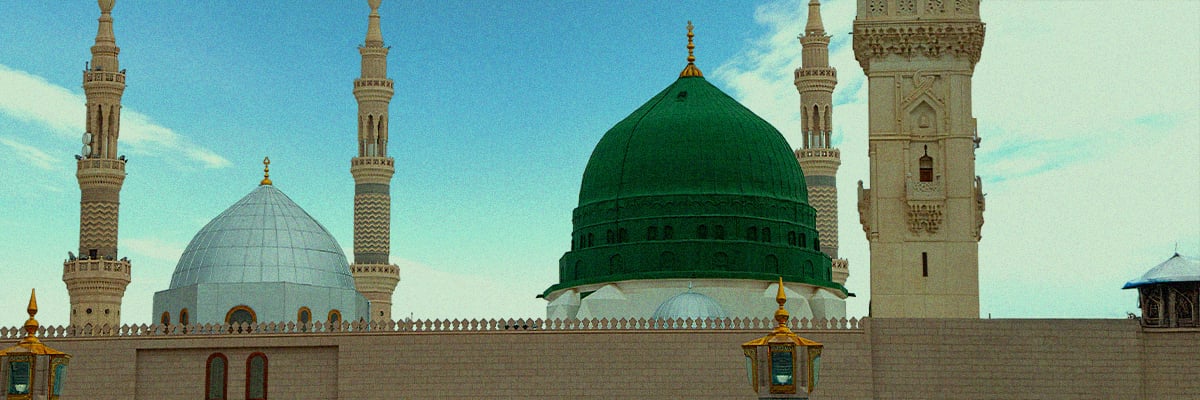
He gently took my hand, leading me outside. "But first, let us perform wudu (ablution)," he said, guiding me not to the nearest restroom adjacent to the Green Dome of Masjid an-Nabawi, but to one farther away. As we walked, he explained with calm sincerity:
"When praying for closeness to the Beloved Prophet ﷺ, one must also uphold adab (etiquette) towards his sanctity. To relieve oneself too close to the Prophet ﷺ’s resting place, even unintentionally, could breach this adab. Instead, we should ask Allah for the grace to uphold respect while seeking the Messenger’s nearness."
After performing wudu, we entered through Bab as-Salam, the Gate of Peace. The crowd was light, allowing us to stand directly before the resting place of the Prophet ﷺ. Shaykh Jazuli and I offered our salutations in unison, hearts brimming with awe.
As we stood there, Shaykh pointed behind us, towards a small, window-size, unobtrusive opening in the structure. "Do you see that little window? It holds a story. That was once part of Hafsa’s house, May Allah be pleased with her. From that window, she would send salutations to the Prophet ﷺ. Even after all the expansions, it has been preserved just as it was," he said with a smile.
Curiosity stirred within me. How did only Hafsa (may Allah be pleased with her), the Prophet’s ﷺ wife and the daughter of Umar ibn al-Khattab, come to live so close to the masjid, even after his passing? Later, after prayer, I sought the answer from a long-time resident of Madinah who shared insights about Bab Siddiq, the Gate of Abu Bakr.
Pointing to the middle section near Rawda, where the Quran is now placed in a cabinet, he said, 'There is a door there that leads to the Hujra Sharifa (the sacred chamber where the Prophet ﷺ is buried). It used to be visible in the past, but now it is covered by the mushaf (Quran cabinet). That door is parallel to Bab as-Siddiq, the Gate of Abu Bakr. It is likely through this door that Abu Bakr accessed his daughter and the Messenger’s wife Ayisha's house.
Even today, the inscription هذه خوخة سيدنا ابي بكر الصديق ('This is the small door of Abu Bakr as-Siddiq') marks the spot where Abu Bakar’s house once stood.
It was through this door, he explained, that Abu Bakr would enter the masjid. The house and its connection to the mosque held profound significance, as Abu Bakr’s footsteps sanctified the ground. No wonder, he added, people often sought to sit near that area, drawn by its barakah (blessing).
The history deepened my fascination. I later learned that Abu Bakr’s house, adjacent to the mosque, was sold when financial aid was needed for a visiting delegation. It was Abu Bakr himself who sold the house to provide the necessary support. Hafsa, the Prophet’s ﷺ other wife and the daughter of Umar ibn al-Khattab, purchased it for 4,000 dirhams.
During the mosque's expansion, Uthman (may Allah be pleased with him) sought permission to demolish the house. However, Hafsa did not consent. Uthman offered to provide an even better house and promised to create a means for her to send salutations to the Prophet ﷺ from that location.
I read this explanation alongside what the Shaykh Jazuli had shared, and it answered my question. That must be how the house came to exist here. Even as expansions occurred later, the small window was preserved. To this day, it remains there, and that continuity amazes me.
But one question lingered in my mind: among the thousands of Sahaba who lived near the mosque, why was Abu Bakr’s door the only one allowed to remain open?
The answer lay in the words of the Prophet ﷺ himself, as narrated by Abu Sa’id Al-Khudri (may Allah be pleased with him):
Allah's Messenger (ﷺ) sat on the pulpit and said,
"Allah has given one of His Slaves the choice of receiving the splendor and luxury of the worldly life, whatever he likes, or to accept the good which is with Allah. And he has chosen the good which is with Allah."
Upon hearing this, Abu Bakr wept and said,
"Our fathers and mothers be sacrificed for you, O Messenger of Allah."
The companions, puzzled by his tears, whispered among themselves, "Why is this old man crying? The Prophet ﷺ is only speaking of a servant of Allah who has been given a choice!" But Abu Bakr had understood what others had not: the Prophet ﷺ was speaking of his impending departure, a choice between staying in this world or reuniting with his Lord.
The Prophet ﷺ then said,
"No doubt, I am indebted to Abu Bakr more than to anybody else regarding both his companionship and his wealth. And if I were to take a Khalil (intimate friend) from my followers, it would certainly have been Abu Bakr. But the bond of Islamic brotherhood is sufficient. Let no door leading into the mosque remain open, except the door of Abu Bakr.”
This declaration was more than a practical decision; it was a reflection of Abu Bakr’s unique status in the life of the Prophet ﷺ. His door, a quiet yet enduring symbol, stood for his loyalty, sacrifice, and love—a door that welcomed him into the mosque and, by extension, into the Prophet’s ﷺ life and mission.
Abu Bakr (may Allah be pleased with him) knew and loved the Prophet ﷺ in ways no one else could. Through every trial and triumph, their bond remained unmatched—a friendship marked by unparalleled devotion, captured in the story of a door that never closed.
This moment, rich with significance, highlights the unique position of Abu Bakr in the life of the Prophet ﷺ and the community. While many companions had doors that opened into the mosque, they were all instructed to close them—except for Abu Bakr. This exception underscores a distinction granted solely to him. His exceptional understanding of the Prophet ﷺ, his intentions, and his words set him apart from all others. He was often the first to grasp the unspoken, reflecting a bond of unparalleled closeness and trust. Above all, Abu Bakr’s devotion, service, and love for the Prophet ﷺ were unmatched, embodying the highest level of loyalty and companionship.
No one knew the Prophet ﷺ as Abu Bakr did.
No one supported the Prophet ﷺ as Abu Bakr did.
No one loved the Prophet ﷺ as Abu Bakr did.
And no one was loved by the Prophet ﷺ in the way Abu Bakr was.
This door—quiet, unassuming, yet eternally open—is not just a gateway to the mosque. It is a testament to a bond of extraordinary faith, love, and loyalty. A bond that no other relationship in history could ever parallel.
AN ORDINARY RIFT
There are countless historical moments that reveal the depth of the bond between the Prophet ﷺ and Abu Bakr (may Allah be pleased with him).
One such incident occurred between Abu Bakr and Umar (may Allah be pleased with them). A conversation between them led to a disagreement. Umar did not like what Abu Bakr had said and left in anger. Regret immediately struck Abu Bakr, and he followed Umar to make amends. However, Umar refused to reconcile, went into his house, and shut the door.
With a heart heavy with sorrow, Abu Bakr made his way directly to the Prophet ﷺ. His garment was partially lifted, exposing his knees, as he approached the Prophet ﷺ in distress. Upon seeing him, the Prophet ﷺ remarked:
"Your companion seems to have had a dispute with someone."
Abu Bakr began to explain:
"Something occurred between Umar and me. I said something harsh to him, and then I regretted it. I asked him to forgive me, but he refused. So I have come to you instead."
The Prophet ﷺ, with his characteristic compassion, said three times:
"Allah will forgive you, Abu Bakr."
Meanwhile, Umar, filled with regret, set out to find Abu Bakr. He searched for him at his house but did not find him there. Realizing that Abu Bakr might be with the Prophet ﷺ, Umar headed to the mosque. Entering, he greeted the Prophet ﷺ with salam.
The Prophet ﷺ’s face, however, bore a hint of displeasure. Abu Bakr, sensing Umar’s apprehension, feared that the Prophet ﷺ might rebuke Umar. Without hesitation, Abu Bakr knelt before the Prophet ﷺ and pleaded:
"O Messenger of Allah, by Allah, I was at fault! It was my mistake!"
The Prophet ﷺ then addressed everyone present, saying:
"When Allah sent me as a messenger, all of you rejected me, but Abu Bakr believed in me. He supported me with his self and his wealth. Will you not leave my companion for me? Will you not leave my companion for me?"
What a story this is! Such moments of pure selflessness and humility remind one of the innocence of children. But what brought such selfless humility and nobility to these two great men?
Can such a story exist outside of Islamic history?
Disagreements and anger are common in human relationships. But for someone to immediately seek reconciliation, to pursue the offended party, and to regret deeply when forgiveness is not granted—this is rare.
What’s even rarer is when the offended party, upon reflection, becomes regretful and sets out to find the one they were angry with. And finally, for the mediator to not only refuse to speak ill of the offending party but instead highlight their unparalleled virtues, telling the story of their solitary sacrifices and unwavering support—this is a lesson in love, humility, and companionship that transcends ordinary human interactions.
THE AFTERMATH OF A LAND DISPUTE
In another similar incident, Rabee’ah narrates:
The Prophet ﷺ allocated land to both Abu Bakr and me, in plots adjacent to one another. The land produced a good income, but a dispute arose between us over a date palm. I claimed it was on my side, while Abu Bakr insisted it was on his.
During the discussion, Abu Bakr said something that I found offensive. Immediately, he said,
"Rabee’ah, say the same thing to me in response, so that it may serve as retribution."
I refused, saying, "I will not say it."
Abu Bakr insisted, "You must say it! Otherwise, I will take this matter to the Prophet ﷺ." He then relinquished his claim to the land and went directly to the Prophet ﷺ. I followed him.
On the way, some people from the Aslam tribe who saw us said to me:
"May Allah have mercy on Abu Bakr. What case is he going to present to the Prophet ﷺ about you? Wasn't he the one who offended you?"
I replied, "Do you know who this is? This is Abu Bakr! He was one of the 'two in the cave' during the Hijrah. He was the first man to accept Islam. He is the one who recited the Quran to people! Go back to your work. None of you should follow me. If Abu Bakr sees you with me, he may think you are supporting me against him, and that might upset him. If he goes to the Prophet ﷺ in anger and the Prophet ﷺ gets upset because of me, then Allah's punishment might descend. And I, Rabee’ah, would be the cause of it!"
When I caught up with Abu Bakr, he had already reached the Prophet ﷺ. He narrated the incident exactly as it had happened. The Prophet ﷺ looked up and asked me,
"Rabee’ah, what is the matter between you and Abu Bakr?"
I explained:
"This and that happened. In the course of it, Abu Bakr said something to me that he himself didn’t like. He then asked me to say something similar to him in return, but I refused."
The Prophet ﷺ said,
"Good. Do not respond in kind. Instead, say this:
'May Allah forgive you, Abu Bakr.'"
I repeated the words as instructed. Upon hearing them, Abu Bakr began to cry and left the gathering in tears.
What extraordinary humility this was! What profound love this was!
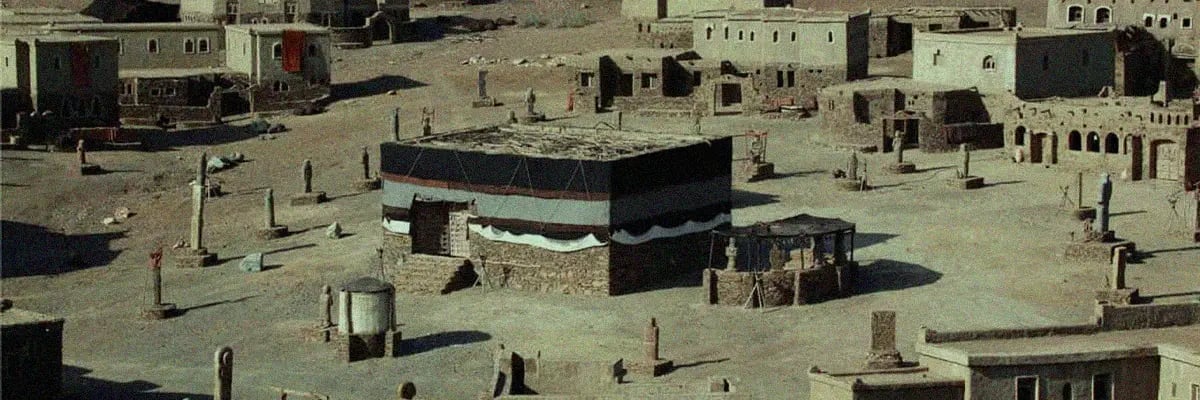
The same society that once thrived on violence, drunkenness, and indulgence was transformed into one of nobility, humility, and unparalleled affection.
How did the Prophet ﷺ achieve such a transformation? By his unwavering example and boundless compassion, he turned hearts, reforming an entire community into a model of virtue and integrity. Truly, his influence was a miracle in itself.
THE COMPANION OF THE CAVE
The Prophet ﷺ’s immense love for Abu Bakr (may Allah be pleased with him) shines through these two incidents.
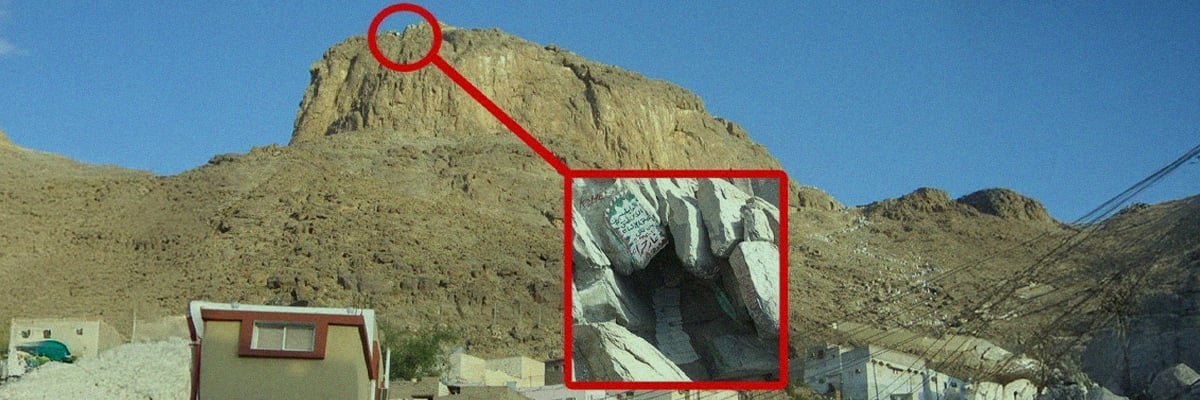
But what was the reason for this deep affection? The Prophet ﷺ himself expressed it. To truly understand, we must journey through the experiences of the Hijrah, ascending to the Cave of Thawr and witnessing the bond forged in those moments.
Shall we climb the mountain with Abu Bakr and the Prophet ﷺ?
The Cave of Thawr sits at an altitude of 760 meters above sea level. Imagine the climb—two men scaling its steep and rugged slopes. There were no steps, as there are today, crafted by modern efforts. Nor were there clear trails worn smooth by frequent travelers. The mountain was harsh, and the path was treacherous, demanding strength and perseverance.
Did the Prophet ﷺ grow weary during the climb?
Did a stone strike his blessed feet?
Abu Bakr could not bear the thought. His heart overflowed with concern. So what did he do? He carried the Prophet ﷺ on his shoulders!
Imagine it—one man, carrying another two years older than him, up a steep mountain. Can you even fathom such an act of love and devotion?
But before lifting the Prophet ﷺ onto his shoulders, where was Abu Bakr walking? He moved in circles—sometimes ahead, sometimes behind, sometimes to the right, and sometimes to the left. The Prophet ﷺ noticed this and asked,
"Abu Bakr, why are you doing this?"
Abu Bakr replied,
"O Messenger of Allah, when I think the enemy might lie in ambush ahead, I walk in front of you. Then I fear they may attack from behind, so I walk behind you. When I think they might approach from the right or the left, I move accordingly."
Is it any wonder that Umar (may Allah be pleased with him) once said,
"If I could exchange all the days of my life for just one day of Abu Bakr’s life, I would do so!"—a statement believed to refer to that extraordinary day of the Hijrah when Abu Bakr carried the Prophet ﷺ on his shoulders, walked ahead and behind to protect him, and stayed steadfast in his love and loyalty.
Such love, such devotion—how extraordinary was their bond!
Finally, they reached the cave. The entrance was narrow, requiring them to crawl inside. It wasn’t a grand, inviting space—it was small, dark, and stifling. The Cave of Thawr became their refuge, not for hours, but for three long days and nights.
Imagine the effort it took to reach this sanctuary. Abu Bakr, ever vigilant, ensured that every stone, every crevice, and every possible danger was accounted for. He carried the weight of the Prophet ﷺ not just physically but emotionally, spiritually, and with complete faith.
The love between the Prophet ﷺ and Abu Bakr was no ordinary friendship. It was a bond built on sacrifice, loyalty, and trust. The mountain they climbed and the cave they shared are eternal witnesses to a relationship unparalleled in history—a relationship that inspires and humbles us to this day.
The Cave of Thawr
There it was! The cave came into view, its entrance so narrow that one could only crawl to get inside. According to the historian Ibn Jubayr, the entrance of the cave was five cubits long, and the interior stretched about eighteen cubits. It was barely large enough for a person to sit, pray, or rest.
Inside, the Prophet ﷺ lay his blessed head in Abu Bakr’s lap (may Allah be pleased with him). Before they settled, Abu Bakr had torn pieces from his garment to plug every crevice, ensuring that no creature could harm his beloved companion. But alas, one small opening remained. Worried that some harmful creature might come through, Abu Bakr placed his foot over the gap as a seal.
Suddenly, a snake bit him.
He did not flinch. He did not move his foot, for fear that the creature might emerge further and harm the Prophet ﷺ. The pain was excruciating, unbearable. Yet, Abu Bakr stayed silent, suppressing any reaction that might disturb the Prophet ﷺ’s rest. But tears, unbidden and unstoppable, welled in his eyes and rolled down his cheeks.
One drop fell on the Prophet ﷺ’s blessed face. He woke and immediately asked, “What is wrong, Abu Bakr?”
“Messenger of Allah, a snake has bitten me,” Abu Bakr replied.
The Prophet ﷺ, with his blessed saliva, touched the wound. The pain disappeared instantly, replaced with a profound sense of relief. Such was the mercy and grace of the Prophet ﷺ.
The Night in the Cave
Darkness enveloped the cave as night fell. The world outside was pitch black, silent save for the occasional cry of some nocturnal creature. There were no lamps, no candles, no comforts of bedding or food. Only a dove and a spider stood as silent sentinels, a miraculous protection sent by Allah.
The Prophet ﷺ and Abu Bakr reached the cave on a Friday evening in the blessed month of Rabi' al-Awwal. They remained there for three nights and days, finally descending on Monday night.
At one point, enemies reached a rock just ten meters from the cave’s entrance. They searched meticulously and even considered peering inside. But as Umayyah ibn Khalaf remarked, "Why would Muhammad be in a cave covered with a spider’s web spun before his birth?"
From inside, Abu Bakr could see the feet of their pursuers. His heart raced with fear, not for himself, but for the Prophet ﷺ. "If they just look down at their feet, they will see us, O Messenger of Allah," Abu Bakr whispered.
The Prophet ﷺ, ever calm, replied,
"Do not grieve, for Allah is with us."
The Spring of Paradise
At dawn, Abu Bakr expressed his thirst to the Prophet ﷺ. The Prophet ﷺ, ever the provider of solace, instructed him:
"Go to the upper part of the cave. There you will find water. Drink from it."
Abu Bakr obeyed without hesitation. He placed his lips on the rock where water trickled and drank deeply.
What water it was! Sweeter than honey, whiter than milk, more fragrant than musk. Abu Bakr had never tasted anything like it before.
“Did you drink, Abu Bakr?” asked the Prophet ﷺ.
“Yes, Messenger of Allah. What sweetness!”
The Prophet ﷺ smiled and explained,
“That is a drink from Paradise! Allah instructed an angel to direct a stream from one of Paradise’s springs here, just for you.”
“Will I have such a rank in the Hereafter as well, O Messenger of Allah?” Abu Bakr asked.
The Prophet ﷺ reassured him,
“You will have this and more. But know this: anyone who harbors hatred for you will not enter Paradise, even if they worship Allah as much as seventy Prophets.”
A Story of Faith and Devotion
Who brought the water of Paradise to Earth?
The Prophet ﷺ.
Who requested it?
The first Caliph, Abu Bakr.
Who experienced it?
The devoted companion, Abu Bakr.
Who facilitated it?
The angels.
Who commanded it?
Allah, the Most Merciful.
And who narrated this miraculous event?
Imam Fakihani.
The story of the cave and its miracles testifies to the bond between the Prophet ﷺ and Abu Bakr—a bond of love, loyalty, and divine favor that continues to inspire the hearts of believers.
We began by speaking about the closest companions of the Prophet ﷺ. Yet, even as we focus on the first among them—Abu Bakr (may Allah be pleased with him)—we find ourselves unable to move beyond his love and devotion. There is simply no end to recounting his virtues and sacrifices.
And what of the second? It is none other than the second caliph, Umar ibn al-Khattab (may Allah be pleased with him). Let us end with a remarkable story where Umar himself attempted to surpass Abu Bakr, only to realize it was impossible.
Umar once narrated:
One day, the Prophet ﷺ called upon the companions to give in charity. It was a time when I happened to have some wealth at hand. I thought to myself, "Today, I will finally surpass Abu Bakr if ever there was a chance to do so."
I brought half of all I owned to the Prophet ﷺ. The Prophet ﷺ, noticing the extent of my contribution, asked,
"What have you left for your family?"
I replied, "I have left them an amount equal to this."
Then came Abu Bakr. He brought everything he owned and placed it before the Prophet ﷺ. The Prophet ﷺ, surprised at such generosity, asked,
"Abu Bakr, what have you left for your family?"
Abu Bakr replied with absolute faith:
"I have left them Allah and His Messenger."
At that moment, I knew—without a doubt—that I could never surpass Abu Bakr.