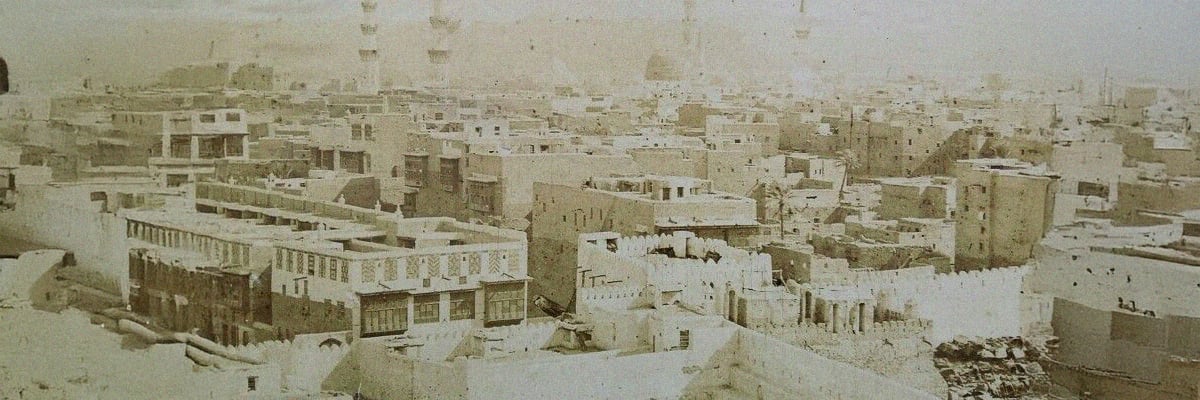

Seated by the green dome near the Prophet ﷺ in the sanctified city of Madinah—who could remain unmoved? Especially when one sees women gathered nearby. Once denied even the right to live, these once-oppressed women now appear joyous and dignified in the presence of the greatest leader the world has ever known. What a profound relief for the heart! What would the fate of the world have been had this Prophet ﷺ not lived? In places untouched by his message, were not women subjected to cruel oppression until
very recently? History and the present both whisper bitter truths into our ears. Every woman can take pride in the freedoms women enjoyed under the Islamic governance and in Muslim societies of the past. Consider what the Encyclopaedia Britannica states:
“Throughout most of Western history, women were confined to the domestic sphere, while public life was reserved for men. In medieval Europe, women were denied the right to own property, to study, or to participate in public life… Even as late as the early 20th century, women could neither vote nor hold elective office in Europe and in most of the United States. Moreover, women had little or no access to education and were barred from most professions.”
Most Western revolutions—including the Renaissance—were responses to this legacy of injustice. Women, having suffered greatly, reacted naturally. They took to the streets.Thus emerged what we now call feminism. Their rights were not granted; they were wrested from a world that had denied them.
Religious clergy, both then and now, have often opposed this movement. Many human rights declarations made no mention of women. Even communism—despite its claims—forgot women. In the entire history of communist revolutions, female presence was negligible. When colonizers expanded globally, they ignored women’s oppression in colonized societies. India’s deeply cruel traditions like sati (widow burning) and devadasi systems were not banned by colonial powers. The abolition of sati in 1929 came only after intense struggle and, even then, it continued privately.
Think of the bald-headed widows of Varanasi—what horror their lives must have been. All this after centuries of so-called enlightenment! Imagine the plight of women a thousand years earlier. Even among adherents of other religions, women were subjected to brutal discrimination during that era. Until the dawn of Western enlightenment, the discrimination continued. Some even debated whether women had souls.
Women were seen not as humans, but as something less. While men were venerated, women were pushed to the lowest social strata. This was partly due to the influence of Greco-Roman civilization on dominant religions of the West. As a result, these religions harbored and upheld a culture of untouchability towards women. Modern global organizations like the UN track statistics on women’s abuse. According to a WHO report dated November 29, 2017, one in three women globally faces sexual violence. Of these, 30% are abused by their partners. 38% of female homicides are committed by male partners.
A Gallup report dated October 20, 2016, revealed: “More than one in three women in the U.S. regularly fears being sexually assaulted… Among the 77 countries that reported to the United Nations, Sweden, the UK, Botswana, and Australia had the highest rates of sexual violence. The U.S. had especially high rates of rape.” Women’s basic need for safety is increasingly unmet in today’s world. Every passing day, this crisis worsens. Who is accountable?
In Kerala, the Hema Commission report sparked debate. But globally, no report has ever said that women are free and unviolated. All indicate distressing realities. The report on the film industry is just a glimpse; if similar commissions probed other sectors, the findings might be even more painful.
Let’s consider four countries:
- United States of America: According to government reports, 43.6% of women have experienced sexual assault. One in five has been assaulted, and one in four was abused by someone close—like a boyfriend.
- United Kingdom: According to a UN study by the All-Party Parliamentary Group, 97% of women reported experiencing some form of sexual harassment.
- India: On August 16, a young doctor was assaulted and murdered in Kolkata. Reuters reported that every 15 minutes, a woman is raped in India. Despite post- 2014 legal reforms, assault rates continue to rise—by as much as 200% even in Kerala.
- Saudi Arabia: Only 0.3% of women have reported abuse, meaning 99.7% are considered safe. Reports also state that Madinah is the safest city for women worldwide.
Islam’s legal framework, or Shari‘ah, rests on six core objectives (maqāṣid al- sharīʿah)—each focused on protection (ḥifẓ): of life (nafs), wealth (māl), dignity (ʿirḍ), lineage (nasl), intellect (ʿaql), and religion (dīn). The Shari‘ah’s fundamental offering to the world is safety. Even as others debated whether women had souls, Islam embraced and elevated them. The first person to believe in the Prophet ﷺ was a woman—Khadījah. Islam became a tradition in which thousands of women played a pioneering role. No religion or movement can show such proportionate female participation. Often, women were the first in their households to accept Islam—sometimes even without their husbands’ knowledge. The family of Caliph ‘Umar (RA) is a prime example.
Islam doesn’t grant absolute freedom, but regulated freedom that ensures protection. It never said a woman shouldn’t step out; it only prescribed guidelines for safety. If rulers fail to protect women, Islam urges women to be vigilant. But the burden lies with the rulers first.
In contrast, modern society sends women out unsafely and then exposes them to exploitation. Some critics say feminism was created by exploitative men who knew that only when women entered the streets would they be accessible. Capitalism supported this by commodifying women.
Thus, in today’s world, women have become capitalist slaves—no voice of their own, confined to market dictates. In many areas, this slavery is even worse than before. All for men’s benefit. If a woman appears half-naked, who benefits? Men. Unwittingly, feminist women are serving patriarchy.
All constitutions promise liberty, but no person has absolute freedom. Indian citizens, for instance, must abide by laws made by Parliament, Legislative Assemblies, or Panchayats. Cultural norms must also be followed. So, too, with every nation. Hence, the idea of total freedom—“I’ll do whatever I want”—is an illusion. No system or constitution guarantees this. What women need is this same regulated empowerment. What defines such freedom? Education, employment, shelter, marriage rights, property
ownership, protection during childhood and old age, dignity after death, and legal recourse in case of violation. Any system that ensures all this gives real empowerment—and Islam does exactly that.
Modern feminists advocate gender equality. Islam instead speaks of partnership. Men and women are not rivals but complements. Humanity’s fullness lies in their cooperation. “O mankind! Be conscious of your Lord who created you from a single soul, and from it created its mate and from the two of them spread countless men and women…” (Qur’an 4:1) Women and men are parts of the same whole, complements, not competitors. The call for equality often comes from resentment, not from a desire for harmony. When the Qur’an addresses inheritance, it does not distinguish between male and female: “For men is a share of what their parents and close relatives leave, and for women is a share of what their parents and close relatives leave…” (Qur’an 4:7) This verse was revolutionary. Until then, no religion or culture had granted women inheritance rights. Europe followed suit only in the 19th century. Communism, despite its rhetoric, denied these rights. American women had to wait until 1850. In contrast, Muslim women always enjoyed these rights under Islamic civilization. The Qur’an also outlines protective measures for women: “O children of Adam! We have given you clothing to cover your nakedness and as adornment. But the clothing of righteousness is best.” (Qur’an 7:26)
“Tell the believing men to lower their gaze and guard their modesty… and tell the believing women to lower their gaze, guard their modesty, and not display their beauty except what is apparent…” (Qur’an 24:30–31) “When you ask something from the wives of the Prophet, ask from behind a screen. That is purer for your hearts and theirs… Tell your wives, daughters, and believing women to draw their cloaks over themselves. That will be better so they are recognized and not harassed…” (Qur’an 33:53, 59)
These verses prescribe modesty for both men and women—not to burden, but to protect. Christianity and Judaism require modest dress for nuns and priestesses. Islam made modesty universal—for every man and every woman. The specifics of covering vary;
Islam only insists that certain parts be covered. If modern garments fulfill that, they are Islamically valid.The Prophet ﷺ said that education is mandatory for every Muslim—male and female.
Many women rose to prominence in Islamic scholarship. Among the most prolifichadith narrators was ‘Ā’ishah (RA). She alone ranks second in narration count. The Prophet ﷺ was the first leader to assert women’s right to education. There were over 1,500 women scholars among the Prophet’s companions, as recorded in Ibn Ḥajar al-‘Asqalānī’s al-Iṣābah fī Tamyīz al-Ṣaḥābah. Even today, no nation can boast such progress. Islam remains a model in every field.
Islam also protected women’s right to marriage, choose a spouse, receive a mahr (bridal gift), voice opinions and live in dignity. The Qur’an was the first to proclaim: “Women have rights similar to those upon them in fairness.” (Qur’an 2:228) Through rights and responsibilities, the Qur’an shaped noble citizens. In the Prophet’s Farewell Sermon, he said: “O men! Treat your women well. You have taken them as a trust from God.”
Islam encouraged the remarriage of widows. The Prophet’s first wife Khadījah (RA) was a 40-year-old widow. All of his wives except ‘Ā’ishah were widows or previously married. Islam never disgraced a widow. Their remarriage was actively encouraged. The Prophet ﷺ declared: Protect women. Whether in a home, a city, a country, or the world—women must not be harmed. This is the policy of Islam.