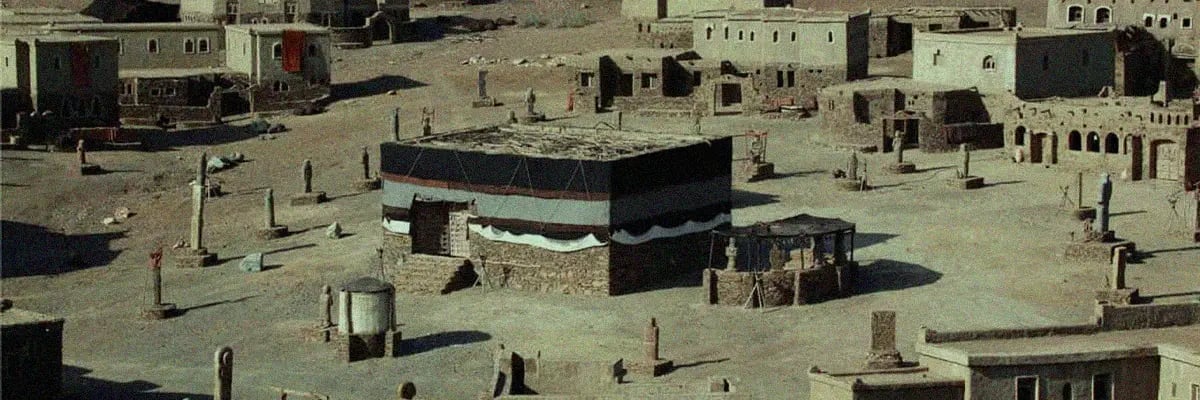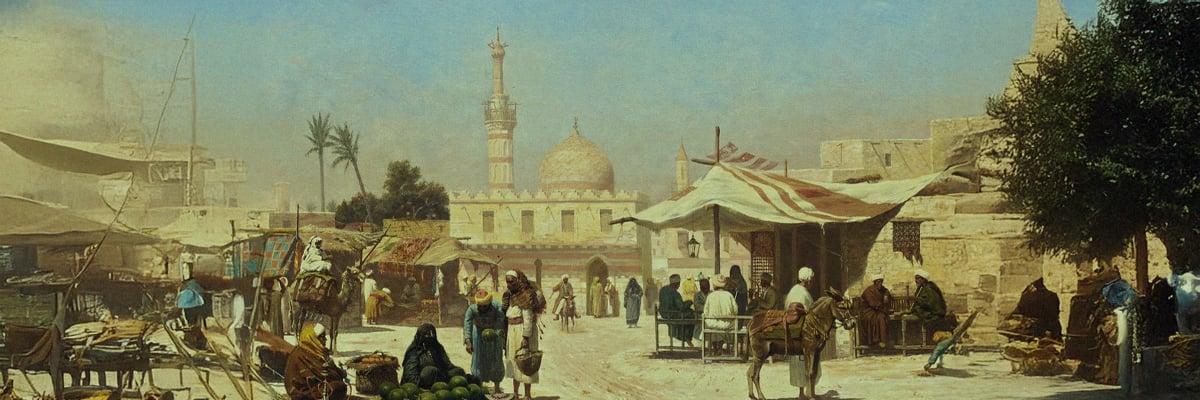

On the day the Final Messenger ﷺ was due to arrive in Madinah—then called Yathrib—all hearts in that part of the world were brimming with anticipation. The people had been waiting for this blessed moment with a love so deep and a loyalty so fierce that it defied all fear. Every morning, from the eldest elders to the youngest children, they gathered on the outskirts of the city, their gazes fixed on the horizon, hoping to be the first to catch sight of the beloved Prophet ﷺ. Whispers and prayers filled the air as they shielded their eyes from the sun, scanning every dusty road for any sign of his approach.
As the sun climbed higher, they would stay, bearing the scorching heat. For these devoted souls, the Prophet ﷺ wasn’t just a figure of spiritual guidance—he was the hope they had been waiting for, a light that would forever change their lives. Even the risk of displeasure from the Quraysh of Mecca, who had vowed to stop him, did not deter them. Their hearts were set; they were ready to defend him, even if it meant risking their own lives.
Finally, that long-awaited day arrived. As the Prophet ﷺ entered Yathrib, joy erupted across the city. Homes and streets filled with celebration as the people rejoiced, some singing songs of welcome and others crying tears of relief and gratitude. The children beat their daffs and sang:
"The full moon rose over us, from the valley of Wada’.
Grateful we must be, as long as one calls to Allah."
On that beautiful day, the people of Madinah felt as though the full moon had truly risen over their city. Their happiness knew no bounds. Children continued to play daffs and sang, joyously welcoming the Prophet ﷺ. Everyone longed to catch a glimpse of him, to touch him, to invite him into their homes, and to extend their hospitality to the one they had awaited with such love.
The city that had once been called Yathrib would now be known as Madinah al-Nabi—the City of the Prophet—a place transformed by his presence. In that radiant moment, Madinah welcomed the one they had been longing to see, ready to stand by him, ready to give everything to protect him and the message he carried.
******
Many people brought precious gifts to present to the Prophet ﷺ. Yet for Umm Sulaym, there was nothing she could offer but her love and devotion. She wondered to herself, “What could I possibly give to the Prophet ﷺ? I have nothing in my hands!”
After deep thought, she came up with an extraordinary gift. Taking the hand of her 10-year-old son, Anas, she approached the Prophet ﷺ and humbly offered her son’s service, saying, “Everyone is bringing you gifts of great value, but I have nothing else to give. All I have is this young son of mine. Please accept him as your servant. Let him assist you—whether fetching a toothbrush or carrying water for your needs.”
Thus began Anas's journey as a close servant and companion to the Prophet ﷺ, a relationship that would last for ten blessed years until the passing of the chosen one ﷺ.
Anas ibn Malik would later recount a cherished memory from his time with the Prophet ﷺ: “Once, as we walked through the streets of Madinah, a group of young girls from the Banu Najjar tribe began singing a joyful song. Their voices rose in a melody that filled the air:
"We are the girls from the tribe of Najjar,
What a joy to have Muhammad as our neighbor!"
The Prophet ﷺ smiled warmly at them, his face lit with affection. He reciprocated their love, saying, “Allah knows that I love you.” The girls’ delight was palpable, as if their song had been a gift returned by the most beloved of all. The joy and love he shared with them were a testament to his boundless compassion and his special way of connecting with people of all ages.
The beloved Messenger ﷺ made a special supplication for Anas, saying, “O Allah, grant him wealth, bless him with many children, and fill his life with barakah.” The Prophet’s ﷺ prayer was answered, as Anas lived over a hundred years and was blessed to see over a hundred descendants.
When asked about the Prophet’s ﷺ character, Anas would say, “I have never touched silk softer than the hand of the Prophet ﷺ, nor have I smelled a fragrance more beautiful than his. I have never met anyone in my life with a character more noble than his.”
He continued, “For ten years, I served the Prophet ﷺ. During that entire time, he never once spoke a harsh word to me. Not once did he ask, ‘Why did you do that?’ or ‘Why didn’t you do this?’ He was the most compassionate, the most open-hearted, and the kindest of souls.”
Anas would also recall how the Prophet ﷺ never looked at him with anger or reproach. “The Prophet ﷺ never scolded me, never hit me,” he said, reflecting on the Prophet’s ﷺ gentle nature.
Anas narrated another incident: “One day, the Prophet ﷺ sent me on an errand. On the way, I saw some children playing and stopped to watch them. While I was there, I forgot the task he’d given me. Soon enough, the Prophet ﷺ came up behind me, and I suddenly sensed someone standing there. Turning around, I saw him smiling at me. ‘Did you do what I asked, little Anas?’ he gently asked, addressing me as ‘Unais’—a term of endearment. Realizing my mistake, I quickly said, ‘Yes, I’ll go right now,’ and I rushed to complete the task.”
These stories reveal the unique way the Prophet ﷺ related to children. His kindness extended beyond the practical; it was a kindness that touched their hearts. Anas often recalled how the Prophet ﷺ would never pass by a child without greeting them, setting an example of respect and affection that was rare for his time.
The Prophet ﷺ had a remarkable bond with children, showing boundless compassion not only to older children but even to newborns. Anas recalled another unforgettable incident involving his mother, Umm Sulaym, shortly after she had given birth to a son.
It was the middle of the night when Umm Sulaym went into labor, assisted only by her husband, Abu Talha. When the baby boy’s cries finally broke the silence of the night, Umm Sulaym praised Allah for the safe birth. Yet, as much as her newborn needed nourishment, Umm Sulaym withheld nursing him. She was waiting for something greater, something she wanted for her son before anything else. She had decided that the baby’s first taste should be from the Prophet ﷺ himself.
At dawn, she entrusted Anas with this precious task. Handing him the baby and a few dates, she instructed, “Do not nurse him until he has been taken to the Prophet ﷺ. Carry him straight to the Prophet’s presence.”
Anas obediently set out, carrying his baby brother through the morning streets of Madinah. He found the Prophet ﷺ holding a small iron tool used for cupping therapy. Seeing Anas approach, the Prophet ﷺ immediately inquired, “Did Umm Sulaym have her child?” Anas nodded, and the Prophet ﷺ set aside what he was holding and took the baby gently into his lap.
“Do you have anything sweet with you?” he asked. Anas handed him the dates, which the Prophet ﷺ placed in his mouth, chewing until they softened. He then placed the chewed dates into the newborn’s mouth, initiating the child’s first taste. The baby instinctively sucked on the dates, and the Prophet ﷺ smiled, humorously remarking, “See how much the Ansar love dates!”
The Prophet ﷺ then caressed the child’s face and gave him the name “Abdullah.”
In that tender interaction, the Prophet ﷺ demonstrated his warmth and love for even the youngest members of the community. He did not rush or set aside the child for later, nor did he let the duties at hand take precedence. Instead, he embraced the moment fully, attending to the child’s needs with genuine care and even sharing a lighthearted joke about the Ansar’s love for dates. He welcomed the newborn, treating him as a beloved part of the Ansar, instilling a sense of belonging from the very beginning.
This simple act encapsulated the Prophet’s ﷺ profound humility and affection, where no one, not even a newborn, was overlooked.
Another tender moment Anas remembered was when a mother, Umm Qais, brought her young son, barely two years old, to the Prophet ﷺ. She placed her child in his lap, and the Prophet ﷺ welcomed him with a smile. Suddenly, the child urinated on him. Instead of showing any sign of frustration or discomfort, the Prophet ﷺ simply asked for water, gently rinsed his clothing, and continued to smile. No harsh words were spoken; there was only patience and gentleness. This simple act of tolerance and understanding demonstrated the deep kindness he held for every soul, no matter how young or small.
The Prophet ﷺ engaged with children in a way that acknowledged their feelings and concerns. One day, he saw a young boy named Abu Umayr looking sad and asked the boy’s mother, “Why does Abu Umayr seem down?” She explained that her son’s pet bird had died, leaving him heartbroken. Hearing this, the Prophet ﷺ went to Abu Umayr, sat beside him, and gently asked, “Abu Umayr, what happened to your little bird?”
This tender inquiry was not only a comfort but a way for Abu Umayr to share his sorrow, easing his pain in the presence of someone who truly cared. The Prophet’s ﷺ compassionate question created a space for the young boy to express his feelings, showing that even a child’s loss was worthy of attention. This small act of kindness, filled with empathy and understanding, reflected the Prophet’s ﷺ deep commitment to caring for all, regardless of age.
In the years that followed the Prophet’s ﷺ passing, Anas (RA) reflected on the impact of these small but profound moments. Each gesture, each word, and every smile from the Prophet ﷺ had left an indelible mark on his heart and on the hearts of those around him.
One day, Anas shared a heartfelt reflection, recalling the two most unforgettable days of his life: “I saw two days that will remain with me forever—the day the Prophet ﷺ arrived in Madinah and the day he left this world. No day was ever as radiant as the day of his arrival, nor as sorrowful as the day of his departure.”
Through these memories, Anas’s words preserved the legacy of the Prophet ﷺ, whose gentle compassion, boundless patience, and unwavering love continue to inspire hearts and illuminate lives to this day.