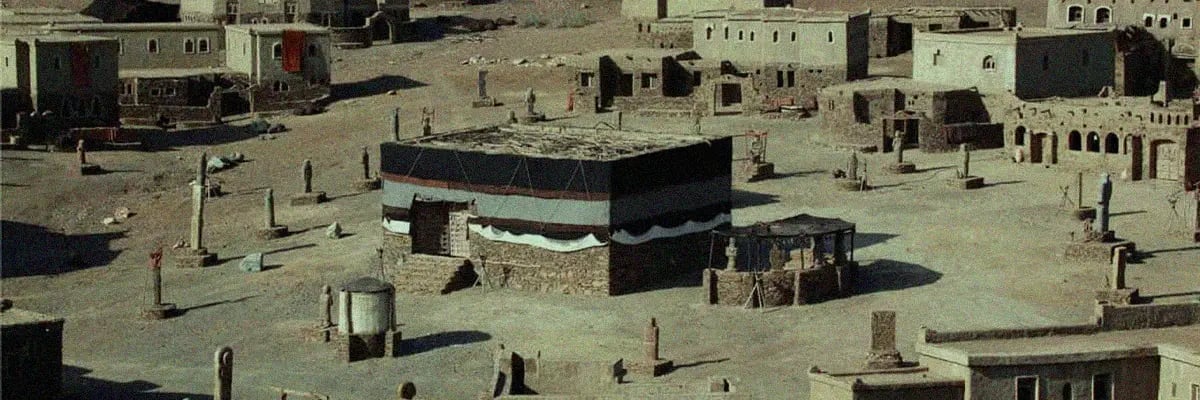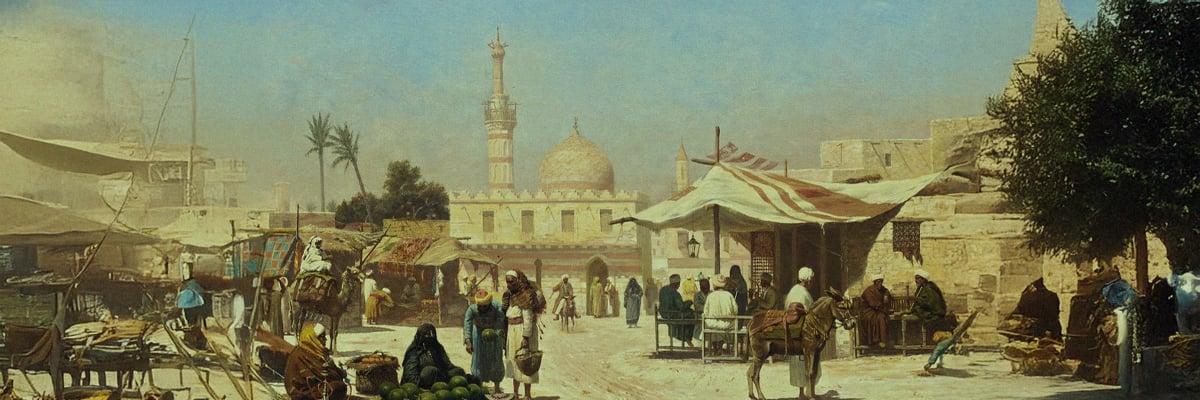

A man builds a house. Every detail is thoughtfully completed. Yet, one brick remains unlaid. Visitors admire the structure, marveling at its beauty, but their eyes keep returning to that single empty space. “If only this gap were filled,” they say, “the house would be perfect.”
The Prophet Muhammad ﷺ described himself through this vivid metaphor: “I am that last brick. I have come to complete the structure. Prophethood has now been perfected.”
With these words, the Prophet ﷺ conveyed the finality of prophethood, offering his followers a clear understanding of his role as the seal of the prophets. But this was more than just an explanation—it was a lesson in the art of teaching. Through metaphors, models, and diverse methods, the Prophet ﷺ exemplified the traits of an extraordinary and effective teacher.
Let us explore the teaching methods of the Prophet ﷺ, whose lessons remain timeless and transformative.
1. The Teacher as a Living Example
The Prophet ﷺ did not merely preach good character—he lived it. His entire life was his message, a radiant embodiment of the Quran. As his wife, Aisha (RA), beautifully described, “His character was the Quran.”
Unlike modern leaders who denounce corruption while indulging in it, the Prophet ﷺ led by example. His integrity, compassion, and humility inspired a generation and continue to illuminate lives today. He didn’t just tell people how to live; he showed them through his own actions.
2. Delivering Knowledge Through Lectures
Traditional lectures have been a cornerstone of teaching for centuries, and the Prophet ﷺ skillfully used this method. His sermons were often lengthy and profound, encompassing lessons about both the seen and unseen.
Amr ibn Akhtab (RA) recalled one such day:
“The Prophet ﷺ led us in the dawn prayer, ascended the pulpit, and began speaking. He continued until noon, paused to pray, and resumed speaking until the afternoon prayer. After that, he continued until sunset. He spoke of everything that had happened and everything that was yet to come. Those of us who remembered the most were those with the sharpest minds.”
(Sahih Muslim)
The depth of these lectures offered the companions a complete worldview, rooted in faith and awareness of the divine plan.
3. The Power of Questions
Great teachers provoke thought. The Prophet ﷺ frequently used questions to spark curiosity and encourage reflection.
One day, he asked his companions, “There is a tree whose leaves do not fall, and it resembles a Muslim. Can you name it?”
The companions pondered deeply, imagining rare and exotic trees. Young Abdullah ibn Umar (RA) thought of the date palm but hesitated to speak, feeling too young to contribute. When the Prophet ﷺ revealed the answer, the companions marveled at the simplicity and depth of the analogy.
Through this method, the Prophet ﷺ nurtured an environment of active learning, teaching his followers to think critically and engage deeply.
4. Visual Demonstrations
The Prophet ﷺ often illustrated his teachings with simple, impactful drawings.
In one instance, he drew a straight line in the sand and said, “This is the straight path.” Then, he drew smaller lines branching off to the right and left. “These are the paths of Satan,” he explained, reciting the verse:
"Indeed, this is My straight path, so follow it, and do not follow other ways, for they will separate you from His way."(Quran 6:153)
On another occasion, he drew a rectangle with a line extending beyond it and several smaller lines intersecting the central line. “The rectangle,” he explained, “represents a person’s lifespan. The line that extends beyond it is their desires, and the smaller lines are the trials and tribulations they face. If one trial misses, another will strike.”
These visual aids brought abstract concepts to life, making them tangible and unforgettable.
5. The Use of Parables
The Prophet ﷺ frequently used parables to convey profound truths.
Once, he compared a community to passengers on a ship. Some occupy the upper deck, while others are below. When those below need water, they go to the upper deck, inconveniencing the others. To avoid this, they suggest drilling a hole in their part of the ship. “If the people above allow this,” the Prophet ﷺ warned, “the entire ship will sink. But if they stop them, everyone will be saved.”
Through this story, he emphasized the collective responsibility to prevent harm and uphold justice, demonstrating how individual actions impact the whole community.
6. Learning Through Real-Life Models
The Prophet ﷺ often used real-life examples to make his teachings relatable and impactful.
One day, while walking through the marketplace, he noticed the carcass of a deformed goat with small ears lying discarded. Picking it up by its ear, he turned to his companions and asked, "Who among you would buy this for a dirham?"
The companions replied, "O Messenger of Allah, we wouldn’t take it even if it were free!"
The Prophet ﷺ asked again, "Would any of you desire it, even as a gift?"
They responded, "By Allah, even if it were alive, it would be considered defective because of its small ears. And now that it’s dead, it holds no value at all!"
The Prophet ﷺ then said, "By Allah, this world is even less valuable to Allah than this goat is to you."
This striking analogy powerfully conveyed the fleeting and insignificant nature of worldly possessions compared to the eternal hereafter, leaving an indelible impression on those who heard it.
7. The Messenger ﷺ as a Master Storyteller
The Messenger ﷺ often taught through stories, weaving profound lessons into narratives that resonated deeply with his listeners. These stories ranged from tales of prophets and past nations to animals, birds, angels, and even simple, everyday occurrences. While many were brief and concise, each carried a powerful moral, leaving an indelible impact on those who heard them.
Here, we recount two such stories, both brimming with wisdom and universal truths.
a. The Devout Man and the Sinner
Among the Children of Israel, there were two men: one devout and pious, the other a habitual sinner. The pious man constantly admonished his companion, urging him to abandon his sinful ways and turn to Allah.
One day, frustrated by the sinner’s persistent disobedience, the pious man exclaimed, “By Allah, He will never forgive you!” or, in another narration, “You will never enter Paradise!”
Time passed, and both men eventually died. They stood before Allah, the Most Just and Merciful. Turning to the pious man, Allah said:
"Who are you to decide what I will or will not forgive? Have I granted you authority over My mercy?"
Then, Allah forgave the sinner, who had sincerely repented, and admitted him into Paradise. The pious man, however, was punished for his arrogance and for presuming to limit Allah’s boundless mercy.
This story is a powerful reminder of the balance every believer must maintain: hope in Allah’s mercy and fear of His justice. It also teaches humility, cautioning us against passing judgment on others. Our role is not to condemn but to guide, leaving the ultimate judgment to Allah, whose mercy knows no bounds.
b. The Blessed Garden
The Prophet ﷺ narrated the story of a man walking through a barren desert. Suddenly, he heard a voice from the clouds, saying, “Water the garden of so-and-so.” The man was startled but followed the movement of the cloud.
The cloud traveled over a rocky plain and poured its rain over a specific area. The water collected into a stream and began flowing toward a garden. Intrigued, the man followed the stream until he reached the garden, where he found a farmer directing the water into his crops.
The traveler asked the farmer his name, and it was the same name he had heard from the cloud. Curious, he asked, “Why does Allah single out your garden for this blessing?”
The farmer replied, “Since you ask, I will tell you. I divide the produce of this garden into three parts. One third I use to support my family, one third I reinvest into the garden, and one third I give away in charity.”
Lessons from the Stories
These two stories, simple yet profound, carry timeless lessons:
The Boundlessness of Allah’s Mercy
The first story teaches us that Allah’s mercy is infinite and beyond human comprehension. It cautions against arrogance and judgmental behavior, reminding us that Allah’s grace can reach even those we might deem unworthy.
The Barakah (Blessing) of Charity
The second story highlights the extraordinary blessings that flow from a generous heart. The farmer’s balance of sustenance, reinvestment, and charity exemplifies a life aligned with divine principles, showing how acts of giving can invite heavenly favor.
These narratives, delivered in the Prophet’s ﷺ incomparable style, remain as relevant today as they were over 1,400 years ago. They remind us to embody humility, nurture compassion, and strive for balance in our spiritual and worldly lives. In a world often driven by judgment and greed, the lessons of these stories shine like beacons, guiding us toward a life of purpose and divine connection.
In Conclusion: A Timeless Model for Humanity
The Prophet ﷺ was sent, as he himself said, to perfect noble character. His teachings are not relics of the past but living lessons, relevant to every age.
Today, as education becomes increasingly commodified, focusing on material success rather than moral growth, the Prophetic model serves as a beacon of hope. His approach nurtured not only minds but also hearts, fostering a holistic development that modern education often overlooks.
In the Prophet’s school, the teacher was not merely an instructor but a guide, a companion, and a source of solace. His lessons extended beyond the classroom, shaping lives in moments of joy and sorrow, in times of ease and hardship, and across the realms of life and death.
The teaching methods of the Prophet Muhammad ﷺ remain a timeless treasure, reminding us that true education is not just about acquiring knowledge but about cultivating character, compassion, and a connection with the Divine. Let us draw from this legacy and strive to embody its principles in our lives, for in doing so, we follow the path of the most perfect teacher.