
Surah al-ʿAlaq, the ninety-sixth chapter of the Qur’an, begins with the very first verses revealed to the Prophet Muhammad ﷺ. They were sent down while he sat in deep meditation in the Cave of Ḥirā’, at the very threshold of his prophethood. The chapter is named after a word that appears in its second verse—ʿalaq, which, in Arabic, denotes something that clings. It also evokes an image far more visceral and unexpected: that of a leech.
Strangely yet wondrously, the first creature ever referenced in the Qur’an is a leech. The name of the chapter itself, al-ʿAlaq, comes from this term, mentioned in the second verse. And with that, one might say: the first Qur’anic reference to a living being, and the name of the first revealed surah, is the leech.
Let us now return to those opening verses:
ٱقْرَأْ بِٱسْمِ رَبِّكَ ٱلَّذِي خَلَقَ. خَلَقَ ٱلْإِنسَـٰنَ مِنْ عَلَقٍ . ٱقْرَأْ وَرَبُّكَ ٱلْأَكْرَمُ. ٱلَّذِي عَلَّمَ بِٱلْقَلَمِ. عَلَّمَ ٱلْإِنسَـٰنَ مَا لَمْ يَعْلَمْ (Surah al-ʿAlaq: 1–5)
Recite in the Name of your Lord who created.
Created man from ʿalaq.
Recite, and your Lord is the Most Generous—
He who taught by the pen—
Taught man what he never knew.
Naturally, the verse “خَلَقَ ٱلْإِنسَـٰنَ مِنْ عَلَقٍ”—“He created man from ʿalaq”—has provoked questions: does this mean man was created from a leech? Some have mocked this notion. Others asked sincerely. And still others, after years of study, found that modern scientific discoveries gave this word a clarity they could never have imagined.
The Qur’an speaks of this embryonic stage repeatedly, in other surahs as well. In Surah Ghāfir, verse 67, Allah states:
هُوَ ٱلَّذِى خَلَقَكُم مِّن تُرَابٍۢ ثُمَّ مِن نُّطْفَةٍۢ ثُمَّ مِنْ عَلَقَةٍۢ ثُمَّ يُخْرِجُكُمْ طِفْلًۭا (Surah Ghāfir: 67)
He is the One who created you from dust, then from a sperm-drop, then from ʿalaq, then He brings you forth as an infant. And in Surah al-Muʾminūn, the verse unfolds the stages even more elaborately:
ثُمَّ خَلَقْنَا ٱلنُّطْفَةَ عَلَقَةًۭ فَخَلَقْنَا ٱلْعَلَقَةَ مُضْغَةًۭ فَخَلَقْنَا ٱلْمُضْغَةَ عِظَـٰمًۭا فَكَسَوْنَا ٱلْعِظَـٰمَ لَحْمًۭا ثُمَّ أَنشَأْنَـٰهُ خَلْقًا ءَاخَرَ ۚ فَتَبَارَكَ ٱللَّهُ أَحْسَنُ ٱلْخَـٰلِقِينَ (Surah al-Muʾminūn: 14)
Then We created the sperm-drop into ʿalaq, then We made the ʿalaq into a chewed lump, then We made the lump into bones, then We clothed the bones with flesh. Then We brought it forth as a new creation. So blessed is Allah, the best of creators.
The term ʿalaq, which classical scholars often translated as “a clinging blood clot,” seemed in earlier centuries to be an evocative metaphor. But modern embryologists discovered that the term has literal, not merely poetic, accuracy. The embryo at this stage does indeed resemble a clot in its blood-rich stillness, but it also behaves—remarkably—like a leech.
It clings to the mother’s uterus. It draws blood. It is nourished by another body. And in structure and shape, it mirrors the form of a leech.
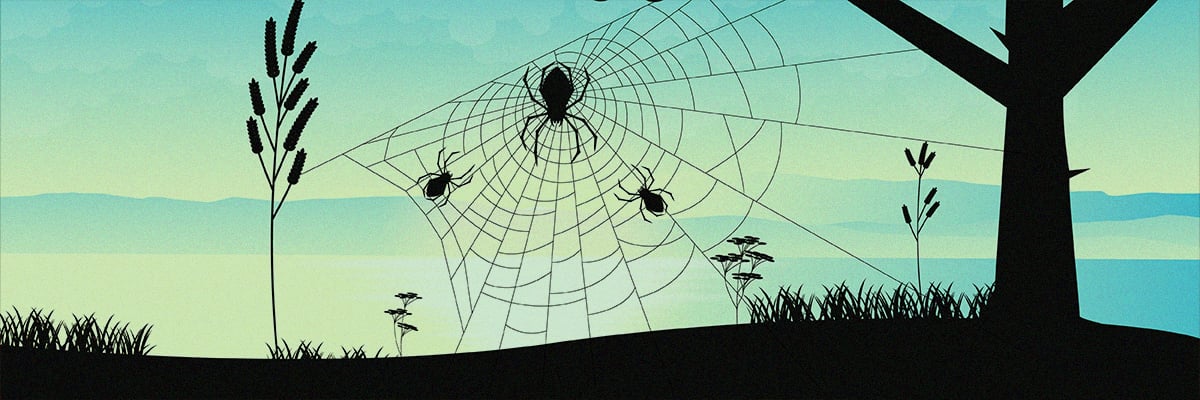
Leeches belong to the class Hirudinea, part of the phylum Annelida. Most are freshwater dwellers, though some live in moist soil or the sea. There are over six hundred known species. A leech’s body is composed of thirty-three internal segments. These segments appear externally as multiple rings—giving it the appearance of having over a hundred rings. Its body is soft, expandable, and varies in color: green, black, or brown, with striking patterns. Leeches attach to their hosts using suckers; though they have suckers on both ends, only the front has jaws designed to pierce skin. After attaching, the leech secretes hirudin, a substance that prevents the host’s blood from clotting. Other chemicals in its saliva cause numbness and dilation of blood vessels, allowing blood to flow easily.
Astonishingly, the leech can consume blood up to ten times its body weight and store it in a special pouch inside its body, where it digests it slowly—sometimes over a year. It does not require food again during that entire period. Its bite is painless; its host often only realizes it has been attacked after blood loss has occurred.
All of these features—attachment, dependency, blood consumption, storage, and growth—are present in the early human embryo. These parallels fascinated Dr. Keith Moore, an anatomist at the University of Toronto, who worked with the Embryology Committee of King Abdulaziz University in Saudi Arabia. In his co-authored textbook The Developing Human, published with Islamic additions in 1983, he remarked:
“For the past three years, I have worked with the Embryology Committee of King Abdulaziz University in Jeddah, Saudi Arabia, helping them reinterpret the many statements in the Qur’an… referring to human reproduction and prenatal development. At first, I was astonished by the accuracy of the statements that were recorded in the 7th century AD, before the science of embryology was established.”
In that same work, he included visual comparisons of the leech and the embryo, noting the startling similarities. Further studies showed that the embryo—at the stage called the blastocyst—travels to the uterus about five days after fertilization. For a short time, it floats freely. Then, it begins to attach to the uterine lining. This implantation process marks the ʿalaq stage, the “clinging” stage. Finger-like projections from the embryo anchor it to the uterine wall. These projections develop into what becomes the placenta. Thus begins a series of intimate biological adhesions.
Dr. Muhammad Ali al-Bar, an eminent scholar in Islamic medical ethics, explains in his book Embryology in the Qur’an and Sunnah that ʿalaq is the most precise word to describe this stage. The blastocyst adheres to the uterine wall in three distinct ways: the embryo clings, its surrounding membranes invade the uterine lining, and its roots burrow in to draw nourishment. The word ʿalaq encompasses all these ideas—attachment, suspension, and absorption.
Yet this modern insight does not nullify the earlier meaning. The embryo is indeed blood-rich during this phase. As Imam al-Qurṭubī explained, ʿalaq as “clotted blood” is apt because the embryo appears still, saturated, and suspended. Modern science simply widens our view. It does not contradict—it completes.
But why does the Qur’an, in its first revelation, mention ʿalaq alone? And why does it use the plural form ʿalaqīn here, when all other instances use the singular?
Elsewhere, the Qur’an outlines multiple stages of creation—nine in total: water, dust, sperm-drop, mingled fluids, clinging clot, chewed-like lump, bones, flesh, and then the ensoulment. But in this first descent, ʿalaq alone is named. Perhaps it is because this stage represents the beginning of real connection—of life attaching to life. The embryo becomes more than a cell; it becomes a dependent being. It becomes something that clings—that needs. It is at this moment that the story of human fragility and divine generosity truly begins.
The plural form may reflect the multiple dimensions of attachment—physical, emotional, spiritual. It may also reflect the multiple layers of meaning in the word itself.
For ʿalaq is a word of immense richness in Arabic. It can mean: a clot, an attachment, a bond, something beloved, something clung to, or a pregnancy itself. It signifies longing, desire, love—and also blood, dependence, and growth. It captures both the emotional intimacy between lovers and the biological adhesion of embryo to womb.
The human being begins with desire. From that desire comes physical union. From union comes fertilization. From fertilization, a clinging organism. From a clinging organism, a fully formed human being. And through every stage, there is ʿalaq—clinging, connecting, becoming.
And thus, the word is not trivial. It is not simple. It is vast. It speaks of biology and longing, of physiology and love, of creation and mercy. In every stage of the embryo’s development, there is some form of clinging, and thus the word ʿalaq—in plural—becomes not only appropriate but inevitable.
In the end, a single word—ʿalaq—carries us through entire worlds. From clay to conception, from leech to life, from blood to soul. The journey of the embryo is the journey of man. The creature that clings is no minor detail. It is the very emblem of dependency, vulnerability, and divine design.
The leech in the Qur’an is no ordinary creature. And the human being, who begins his life as ʿalaq, is not just a product of nature—but a miracle, a mercy, and a sign.