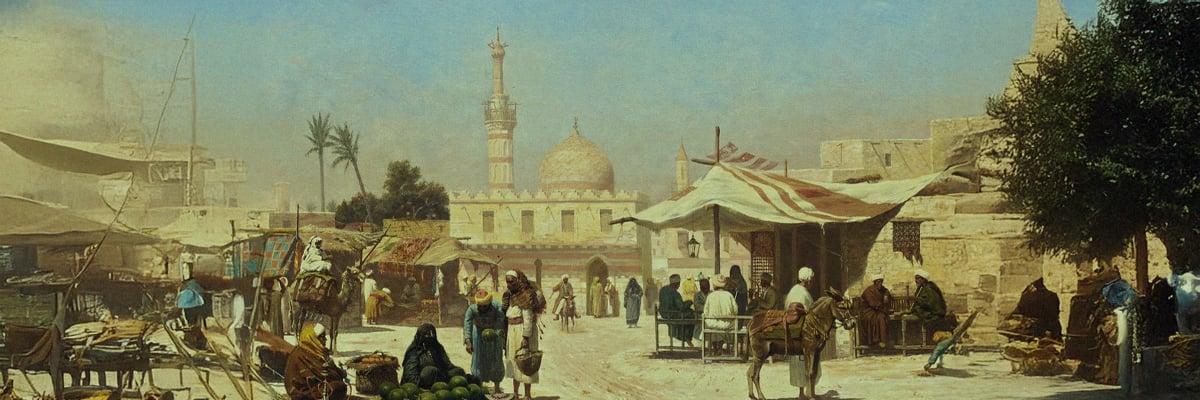

It was midday in Medina, and the scorching sun hung over the city like a relentless overseer. The streets were silent, save for the occasional rustling of leaves as a dry breeze swept through. It was on such a day, with hunger gnawing at his stomach, that the Prophet Muhammad ﷺ left his home. His footsteps were light yet deliberate, echoing in the empty streets. His was not the walk of a man searching for food but of someone drawn to the needs of others, as if hunger itself sought solace in his company.
As he walked, he noticed a familiar figure leaning against a wall, his face etched with quiet despair. It was Abu Bakr (RA), his closest companion. The Prophet ﷺ approached him, his voice soft yet knowing: “What brings you out at this hour?”
“Hunger,” Abu Bakr confessed. The word hung heavy between them, but before the silence could deepen, another figure appeared in the distance. It was Umar (RA), his gait weary, his face mirroring the same struggle.
“And you, Umar? What brings you here?”
“By Allah, it is hunger that has driven me out,” Umar replied.
The Prophet ﷺ nodded, his own hunger unspoken but evident in his gaze. “I, too, have left my home for the same reason,” he admitted, his words not a complaint but an acknowledgment of shared vulnerability. Together, the three men walked in search of sustenance—not just to fill their stomachs but to find the warmth of companionship and the solace of mutual care.
Their steps eventually led them to the home of Abu al-Haytham, an Ansari companion known for his generosity. The house was modest but welcoming, its walls adorned with the quiet dignity of a man who lived simply yet abundantly. Abu al-Haytham’s wife greeted them at the door with a mixture of surprise and joy. “My husband has gone to fetch water,” she informed them, ushering them inside with warm insistence.
When Abu al-Haytham returned, carrying water from the well, his face lit up at the sight of his honored guests. His joy knew no bounds. He expressed an unwavering readiness to offer them anything they desired. Without hesitation, he invited them to sit beneath the shade of a date palm in his garden. The Prophet ﷺ, ever mindful of his host’s means, spoke gently: “We do not wish to burden you.”
Abu al-Haytham’s response was resolute. “What greater honor is there than to serve you? No one on this earth could have more distinguished guests than I have today.” He climbed the palm tree himself, plucking the ripest dates—some golden with ripeness, others still young and firm—and laid them before his guests. “Eat of these,” he said, “whatever pleases you.”
The Prophet ﷺ, Abu Bakr, and Umar ate in silence, savoring the cool water and sweet fruit. At that moment, the Prophet ﷺ spoke, his voice reflective: “Cool shade, pure water, and sweet fruits. On the Day of Judgment, Allah will ask us about these blessings.”
Abu al-Haytham then disappeared momentarily, returning with a young goat he intended to prepare for them. Seeing this, the Prophet ﷺ gently advised, “Do not slaughter one that gives milk.” Abu al-Haytham smiled, nodding in understanding, and proceeded to prepare a meal from another goat. Together, they sat and ate, their hunger replaced by gratitude and camaraderie.
When the companions had finished their meal and their hunger was finally sated, the Prophet ﷺ turned to them and said:
“You left your homes with empty stomachs, driven by hunger, and now you return having experienced great blessings. Indeed, you will be questioned on the Day of Judgment about these blessings.”
As they rested, the Prophet ﷺ observed how Abu al-Haytham personally managed every chore in his household. Concerned for his well-being, he gently asked, “Do you not have a servant to help you?”
Abu al-Haytham humbly replied, “No, I don’t.”
The Prophet ﷺ, always mindful of his companions’ needs, reassured him, “When captives come to us, return, and I will provide you with a servant.”
Later, when two captives were brought to the Prophet ﷺ, he summoned Abu al-Haytham and said, “Choose one of these for yourself.”
Abu al-Haytham, out of respect, said, “You choose for me, O Messenger of Allah.”
The Prophet ﷺ, recognizing the piety and devotion of one of the captives, said, “Take this one. I have observed his prayers, and he is a God-fearing man.” Before sending them off, the Prophet ﷺ added, “Treat him well.”
Abu al-Haytham brought the servant home and relayed the entire incident to his wife. She listened carefully and then said, “The Prophet ﷺ has instructed you to treat him well. The only way to truly fulfill his words is to set him free.”
Without hesitation, Abu al-Haytham freed the servant, honoring the Prophet’s ﷺ guidance and embodying the spirit of generosity and justice that Islam teaches.
Such was the way of the Prophet ﷺ—always giving more than he received, uplifting those around him, and embodying gratitude while constantly reminding others to be grateful.
The Miraculous Host
During one of the most pivotal moments in Islamic history—the Battle of the Trench—the Prophet ﷺ and his companions labored tirelessly to dig a defensive trench around Medina. This was no ordinary task; it was a critical juncture where their unity, perseverance, and unwavering faith were tested against overwhelming odds. Facing a coalition of over 10,000 allied forces from the Quraysh and other tribes, vastly outnumbering the Muslim defenders, the situation was dire. To make matters worse, it was a harsh winter, and the companions were weakened by days of hunger and fatigue. Each of them, driven by sheer determination, tied a stone to their stomach to suppress the gnawing pangs of hunger. The Prophet ﷺ, sharing in their hardship, tied two stones to his stomach—a profound testament to his resilience, empathy, and unshakable leadership in the face of adversity.
In the midst of this, Jabir (RA) quietly approached the Prophet ﷺ and whispered, “O Messenger of Allah, I have a small amount of food at home—enough for you and a few others. Please come and be my guest.”
The Prophet ﷺ asked, “What do you have?”
Jabir replied, “We have slaughtered a small animal, and we have about two to three kilograms of barley to make some bread.”
The Prophet ﷺ smiled and said, “That is more than enough.” He then turned to the companions working tirelessly around him and invited all of them to join.
Jabir, taken aback, watched as the Prophet ﷺ instructed, “Do not remove the pot from the fire or the bread from the oven until I arrive.”
When they reached Jabir’s house, the Prophet ﷺ went straight to the kitchen, overseeing the preparation personally. By then, hundreds—if not thousands—of companions had already arrived, with many others still on their way. The humble home of Jabir (RA) became the gathering place for a multitude of hungry hearts, each trusting in the Prophet ﷺ’s promise and the blessings of Allah. Each one of them was now an honored guest of the Prophet ﷺ himself, and their hospitality became his responsibility.
Despite the food being intended for only a few, the Prophet ﷺ managed the servings himself. He cut the bread and poured the stew, ensuring every single companion was served. One by one, they ate to their fill, yet miraculously, the food remained sufficient. Even after everyone had eaten, there was still food left over.
Turning to Jabir’s family, the Prophet ﷺ said, “Take the remaining food and share it with your neighbors. It is a time of hardship.”
The miracle was not just in the multiplication of sustenance but in the spirit of shared generosity and trust, exemplified time and again in the life of the Prophet ﷺ.
Abu Huraira and the Milk of Barakah
One of the most poignant examples of the spirit of shared generosity, unwavering trust, and profound empathy that defined the life of the Prophet ﷺ is masterfully recounted by Abu Huraira (RA). Through his vivid storytelling, he not only preserves the details of the incident but also reveals the miraculous nature of the event, where a single bowl of milk satisfied an entire group, embodying the barakah (blessing) that accompanied the Prophet ﷺ in every aspect of his life.
He narrated:
“By Allah, except Whom none has the right to be worshipped, (sometimes) I used to sleep on the ground on my liver (abdomen) because of hunger, and (sometimes) I used to bind a stone over my belly because of hunger. One day I sat by the way from where they (the Prophet ﷺ and his companions) used to come out. When Abu Bakr passed by, I asked him about a verse from Allah's Book, but my real intention was that he might satisfy my hunger. However, he passed by without understanding my need. Then `Umar passed by, and I asked him about a verse from Allah's Book, hoping he would notice my condition, but he too passed by without doing so.
Finally, Abu-l-Qasim (the Prophet ﷺ) passed by me, and he smiled when he saw me, for he knew what was in my heart and on my face. He said, ‘O Aba Hirr!’ I replied, ‘Labbaik, O Allah's Messenger ﷺ!’ He said to me, ‘Follow me.’ I followed him until we entered his house, and I was granted permission to enter. Inside, he found a bowl of milk and asked, ‘From where is this milk?’ The people of the house replied, ‘It was gifted to you by such-and-such person.’
The Prophet ﷺ then said, ‘O Aba Hirr!’ I replied, ‘Labbaik, O Allah's Messenger ﷺ!’ He said, ‘Go and call the people of Suffa.’
The people of Suffa were the guests of Islam—men who had no families, no wealth, and no means of sustenance. They relied on the charity of the Muslim community, and whenever food or gifts were brought to the Prophet ﷺ, he would prioritize them over himself.
The Prophet’s ﷺ command upset me. I thought to myself, ‘How will this little milk be enough for the people of Suffa? I, who am hungrier than all of them, am more entitled to drink from this milk to strengthen myself!’ Still, I could not disobey Allah’s Messenger ﷺ, so I went and called the people of Suffa. They came, asked permission, entered, and took their seats in the house.
The Prophet ﷺ said, ‘O Aba Hirr!’ I replied, ‘Labbaik, O Allah's Messenger ﷺ!’ He said, ‘Take it and give it to them.’
I took the bowl, and, one by one, each man drank his fill and handed it back to me. I continued serving until all of them had drunk to their satisfaction. By the time the last man finished, I looked at the bowl and found that it was still full.
The Prophet ﷺ then smiled at me and said, ‘O Aba Hirr!’ I replied, ‘Labbaik, O Allah's Messenger ﷺ!’ He said, ‘Now, it is just you and me.’ I said, ‘You have spoken the truth, O Allah's Messenger ﷺ.’ He said, ‘Sit and drink.’
I sat down and drank. He kept telling me, ‘Drink,’ and I kept drinking until I said, ‘No, by Allah Who sent you with the Truth, I can drink no more.’ The Prophet ﷺ then took the bowl, praised Allah, and drank the remaining milk.”
This masterful storytelling by Abu Huraira (RA) reflects not only the miracle of the milk but also the profound empathy, care, and hospitality of the Prophet ﷺ. He taught through action that even in moments of personal hunger, the needs of others come first. His smile, his understanding of Abu Huraira’s silent plea, and his insistence that everyone be satisfied before himself are a testament to his unmatched character. This is not just a story of milk; it is a story of generosity, faith, and the trust that sustenance, when shared, brings barakah (blessing).
The Grace of Gratitude
In every instance, the Prophet ﷺ transformed simple acts of eating and hosting into profound moments of spiritual reflection. He elevated small blessings—shade, water, dates—into reminders of Allah’s grace. “Even for these, we will be questioned,” he would say, not to instill fear but to nurture mindfulness and gratitude.
But his hospitality was never one-sided. When Abu al-Haytham admitted he had no servant to help with the household chores, the Prophet ﷺ promised, “When captives are brought to us, come, and I will give you a servant.” True to his word, the Prophet ﷺ later called Abu al-Haytham and offered him a choice of two servants. Abu al-Haytham hesitated, unsure of his decision. “Choose the one you feel is best,” he asked the Prophet ﷺ.
“This one,” the Prophet ﷺ said, gesturing to a young man. “I have seen his devotion in prayer.” Before they parted, the Prophet ﷺ added, “Treat him well.” Abu al-Haytham and his wife later freed the servant, understanding that true generosity lies not in ownership but in liberation.
The Heart of a Prophet
The Prophet ﷺ’s life was an intricate mosaic of humility, gratitude, and care for others. Whether hungry himself or comforting the hunger of his companions, he exemplified a leadership rooted in service. He sought out solutions that spared others discomfort, honored the smallest acts of kindness, and reminded all who met him that every blessing, no matter how small, was a trust from Allah.
In a world often defined by excess, his life calls us back to simplicity—a life where cool shade, pure water, and sweet fruit are enough to remind us of divine abundance and our shared humanity. This was the Prophet ﷺ: a man who never turned away a guest, never burdened a host, and always taught that the true feast lies in the company of kindred spirits and the grace of gratitude.