In the Name of Allah.
By decree of the leaders of Quraysh, let it be known to the clans of Banu Hashim and Banu Muttalib:
From this day forth, all ties and associations with you are severed. No marriage shall be made, no trade conducted, and no words exchanged. Let no provision, sale, or gift pass between us. You are forbidden any alliance, protection, or support within Makkah.
Any who aid or stand by you shall bear the wrath of Quraysh. This boycott shall not be lifted until you surrender Muhammad to us, ending your protection of him.
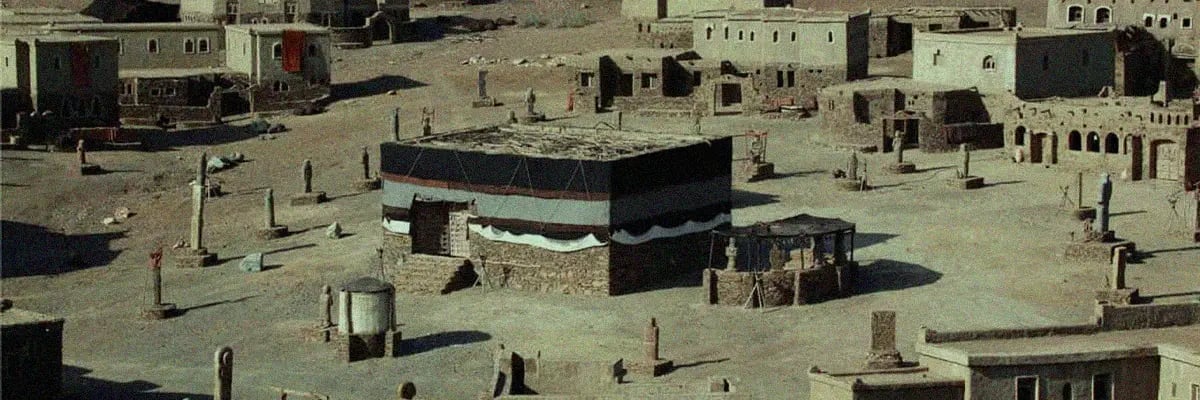
This decree is written and displayed within the Kaaba, to be seen and obeyed by all.
The weathered parchment hung ominously within the sacred walls of the Kaaba, its inscribed words casting a shadow over Makkah. The Quraysh leaders, in their desperation to silence the Prophet ﷺ and his message, had etched a cruel decree on this very document—a pact that demanded the isolation and starvation of Banu Hashim and Banu Muttalib. Families, children, and elders were to be cut off from the lifeblood of the city, denied even the most basic acts of kinship, trade, or mercy.
As the sun rose each day, the sight of that parchment reminded the people of Makkah of the Quraysh’s unrelenting stance. It was an emblem of cruelty displayed at the heart of their holiest site, where once sacredness had unified them but now symbolized a ruthless divide. With every gaze upon it, they were reminded of the pact’s intent: to crush the spirits of the Muslims by any means necessary, forcing them into submission or betrayal.
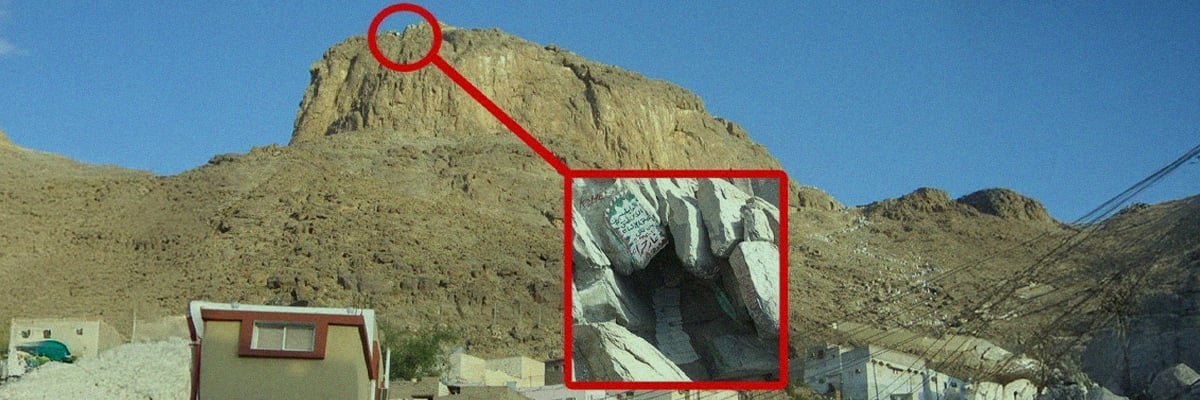
In the narrow ravine of Shi'b Abi Talib[1], hemmed in by the mountains, the Prophet ﷺ and his followers faced the bleak reality of the decree’s consequences. With food supplies dwindling and hope beginning to fray, their faith was their only sustenance. The cries of hungry children echoed through the night, punctuating the silence with reminders of their collective suffering. Yet, even as mothers held starving infants in their arms, the siege did not break them. Against the backdrop of starvation and despair, small acts of defiance and mercy flickered, as sympathetic Makkans risked everything to smuggle food past the Quraysh guards.
In the darkest moments, they held fast to one truth: that no parchment, no decree etched by human hands, could override the will of Allah. This faith would become their shield, and in time, even members of the Quraysh would be moved to defy the brutal pact. As cracks began to form within the Quraysh ranks, whispers of conscience and compassion emerged, threatening to dismantle the cruel pact written within the walls of the Kaaba.
Throughout this time, the Prophet ﷺ stood as a pillar of strength among them. His beloved wife, Khadijah, once one of the wealthiest women in Makkah, now shared the same bitter fate. She had sacrificed her wealth for the mission of Islam, and now, weakened and frail, she bore the weight of the siege with quiet dignity. Her nephew, Hakeem ibn Hizam, risked his life to smuggle food to her, only to be intercepted by Abu Jahl, who thundered with anger upon discovering his act of compassion.
"How dare you bring aid to these rebels?" Abu Jahl sneered, his voice a sharp crack in the dusty air.
But before Abu Jahl could seize Hakeem, Abu al-Bukhtari stepped in, blocking his path. "Enough, Abul Hakam," he said firmly. "Will you deny a woman her right to food?"
Small acts of mercy slipped through the cracks of cruelty, but they were rare and dangerous. As the months turned into years, the faithful found strength in each other and in their shared suffering. Abu Talib, the Prophet’s ﷺ uncle, grew watchful, fearing for his nephew’s life. Each night, he would move the Prophet ﷺ to a new shelter within the camp, his vigilant eyes scanning the darkness for any sign of an approaching assassin. It was a testament to his loyalty and his unconditional love for his nephew, whom he protected as though guarding the very light of their faith.
Even in the sacred months, when fighting was forbidden, the Quraysh found ways to deepen the siege's cruelty. Prices soared, and for the besieged, the simplest provisions became unreachable luxuries. Each trip out of the ravine brought a fresh sting of despair, as traders inflated their prices, forcing the starving Muslims to return empty-handed.
"They are determined to break us," Abu Talib murmured one night, looking at the Prophet ﷺ with a sorrowful pride. "But they do not know our resolve."
The cruelty of the boycott began to weigh on the hearts of a few members of the Quraysh, whose consciences stirred with shame at the suffering inflicted upon their kin. Hisham ibn Amr could bear it no longer. Gathering a few allies, he whispered in the shadows, "Our own kin starve in the mountains while we feast. How long will we stand by?"
He approached Suhayl ibn Amr and Mut’im ibn Adiy, urging them to rise against the pact. Soon, these whispers grew into bold words of dissent. One morning, Suhayl ibn Amr, dressed in his finest robes, approached the Kaaba. With a voice that cut through the morning air, he declared, "People of Makkah, we eat and drink while our own kin suffer. This cruelty must end."
Abu Jahl leapt forward, shouting, "You would break the pact?"
But one by one, Suhayl’s allies stepped forth. Mut’im, Hisham, Abu al-Bukhtari—all denounced the boycott with the resolve that comes only from witnessing prolonged suffering. They raised their voices against the pact that hung within the Kaaba, chipping away at the foundation of cruelty with each word.
News of their defiance reached Abu Talib, and he seized the moment. Facing the Quraysh, he declared that the Prophet ﷺ had received revelation: the parchment in the Kaaba had been destroyed by termites, sparing only the words “In the Name of Allah.” Abu Talib’s voice rang with conviction. "Examine it yourselves," he challenged. "If Muhammad ﷺ speaks falsehood, you may take him. But if his words are true, this boycott must end."
When the Quraysh elders examined the parchment, their faces paled—the Prophet ﷺ had spoken truth. The words of Allah alone remained, untouched by time or decay. And so, the boycott was lifted. Weakened and hollow-eyed, the Muslims emerged from the ravine, their bodies marked by hunger but their spirits unbroken.
The Quraysh, stunned by this profound sign, resorted to their usual tactics, dismissively saying, “Muhammad is nothing more than a skilled magician.”
Regarding this, the Qur’an says:
"And if they see a sign, they turn away and say, 'An ongoing magic.'”
— [Surah Al-Qamar: 2]
No matter what signs they witnessed, they would turn away and dismiss it as continuous magic.
Years later, when the Prophet ﷺ returned to Makkah in triumph, he forgave those who had once driven him to the edge of starvation, fulfilling his mission of mercy. Despite years of persecution, he offered compassion, setting an enduring example of unbreakable grace—one that continues to shine as a guiding light for generations.