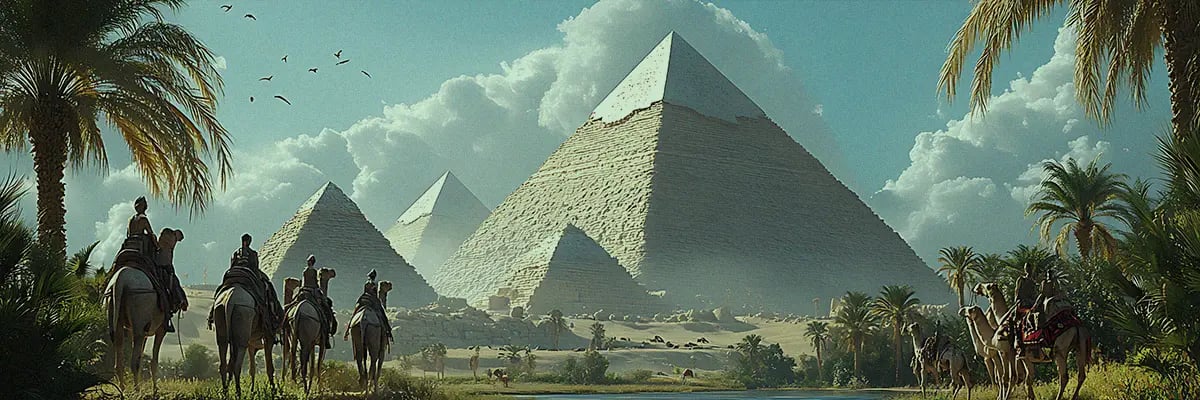

When the Qur’an speaks about the earth, it often pauses to reflect on a recurring theme — how the once-dead earth is brought back to life. These reflections usually appear in response to the questions of polytheists about how the dead will be resurrected, or during the Qur’an’s affirmations of the afterlife, or its proclamations of the Creator’s grandeur. As we recite these verses, it feels as though we are journeying through a region resplendent with natural beauty, rich in subtle variations of colour and rhythm.
Let us begin with Sūrat Yā-Sīn, where Allah says:
﴿وَآيَةٌۭ لَّهُمُ ٱلْأَرْضُ ٱلْمَيْتَةُ أَحْيَيْنَـٰهَا وَأَخْرَجْنَا مِنْهَا حَبًّۭا فَمِنْهُ يَأْكُلُونَ ٣٣ وَجَعَلْنَا فِيهَا جَنَّـٰتٍۢ مِّن نَّخِيلٍۢ وَأَعْنَـٰبٍۢ وَفَجَّرْنَا فِيهَا مِنَ ٱلْعُيُونِ ٣٤ لِيَأْكُلُوا۟ مِن ثَمَرِهِۦ وَمَا عَمِلَتْهُ أَيْدِيهِمْ ۖ أَفَلَا يَشْكُرُونَ ٣٥ سُبْحَـٰنَ ٱلَّذِى خَلَقَ ٱلْأَزْوَٰجَ كُلَّهَا مِمَّا تُنۢبِتُ ٱلْأَرْضُ وَمِنْ أَنفُسِهِمْ وَمِمَّا لَا يَعْلَمُونَ ٣٦ وَءَايَةٌۭ لَّهُمُ ٱلَّيْلُ نَسْلَخُ مِنْهُ ٱلنَّهَارَ فَإِذَا هُم مُّظْلِمُونَ ٣٧﴾
And a sign for them is the dead earth — We gave it life, and We brought forth from it grain, and from it they eat. And We made therein gardens of date palms and grapevines, and We caused springs to gush forth in it. So that they may eat of its fruits — and it was not their hands that made it. Will they not give thanks? Glory be to the One who created all pairs — from what the earth grows, from themselves, and from what they do not know. And a sign for them is the night — We strip it from the day, and behold, they are in darkness. (Sūrat Yā-Sīn, 36:33–37)
To truly feel the meaning of these verses, one might take a journey through the winding mountain paths of Wayanad in South India on a hot, dry day. One side of the road is edged with rugged peaks, the other opens into steep gorges. Trees stand bare, hills lie parched, and the silence is broken neither by running brooks nor birdsong. It is a landscape of stillness, of lifelessness.
Now take the same road again, but this time after the monsoon — when the skies have burst open, and the earth has drunk its fill. From the ninth curve on the ghat road, look down and you will see a transformed world. Where once there was dust, now trees have risen in splendour. Flowers bloom in every shade. Streams laugh as they leap from rock to rock. Waterfalls roar in ecstasy. Birds sing again. The entire scene pulses with life and motion.
This is one of the many moments when the Qur’an enters the heart of the believer. Yā-Sīn brings him to submission. Sūrat al-Nabaʾ fills him with awe. Sūrat ʿAbasa leaves him astonished.
In Sūrat al-Nabaʾ, Allah asks:
﴿أَلَمْ نَجْعَلِ ٱلْأَرْضَ مِهَـٰدًۭا (6) وَٱلْجِبَالَ أَوْتَادًۭا (7) وَخَلَقْنَـٰكُمْ أَزْوَٰجًۭا (8) وَجَعَلْنَا نَوْمَكُمْ سُبَاتًۭا (9) وَجَعَلْنَا ٱلَّيْلَ لِبَاسًۭا (10) وَجَعَلْنَا ٱلنَّهَارَ مَعَاشًۭا (11) وَبَنَيْنَا فَوْقَكُمْ سَبْعًۭا شِدَادًۭا (12) وَجَعَلْنَا سِرَاجًۭا وَهَّاجًۭا (13) وَأَنزَلْنَا مِنَ ٱلْمُعْصِرَٰتِ مَآءًۭ ثَجَّاجًۭا (14) لِّنُخْرِجَ بِهِۦ حَبًّۭا وَنَبَاتًۭا (15) وَجَنَّـٰتٍ أَلْفَافًا (16)﴾
Did We not make the earth a cradle, and the mountains as pegs? And We created you in pairs, and We made your sleep for rest, and the night as a covering, and the day for livelihood. And We built above you seven mighty [heavens], and made a blazing lamp, and sent down from rain-laden clouds water pouring abundantly, so We may bring forth thereby grain and vegetation, and luxuriant gardens intertwined. (Sūrat al-Nabaʾ, 78:6–16)
In Sūrat ʿAbasa, Allah commands man to reflect upon the splendour of the natural world:
﴿فَلْيَنظُرِ ٱلْإِنسَـٰنُ إِلَىٰ طَعَامِهِۥٓ (24) أَنَّا صَبَبْنَا ٱلْمَآءَ صَبًّۭا (25) ثُمَّ شَقَقْنَا ٱلْأَرْضَ شَقًّۭا (26) فَأَنۢبَتْنَا فِيهَا حَبًّۭا (27) وَعِنَبًۭا وَقَضْبًۭا (28) وَزَيْتُونًۭا وَنَخْلًۭا (29) وَحَدَآئِقَ غُلْبًۭا (30) وَفَـٰكِهَةًۭ وَأَبًّۭا (31) مَّتَـٰعًۭا لَّكُمْ وَلِأَنْعَـٰمِكُمْ (32)﴾
Then let man look at his food — how We poured forth water abundantly, then split the earth in clefts, and caused grain to grow therein, and grapes and herbage, and olives and date palms, and thick gardens, and fruits and pastures — a provision for you and your cattle. (Sūrat ʿAbasa, 80:24–32)
Colour diversity does not only manifest in the world of plants. It is wondrously present in animals and in humans too.
The famous British scientist Sir James Jeans, a devout Christian and a professor of astronomy at Cambridge, once walked to church under heavy rain, without an umbrella, clutching his Bible. A Muslim thinker, Inayatullah Khan al-Mashriqi, asked him why. Why endure the rain without an umbrella? And why does such an intelligent man go to church and read the Bible?
Jeans replied, “I was deep in thought and didn’t notice the rain!” Then he opened his umbrella. As for the second question, he said:
“When I behold God’s marvellous feats of creation, my whole being trembles in awe at His majesty. When I go to church, I bow my head and say, ‘Lord, how great You are.’ And not only my lips, but every particle of my body joins in uttering these words. I obtain incredible peace and joy from my prayer — a thousand times more than others do. So now tell me, Inayatullah Khan, do you understand why I go to church?”
Struck by this, Inayatullah Khan shared with him the following verses from the Qur’an:
“أَلَمْ تَرَ أَنَّ ٱللَّهَ أَنزَلَ مِنَ ٱلسَّمَآءِ مَآءًۭ فَأَخْرَجْنَا بِهِۦ ثَمَرَٰتٍۢ مُّخْتَلِفًا أَلْوَٰنُهَا ۚ وَمِنَ ٱلْجِبَالِ جُدَدٌۭ بِيضٌۭ وَحُمْرٌۭ مُّخْتَلِفٌ أَلْوَٰنُهَا وَغَرَابِيبُ سُودٌۭ (٢٧) وَمِنَ ٱلنَّاسِ وَٱلدَّوَآبِّ وَٱلْأَنْعَـٰمِ مُخْتَلِفٌ أَلْوَٰنُهُۥ كَذَٰلِكَ ۗ إِنَّمَا يَخْشَى ٱللَّهَ مِنْ عِبَادِهِ ٱلْعُلَمَـٰٓؤُا۟ ۗ إِنَّ ٱللَّهَ عَزِيزٌ غَفُورٌۭ (٢٨)” (Sūrat Fāṭir, 35:27–28)
Have you not seen that Allah sends down water from the sky, and We bring forth thereby fruits of varying colours? And among the mountains are streaks white and red of various shades, and [others] intensely black. And among people and animals and cattle are also of various colours. Indeed, only those of His servants who have knowledge fear Allah. Verily, Allah is Mighty, Most Forgiving.
What left James Jeans in awe — and what he discovered after fifty years of reflection — is already captured in the Qur’an in just a few concise, luminous lines. The Qur’an doesn’t merely state natural facts; it reveals the interconnectedness of the cosmos in a style that binds theology, cosmology, and perception. Mountains are not simply geological phenomena — their colours, too, serve as signs.
And today, we know about the existence of Rainbow Mountains, mountain ranges that dazzle the eyes with layers of vibrant colour — in hues of red, yellow, green, purple, and gold — as if the earth itself were painted by the Divine brush. These extraordinary Rainbow Mountains are found in Peru, the United States, Indonesia, China, and Argentina. Yet, the Prophet ﷺ had never set foot in these lands, nor had he seen these marvels with his physical eyes. Still, in the Qur’an, mountains are mentioned alongside fruits and animals in a discourse about colour diversity. How is this possible?
Because the Qur’an is not a book born of travel or imagination. It is not sourced from human knowledge or poetic intuition. Its origin is purely divine — and that is what makes these verses some of the strongest evidence for its truth.
The Qur’an draws attention to natural phenomena and their marvellous order — not to entertain or to instruct merely in agriculture or geography — but to present compelling proofs of Allah’s existence, unity, and the resurrection after death.
Every leaf, every cell within it, is a marvel of structure. Each is a sign — flawlessly arranged. Still, the arrogant human being refuses to see the Creator. He takes no pause to thank. He cannot claim that his hands have made any of these things. And yet, he finds it difficult to show gratitude to the One who orchestrated it all.
﴿وَمَا عَمِلَتْهُ أَيْدِيهِمْ ۚ أَفَلَا يَشْكُرُونَ﴾
t was not their hands that made it. Will they not then give thanks? (Sūrat Yā-Sīn, 36:35)
In the Qur’anic worldview, everything in the cosmos — substances and living beings, laws and patterns — is interdependent, complementary, and harmonious. There is plurality, not singularity, in form. But in essence, in origin, and in sustaining power, there is only One — Allah. He alone is unique in being, in attributes, and in action. He is far exalted above all limitations and imperfections.
﴿سُبْحَٰنَ ٱلَّذِى خَلَقَ ٱلْأَزْوَٰجَ كُلَّهَا مِمَّا تُنۢبِتُ ٱلْأَرْضُ وَمِنْ أَنفُسِهِمْ وَمِمَّا لَا يَعْلَمُونَ﴾
Glory be to the One who created all pairs — from what the earth produces, from themselves, and from what they do not know.(Sūrat Yā-Sīn, 36:36)
All beauty — in its final and fullest sense — converges into the One Reality that is free from all need.
This is what the Qur’an teaches. Whether in the streaks of colour in the mountains, the ripening of fruit, the scent of flowers, the variety of taste, or the precision with which plants absorb from the same soil different minerals and nutrients — it all points not to randomness, but to an orchestrating Will, a Sustainer whose artistry transcends all human faculties.
Even a single green shoot that breaks through the earth bears witness to the order He has placed. A sugarcane draws sweetness, while a neem tree absorbs bitterness. A lemon becomes sour, and a chilli fiery. Within the same soil, governed by the same sun and rain, each plant selects what it needs and produces what it is meant to produce. The same is true for colour — the diversity of petals in a valley of flowers is not accidental. Nor is the streaked beauty of a rock face. Not even a mushroom grows without reason. Not a blossom emerges without His decree.
To most eyes, it is just nature. To a poet, it may be the rise and fall of empires. To a scientist, it is a treasury of secrets, endless in their marvel. But to the one who sees through the eye of the heart, it is the handwriting of the Divine.
And so, every rainbow that arcs across the sky, every leaf that unfurls, every fruit that ripens, and every rock that glows with colour — all bear testimony. And the Qur’an, revealed to a Prophet who had never seen a Rainbow Mountain, declared it all — long before science caught up.
Mountain, declared it all — long before science caught up.
“أَلَمْ تَرَ أَنَّ ٱللَّهَ أَنزَلَ مِنَ ٱلسَّمَآءِ مَآءًۭ فَأَخْرَجْنَا بِهِۦ ثَمَرَٰتٍۢ مُّخْتَلِفًا أَلْوَٰنُهَا ۚ وَمِنَ ٱلْجِبَالِ جُدَدٌۭ بِيضٌۭ وَحُمْرٌۭ مُّخْتَلِفٌ أَلْوَٰنُهَا وَغَرَابِيبُ سُودٌۭ (٢٧) وَمِنَ ٱلنَّاسِ وَٱلدَّوَآبِّ وَٱلْأَنْعَـٰمِ مُخْتَلِفٌ أَلْوَٰنُهُۥ كَذَٰلِكَ ۗ إِنَّمَا يَخْشَى ٱللَّهَ مِنْ عِبَادِهِ ٱلْعُلَمَـٰٓؤُا۟ ۗ إِنَّ ٱللَّهَ عَزِيزٌ غَفُورٌۭ (٢٨)” (Sūrat Fāṭir, 35:27–28)
“Have you not seen that Allah sends down water from the sky, and We bring forth thereby fruits of varying colours? And among the mountains are streaks white and red of various shades, and [others] intensely black. And among people and animals and cattle are also of various colours. Indeed, only those of His servants who have knowledge fear Allah. Verily, Allah is Mighty, Most Forgiving.”
What left James Jeans in awe — and what he discovered after fifty years of reflection — is already captured in the Qur’an in just a few concise, luminous lines. The Qur’an doesn’t merely state natural facts; it reveals the interconnectedness of the cosmos in a style that binds theology, cosmology, and perception. Mountains are not simply geological phenomena — their colours, too, serve as signs.
And today, we know about the existence of Rainbow Mountains, mountain ranges that dazzle the eyes with layers of vibrant colour — in hues of red, yellow, green, purple, and gold — as if the earth itself were painted by the Divine brush. These extraordinary Rainbow Mountains are found in Peru, the United States, Indonesia, China, and Argentina. Yet, the Prophet ﷺ had never set foot in these lands, nor had he seen these marvels with his physical eyes. Still, in the Qur’an, mountains are mentioned alongside fruits and animals in a discourse about colour diversity. How is this possible?
Because the Qur’an is not a book born of travel or imagination. It is not sourced from human knowledge or poetic intuition. Its origin is purely divine — and that is what makes these verses some of the strongest evidence for its truth.
The Qur’an draws attention to natural phenomena and their marvellous order — not to entertain or to instruct merely in agriculture or geography — but to present compelling proofs of Allah’s existence, unity, and the resurrection after death.
Every leaf, every cell within it, is a marvel of structure. Each is a sign — flawlessly arranged. Still, the arrogant human being refuses to see the Creator. He takes no pause to thank. He cannot claim that his hands have made any of these things. And yet, he finds it difficult to show gratitude to the One who orchestrated it all.
﴿وَمَا عَمِلَتْهُ أَيْدِيهِمْ ۚ أَفَلَا يَشْكُرُونَ﴾
“It was not their hands that made it. Will they not then give thanks?” (Sūrat Yā-Sīn, 36:35)
In the Qur’anic worldview, everything in the cosmos — substances and living beings, laws and patterns — is interdependent, complementary, and harmonious. There is plurality, not singularity, in form. But in essence, in origin, and in sustaining power, there is only One — Allah. He alone is unique in being, in attributes, and in action. He is far exalted above all limitations and imperfections.
﴿سُبْحَٰنَ ٱلَّذِى خَلَقَ ٱلْأَزْوَٰجَ كُلَّهَا مِمَّا تُنۢبِتُ ٱلْأَرْضُ وَمِنْ أَنفُسِهِمْ وَمِمَّا لَا يَعْلَمُونَ﴾
“Glory be to the One who created all pairs — from what the earth produces, from themselves, and from what they do not know.” (Sūrat Yā-Sīn, 36:36)
All beauty — in its final and fullest sense — converges into the One Reality that is free from all need.
This is what the Qur’an teaches. Whether in the streaks of colour in the mountains, the ripening of fruit, the scent of flowers, the variety of taste, or the precision with which plants absorb from the same soil different minerals and nutrients — it all points not to randomness, but to an orchestrating Will, a Sustainer whose artistry transcends all human faculties.
Even a single green shoot that breaks through the earth bears witness to the order He has placed. A sugarcane draws sweetness, while a neem tree absorbs bitterness. A lemon becomes sour, and a chilli fiery. Within the same soil, governed by the same sun and rain, each plant selects what it needs and produces what it is meant to produce. The same is true for colour — the diversity of petals in a valley of flowers is not accidental. Nor is the streaked beauty of a rock face. Not even a mushroom grows without reason. Not a blossom emerges without His decree.
To most eyes, it is just nature. To a poet, it may be the rise and fall of empires. To a scientist, it is a treasury of secrets, endless in their marvel. But to the one who sees through the eye of the heart, it is the handwriting of the Divine.
And so, every rainbow that arcs across the sky, every leaf that unfurls, every fruit that ripens, and every rock that glows with colour — all bear testimony. And the Qur’an, revealed to a Prophet who had never seen a Rainbow Mountain, declared it all — long before science caught up.