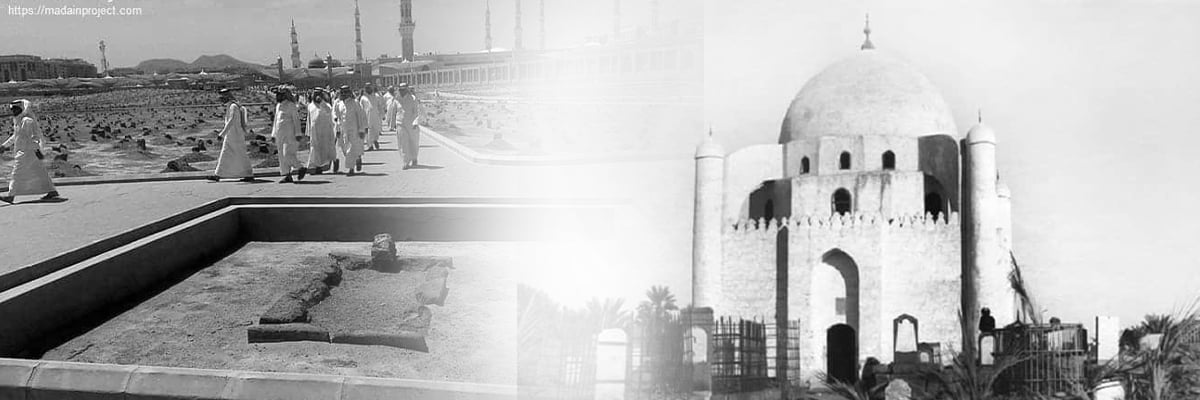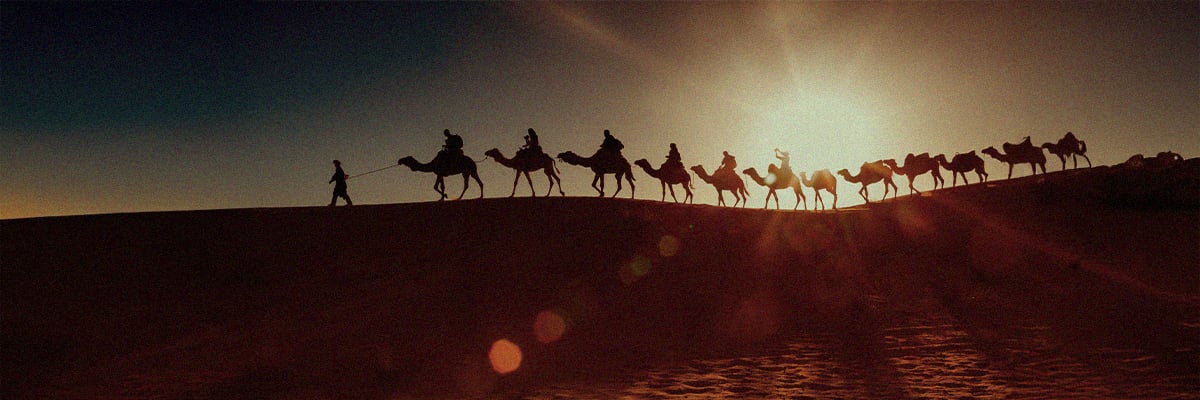

Three of them walked the sunlit road toward Madinah: a mother, her child, and a devoted caretaker. They were bound by an intimate love that softened every footstep. In the Prophet’s mother’s heart fluttered the hope of visiting her husband’s grave, a site of remembrance blooming with tenderness. It was a journey they made each year—a chance to stop, too, and visit relatives from the Banū Najjār clan.
But on their return, at a place called Abwā’, Amīnah—mother of the young Muḥammad ﷺ—fell gravely ill. Her body weakened and her soul returned to its Lord, leaving behind a six-year-old child at the threshold of an unimaginable loss.
Yet the child was not alone. By his side stood a woman who had poured her love into him as gently and faithfully as any mother. Her name was Umm Ayman, and she folded away her tears, took the Prophet’s small hands in hers, and began the journey to Makkah. The Prophet ﷺ would later call her, simply and lovingly, “my mother after my mother.”
Years passed, and as the Prophet ﷺ began to receive revelation, Umm Ayman was among the earliest to believe. She walked the path of Islam with Khadījah and ʿAlī, choosing light over comfort, sacrifice over safety.
When the Quraysh unleashed their brutal persecution, Umm Ayman became a target. She joined the wave of believers who sought refuge in Abyssinia. Later, she migrated to Madinah. She lived through tribulations most could not bear.
Her first husband died early. Her children were slain by enemy swords in battle. Her son Ayman fell in the Battle of Ḥunayn. Her husband Zayd ibn Ḥārithah was martyred in the Battle of Mu’ta. But Umm Ayman bore it all—with the shield of patience and the soul of someone who believed tomorrow still held promise. She sent her beloved ones down the path of righteousness, even if it meant not seeing them return.
Her given name was Barakah—a name befitting her grace. She was a woman of noble spirit. So much so that when her husband passed away, the Prophet ﷺ said:
“Whoever wishes to marry a woman of Paradise, let him marry Umm Ayman.”
After the Prophet ﷺ had left the world, Abu Bakr turned to ʿUmar and said:
“Let us go visit Umm Ayman, just as the Prophet ﷺ used to visit her.”
When they reached her home, they found her weeping. They gently asked,
“Why do you cry, dear mother? Surely what is with Allah is better for the Messenger of Allah ﷺ.”
Through her tears, she replied:
“I do not weep because I do not know that. I weep because the revelation from the heavens has ceased.”
Upon hearing her words, both Abu Bakr and ʿUmar wept with her. For her tears were not merely of sorrow—they were tears of farewell to a world that had once resonated with divine words, now silent.
She was Umm Ayman. A blessed mother in the fullest sense—chosen by love, crowned by faith, and remembered by angels.