
What if, just outside your door, there was a river? Picture it for a moment—clear, flowing, always within reach. Five times a day, you could step in, feel its coolness, let it wash over you, and carry away every trace of dirt, every burden. Imagine what that would mean. No matter how weary you felt or what the day had left on your skin, the river would renew you, time after time.
This is how the Prophet Muhammad ﷺ described prayer—salat—a river of renewal in a believer’s life. It’s a gift that cleanses both the body and the heart and mind, restoring the soul with each encounter. What would it mean to have a life with such a river, a chance to wash away the weight of the world, every single day?
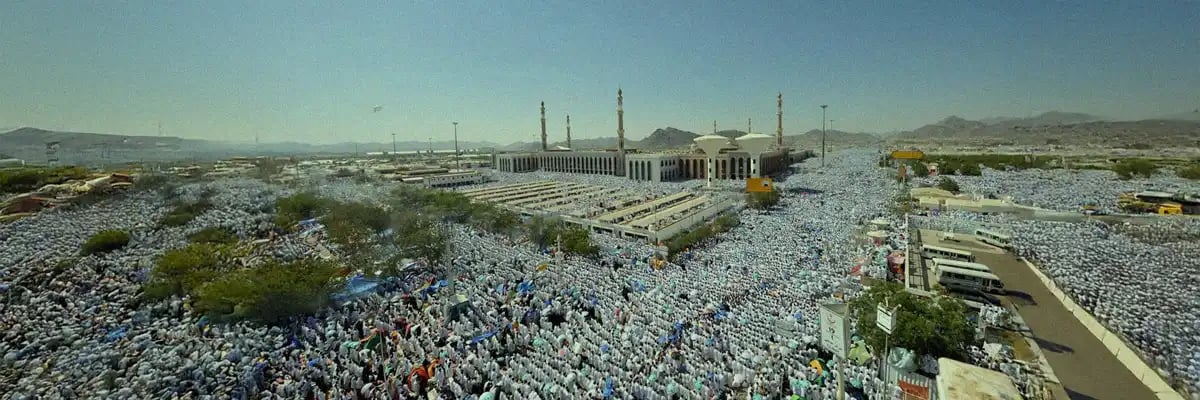
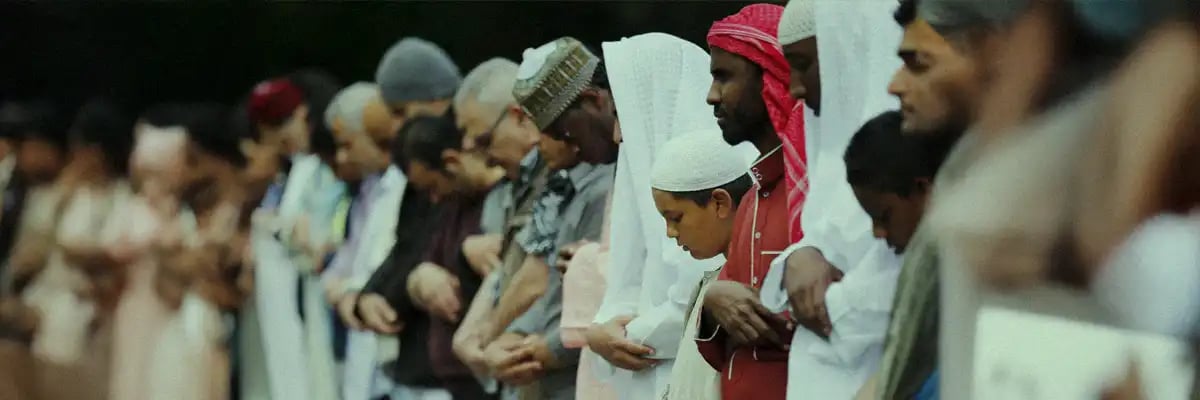
Five-times prayer in Islam is more than an obligation; it is a calling to reconnect with the core of our existence, the very source of being. Five times a day, Muslims across the world leave their ordinary lives behind, even if only for a few minutes, to stand in humility before the Creator. Each prayer is like stepping into that river, a chance to let the burdens of the day slip away and feel washed anew. In a busy world that pulls us in so many directions, prayer calls us to a stillness that allows us to remember who we are, why we are here, and where we are headed.
Thus, think of salat as an anchor in the sea of daily life, a way to stay steady amid the currents of stress and desire. Each prayer opens at a specific moment: dawn when the world wakes, midday when the sun reaches its height, afternoon as it begins its descent, sunset as light yields to darkness, and night when peace blankets the earth. This rhythm teaches us that we, too, are woven into the cycles of nature, bound to the same pulse that governs the rise and fall of the sun, the ebb and flow of the tides. In each prayer, we enter a sanctuary, a sacred space untouched by the clamor of the world, a moment to find ourselves once more—to reaffirm our pledge with the One who, when we were still our primordial selves, bodiless and only souls, asked, Alastu bi Rabbikum? (Am I not your Lord?), and to which we all responded, Bala, shahidna (Yes, indeed, we bear witness) (Quran 7:172).[1]
And yet, you might wonder, why the structure? Why not just speak to God when we feel like it? Why five times a day? In reality, prayer at these times is not an imposition but a cosmic rhythm, a sacred melody set to the pulse of life itself. Prayer is woven into the fabric of existence; it mirrors the cycles of nature, reminding us that we, too, are a part of this cosmic rhythm, this magnificent creation.
But if we are woven into the cycles of nature, we are also, at our core, designed to fall to our knees. We are beings created to bow, to acknowledge something greater than ourselves, to sanctify the dawn, and in doing so, receive the day’s sanctity in return. This longing is old and deeply embedded in us, so much so that when a person begins to lose their way, it often begins with neglecting these moments of humility. The Holy Quran itself says of those who have strayed, "Then there followed after them a generation who lost the prayer and followed their desires; soon they shall meet destruction" (19:59).
Today, however, the discipline of prayer is challenged by an unceasing barrage of distractions. As Abdul Hakim Murad, a contemporary scholar from the University of Cambridge observes, “Dhikr and electricity are deadly rivals.” This is especially true when our nights are filled with screens, drawing us into a web of lights, sounds, and images that often cloud our spirits rather than clear them. Traditionally, people slept shortly after the night prayer, and indeed, our bodies are attuned to this rhythm. The sunna, or practice of the Prophet ﷺ, was to let the quiet of the night envelop us, preparing us for the dawn. Today, though, we’re pulled into the late hours by the allure of technology—hours that do not refresh but instead leave us restless.
When dawn finally comes, many of us find ourselves too drained to rise and greet it. Yet, dawn, Fajr, is one of the purest times of day, a moment of stillness that no other part of the day can replicate. A well-known hadith (saying of the Prophet ﷺ) echoes this, saying, “If the hypocrites knew what goodness there was in the prayers of Isha and Fajr, they would come to them even if they had to crawl.” These early and late prayers, Isha at night and Fajr at dawn, bracket our days with grace, inviting us to step outside the restlessness of the world and find the beauty of these moments that are easily overlooked.
In the early days of Islam, the companions of the Prophet ﷺ would rush to prayer, not out of fear, but from a deep love and yearning. They felt the weight of each word, the power in each bow, the intimacy in each whisper. When the call to prayer sounded, they didn’t see it as an interruption; they saw it as an invitation.
Khalid ibn Walid, a legendary warrior of Islam, known for his strength and bravery, once said that there was nothing he loved more than meeting God in prayer. Think of this: a man whose courage was unmatched, a commander whose presence on the battlefield inspired thousands, found his greatest peace and strength in the quiet moments of salat. To him, every prayer was a reminder of a higher reality, a truth beyond the clamor of battle, beyond the dust of earthly struggle. In his heart, prayer was a doorway to an eternal home.
To pray is to be human in the deepest sense: vulnerable, seeking, grateful. It is to admit that no matter how capable or self-sufficient we feel, we are, at our core, utterly reliant on a power greater than ourselves. With each prayer, we humble ourselves, laying down our pride and acknowledging our limitations. In a world that glorifies self-reliance, prayer is an act of surrender, a quiet proclamation that we are not here to conquer, but to serve, to learn, and to grow.
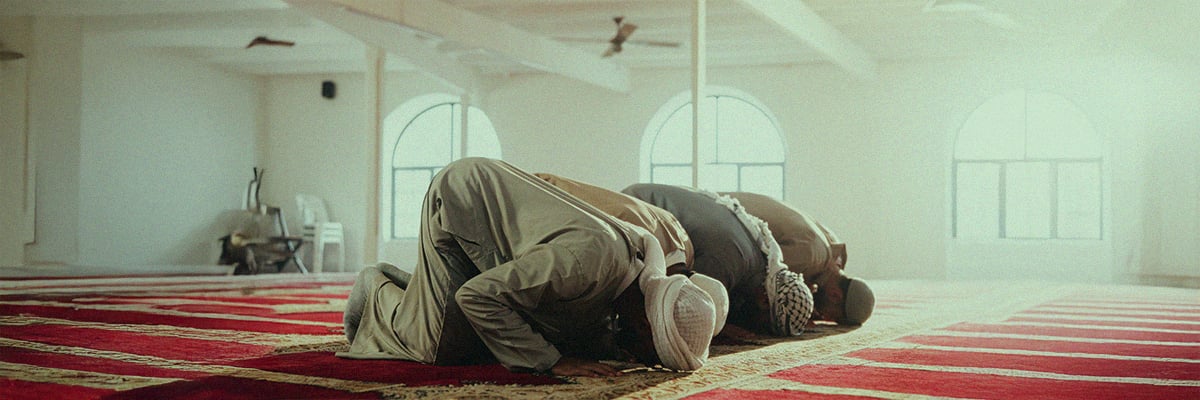
In each movement of prayer—standing, bowing, prostrating—there is a profound wisdom. When we stand, it is with purpose, our hearts aligned with our intentions, our minds free of distractions. In bowing, we lower ourselves, acknowledging that we are but dust in the vastness of creation. And in prostration, we reach the most intimate moment of worship, with our foreheads touching the earth, the humblest position a human can take. In this act, the Prophet ﷺ said, “The closest a servant comes to their Lord is when they are in prostration, so increase your supplications therein.”
It is in this complete submission that we find the sweetest liberation. It is as if, by bowing to the Creator, we rise above the chains of our ego and desires, finding freedom in the very act of surrender.
Consider the story of Bilal, a former slave whose resilience in the face of torture is remembered to this day. When he was freed and became the first muezzin, or caller to prayer, his voice echoed through the streets, calling people to rise beyond their worldly troubles and remember God. Bilal, who had suffered so much, found solace in prayer, and his love for it was so profound that, even in his final moments, he expressed his longing to meet the Final Messenger ﷺ in the hereafter. For Bilal, and countless others, salat was a source of strength, a sanctuary for the soul, and a constant companion in hardship.
Prayer is not just a ritual; it is a reunion. It is the soul’s homecoming, an answer to the longing that lives in the depths of our hearts. To pray is to taste the sweetness of life beyond life, to sense a peace that transcends understanding. In prayer, there is no need for pretense, no place for ego. Only sincerity matters. Prayer strips us down to our essence, inviting us to stand in the presence of the Divine as we are—flawed, seeking, and beloved. It is to draw near to the One who knows us better than we know ourselves. One of His names is Al-Qareeb, the Closest One, who tells us in the Holy Qur'an, “He is closer to you than your jugular vein” (Quran 50:16).
In those moments of solitude and silence, we feel the pulse of that nearness, a profound intimacy that comforts, heals, and transforms.
So, when we hear the call to prayer, it is not a distant summons to a foreign ritual. It is an invitation to a sacred symphony that renews the spirit, a timeless tradition that holds the power to harmonize individuals and, through them, the world. To live in this rhythm, to let it shape our days and nights, is to embrace a life of meaning, humility, and purpose. Prayer is not an escape from life’s duties, but a way of returning to them with a heart refreshed and a spirit emboldened. And as we step into the river of prayer, may we find ourselves washed clean, renewed, and ready to face whatever lies ahead.
REFERENCE : PTI-54 Uliyil
[1] And (remember), when your Lord took out the offspring from the loins of the Children of Adam and made them bear witness about themselves, He said, ‘Am I not your Lord?’ and they replied, ‘Yes, we bear witness.’ So you cannot say on the Day of Resurrection, ‘We were not aware of this,’