
“It’s been a while, hasn’t it? Where have you been?”
“Oh, you know how it goes. Life… commitments piling up, projects half-finished. I’d start to write, then get pulled back. There’s always something—family, work, the endless stream of to-dos.”
“And then?”
“And then I realized: if I ever wanted to finish, I’d have to get away. So I did—rented a small room in the hills, left my phone off, and finally gave it my full attention. In two months, it was done.”
“Sometimes that’s the only way, isn’t it? When you’re carrying something precious, distractions creep in from every corner. To hold onto it, you have to build walls around it, guard it like a well, so it doesn’t get muddied by everything outside.”
******
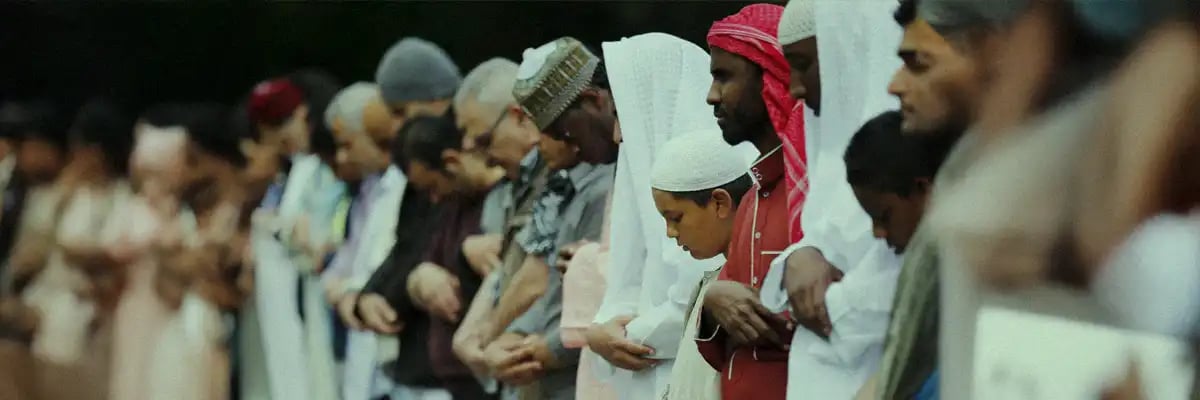
Prayer is like that, too—a mirror of life itself. It’s not just a retreat from the world’s noise; it’s a step into a realm of stillness. The mind, though, has its nature—like a sail flapping in every wind that blows. The heart, the qalb, is its own creature, turning one way and then the other. As much as we guard our minds, we need to shield our hearts too, for there are always whispers ready to pull us away, to turn peace into a storm of thoughts and worries.
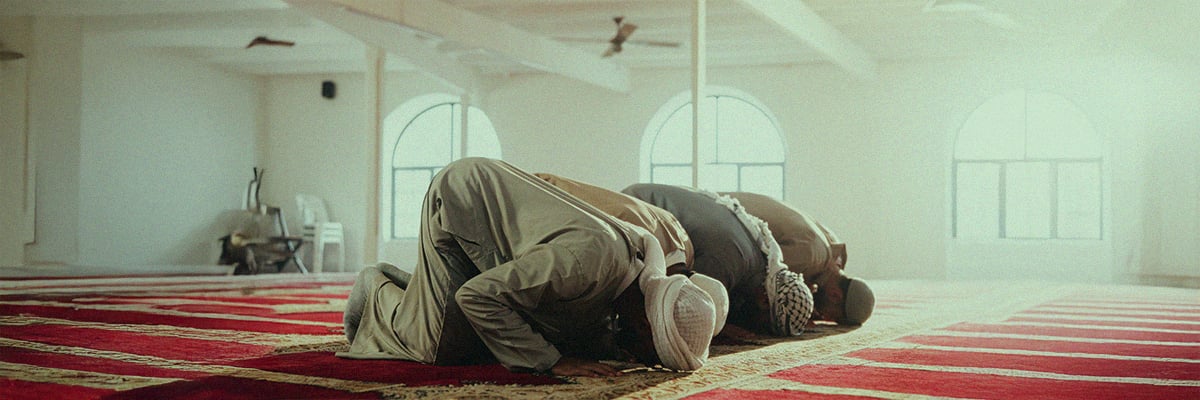
Picture someone standing in prayer, leaving behind the world and its chatter. Yet all at once, their mind fills—unfinished tasks, half-formed ideas, lingering doubts, and tomorrow’s worries. It’s as though every part of them conspires to scatter their focus, drawing them away from that central point, from the One they’ve come to meet.
So, how to resist? Begin with A’udhu—a prayer for protection from all intrusions. A’udhu is a shield, not only for prayer but for any good deed. It surrounds the heart like a fortress, making it a quiet, clear well, where the surface is still, reflecting only the beauty of its source.
Then comes Bismillah, the start of all good things. Bismillah is more than a word—it’s an invitation to goodness, a reminder that everything begins with Allah, the One whose name alone brings calm and clarity. Saying Bismillah brings blessings close and fills the heart with peace, tuning our intentions to something greater.
In prayer, as in all of life, Bismillah is the root of purpose. A heart that begins with Bismillah grows like a tree, yielding fruit for the soul, spreading branches of goodness. Whether building a home, starting a venture, or even opening a book, we start with Bismillah. In prayer, it’s more than an introduction; it’s a pledge, a binding to divine purpose.
Reflect deeply on what we’re discussing. Every word is heavy with meaning; each phrase is rich with depth. Without this understanding, prayer becomes hollow. Each salah is a munajat—a dialogue, a conversation. At its heart lies Surah Al-Fatiha, the opening of the Qur’an, the distilled essence of divine dialogue. It’s not mere recitation; it’s speaking from the soul.
The believer begins with, “All praise is due to Allah, the Lord of all the worlds.” In these words, they recognize not just the Creator but the Sustainer, the One who brought all of creation into being and holds it together.
“The Most Compassionate, the Most Merciful.” Here is Allah, Ar-Rahman and Ar-Rahim, the Giver whose mercy touches all creation without restriction, whose compassion reaches even those who may turn away.
“Master of the Day of Judgment.” The believer is reminded that there is justice, that every soul will return to its Source, and every action will be weighed. In these words, there’s a whisper of accountability, calling them back to what truly matters.
And then comes the intimate part of this dialogue: “You alone we worship, and You alone we ask for help.” It’s a confession of need, an acknowledgment that while we strive, it is Allah who is the ultimate support, the One who guides, the One who protects.
Finally, the supplication: “Guide us along the Straight Path, the path of those who have received Your grace—not those who have brought down wrath upon themselves, nor those who have gone astray.” In these lines, the believer asks to walk the path of integrity, to be granted the clarity to avoid all distractions, and to move towards what is true and good.
Allah is Ar-Rahman, the Compassionate, who gives to all without measure. His mercy is like rain that falls on every field, or like sunlight for all people. There is no boundary to His giving; His gifts reach believer, non-believer, and even those who deny. Allah is not a keeper of grudges; He is the Giver. Knowing this, our hearts swell with trust that whatever we need, He will provide.
And yet, Ar-Rahman does not stop there. Allah is also Ar-Rahim, whose mercy is more personal, who knows every deed. For those who live by His light, there will be grace in the next life. And for those who have turned away, there will be justice. The believer understands balance here—one hand reaches out for mercy, while the other holds back from wrongdoing.
So prayer becomes a mirror of life. If we trust Ar-Rahman, we walk with confidence in the world. And if we remember Ar-Rahim, we walk with humility. Imagine a person who has just prayed, feeling the weight of Ar-Rahim in their heart. Perhaps they’ll tear up a falsified document, go back to make things right, set aside hidden schemes.
From the outside, salah may seem like only movements, but for the one who prays, something stirs deep within. They leave prayer changed, purified. The Qur'an reminds us, “Indeed, prayer prevents immorality and wrongdoing” (Surah Al-Ankabut, 29:45).
Prayer, in this way, becomes the sanctuary we guard, a place to retreat and reconnect. When we truly understand it—when it becomes not a routine but a reunion, a rhythm and remembrance—its meaning shines, cleansing the heart and guiding the soul.