
Let me ask you this—when is the best time to study?
Morning.
And to play?
Evening.
When do you take a bath?
After playtime.
When do you eat your meal?
At midday.
When do you work?
During the day.
And when do you spend time with your family?
At night…
See how different moments are assigned to different activities? Why do you think that is?
Humans are creatures of shifting moods. Time and place profoundly shape our mental state. We are always waiting for someone to take us along, to lead us to the one we love the most. Along the way, we must not fall asleep or lose our way. Amidst the hustle and bustle of daily life, we must not lose ourselves. That is why we need to wake up at intervals—not from sleep, but from distraction into heightened awareness. This is the purpose of the five daily prayers.
Life can either be an intoxicating blur, a burden, or a blend of both. In any case, humans must not lose themselves. The five prayers—at dawn, midday, afternoon, sunset, and night—are designed to keep us centered. They are anchors set at different points in time so that we do not drift away from our purpose.
Before every prayer, we hear a call—the adhan. Whether we are engaged in farming, trade, construction, conversation, travel, play, sleep, or study, the adhan shakes us from the grip of time and space. It reminds us that time management is not just a worldly skill but a sacred practice.
When someone is asleep, lost in thought, or absentminded, we wake them up by sprinkling water on their face. Before prayer, we do the same to ourselves. We cleanse not just our face but our hands, feet, mouth, nose, and every limb that touches the world. We wash away the dust of heedlessness. This is wudu, the purification that jolts us into full awareness.
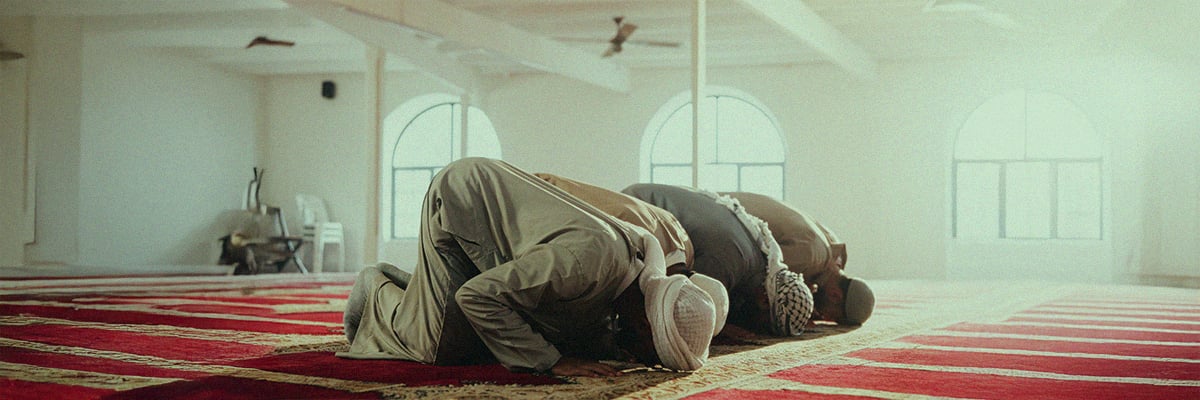
And then, standing before our Creator—the one to whom we owe everything—we place ourselves in His presence, our heads bowed in devotion. We leave behind the frenzied chaos of the material world. With focused minds and uplifted hands, we shake off the distractions pulling us in every direction.
Watch carefully: the movements of prayer resemble the readiness of a bird about to take flight. Hands rising like wings, a subtle and profound ascent. If humans were meant to have wings, wouldn’t it be these very hands? Have you ever thought about it? A bird’s wings, if you observe closely, are nothing but its forelimbs. When we say Allahu Akbar, we are lifting ourselves from the gravity of the world and ascending towards God. Our feet remain on the ground, but our hearts take flight.
When we say Allahu Akbar, no other phrase fits in its place. Not Allahu A’lam (God is the most knowing), nor Allahu Arham (God is the most merciful), nor Allahu Akram (God is the most generous). None of these capture the boundlessness of God’s greatness. The phrase Allahu Akbar is not a measurement; it is an admission that His greatness is beyond measure. We enter a realm where spatial and temporal awareness dissolve, and we ascend.
The Qur’an describes how the women of Egypt, upon seeing the beauty of Prophet Yusuf, were so enraptured that they lost control and cut their hands without even realizing it. The word used in the Qur’an is akbarnahu—they beheld something beyond comprehension. This is the same Akbar that we utter in prayer. Ponder this deeply.
They were so overwhelmed that they forgot their own existence. They could not reconcile what they saw with the limits of human beauty; instead, they exclaimed that he must be an angel or a being from another world. Their sense of self faded in that moment. This is the state of prayer—where the soul soars, where all else fades away.
In prayer, we are not merely reciting words; we are ascending towards the Creator of the heavens and the earth. We do not see Him, but He sees us. And in that moment of realization, we are freed from all earthly burdens and surrender completely: Wajjahtu—I have turned my face entirely to Him.
A believer, upon tying their hands in prayer, is no longer occupied with trivial matters. They are not thinking about a buzzing mosquito or a flickering flame. Instead, they are immersed in the grandeur of the One who created the heavens and the earth. Every time they stand for prayer, their mind expands beyond the confines of this world.
Think about the vastness of the sky. Who can comprehend the One who created it? The sheer immensity humbles us, compelling us to lower our heads in submission. Yet, even bowing feels insufficient. Not knowing what else to do, we fall into prostration. This is the collapse of the ego, the complete surrender of the self.
Every day, the believer practices this rhythm of rising and falling—learning the sweetness of submission. The joy of sujood is a gift from God, and to Him belongs the highest prostration.
The Prophet ﷺ found his greatest comfort in prayer. Many great individuals have lost themselves in prayer—so absorbed that they remained unaware of pain, injury, or even arrows being pulled from their flesh.
Some may dismiss this as exaggeration. But is it? Even in ordinary life, we experience moments of such deep immersion that we become oblivious to our surroundings. Imagine walking through a field, carefully avoiding thorns, stones, and obstacles. Suddenly, you hear the hiss of a king cobra, poised to strike. Your body stiffens, your hairs stand on end. Do you still care about the thorns and pebbles? No. You are already running, unaware of scrapes or bruises. Only after reaching safety do you realize you’ve been injured.
Now imagine, instead of fleeing in terror, you are rushing toward your Beloved. Imagine losing yourself, not in fear, but in absolute surrender. This is prayer—an experience beyond words, beyond limits.
Do you long for God to speak to you? Then read the Qur’an.
Do you long to speak to God? Then stand in prayer.
Imam al-Shafi’i recommended it.
Imam Ahmad ibn Hanbal affirmed it:
There is no joy in this world like the joy found in prayer.