
The phrase "My body, my choice" is often presented as a rallying cry for personal autonomy. But is it worth pursuing? Can we claim complete ownership over ourselves? Before we dive deeper into this thought-provoking question, let’s take a step back and examine the foundational truths of existence. Along this journey, we’ll meet remarkable figures—prophets—who brought clarity to humanity’s biggest questions.
Who is A Prophet in Islam?
In the Islamic tradition, a prophet (nabi) is not merely a preacher or a reformer; he is a divinely appointed messenger sent by Allah to guide humanity. Prophet Salih, for instance, was one among many, not an isolated figure. And he wasn’t alone in carrying this sacred mantle.
This brings us to a common misconception: Islam was not founded by the Prophet Muhammad ﷺ. He is not its "inventor" but its culmination—a messenger sent by the Creator of the universe, as were countless others before him. Allah sent tens of thousands of prophets across time, across peoples, and across nations.
A prophet (nabi) is not just a preacher or reformer. He is a messenger appointed by the Creator of the universe, tasked with guiding humanity. Salih, again, is but one among many such messengers sent by Allah across the ages.
It’s a common misconception to think that Prophet Muhammad ﷺ "founded" Islam. In truth, he was not its originator but its final messenger. Islam, meaning submission to Allah, is as old as humanity itself. Across centuries and continents, Allah has sent thousands of prophets to guide His creation, ensuring that every people and every era had someone to remind them of their Creator.
The Need for Prophethood
Pause for a moment. Reflect on this universe—its vastness, its harmony, its delicate balance. Isn’t it clear that a Creator is behind this intricate design? Human reason alone is often enough to recognize this truth. But how do we, as finite beings, understand the infinite? How do we know what pleases the Creator, what He expects of us, and why we were created?
This is where prophets come in. They are sent to answer questions that reason alone cannot resolve:
- Who is Allah?
- Why did He create us?
- How should we worship Him?
- What are the consequences of following or ignoring His guidance?
These prophets delivered divine revelations (wahy), teaching humanity about their Creator and guiding them on how to live harmoniously—with each other and with the world around them.
Why Do Humans Need Laws?
Some might ask, “Why do humans need laws at all? Don’t animals live freely without restrictions? They eat what they want, mate as they please, and roam without boundaries. Why can’t humans do the same?”
Here’s the difference: humans are not animals.
Animals don’t build societies, ponder justice, or create art. Humans are unique in their complexity and their responsibilities. We need systems to manage our relationships, our resources, and our aspirations. But here’s the challenge: humans, being limited and fallible, cannot create flawless laws. Our biases—based on gender, wealth, culture, or history—inevitably shape the rules we make. Who, then, has the right to legislate universally?
If we cannot trust one human to create laws for another, how can we even trust ourselves to legislate for our own bodies?
The Illusion of “My Body, My Choice”
Many believe that they have full ownership of their bodies, encapsulated in the maxim: “My body, my choice.” But let’s unpack this. Did you choose to exist? Did you design your features, determine your health, or decide when you would feel hunger or thirst? Did you create the laws of biology or nature?
The reality is, none of us owns ourselves in the ultimate sense. Our bodies, like the world around us, are a trust from our Creator—a gift we are responsible for but do not possess outright.
Who Has the Right to Guide?
Imagine purchasing a car. Who determines how it should be used? The manufacturer, of course. The maker understands its design, its strengths, and its limitations. They provide a manual to ensure that the car functions properly. Ignore this manual—put the wrong fuel in the tank or neglect maintenance—and you destroy the vehicle.
Similarly, human beings are intricate creations. Allah, our Creator, knows us better than we know ourselves. His “manual” for humanity is the Quran, which outlines what nourishes us and what harms us—physically, spiritually, and socially. For example, alcohol is widely acknowledged as harmful, yet only Islam unconditionally prohibits it. Would you trust a car manual that permits you to add acid to the fuel tank? Of course not.
The Role of Prophets
Prophets were sent to convey this divine manual. They were men of unparalleled integrity, known for their truthfulness and wisdom. They lived as examples of what they preached, their lives embodying the values they taught. Importantly, they were human, experiencing hunger, fatigue, and illness like everyone else. Yet Allah protected them from flaws that would undermine their mission.
Islam teaches that Allah has sent thousands of prophets throughout history, to every nation and every community. These messengers were not sent to establish new faiths but to remind people of a timeless truth: that we are created by Allah, that we owe our existence to Him, and that our lives are most fulfilling when lived in harmony with His guidance.
The 25 Prophets Mentioned in the Quran
The chain of prophethood began with Adam, the first human, and ended with Muhammad ﷺ, the Seal of the Prophets. Let us meet these extraordinary individuals.
The Prophet Muhammad ﷺ described the line of prophethood with an eloquent metaphor:
“The example of myself and the prophets before me is like a man who built a house. It was perfect, except for one brick missing from the corner. People marveled at the beauty of the house and said, ‘If only this brick were placed!’ I am that brick, and I am the Seal of the Prophets.”
With Muhammad ﷺ, the structure was complete. No prophet will come after him.
While Islam acknowledges countless prophets sent to various communities across time, the Quran specifically mentions 25 of them by name. These prophets, both well-known and lesser known, were sent to guide humanity to the path of Allah. Here is the list:
- Adam (AS): The father of humanity and the first prophet.
- Idris (AS): Renowned for his wisdom and early contributions to knowledge.
- Nuh (Noah, AS): Preached for 950 years, enduring mockery and rejection, until the great flood swept away his disbelieving people.
- Hud (AS): Sent to the people of Aad, who perished after ignoring his warnings.
- Salih (AS): Delivered a miraculous she-camel as a divine sign to the people of Thamud, who still defied Allah and faced destruction.
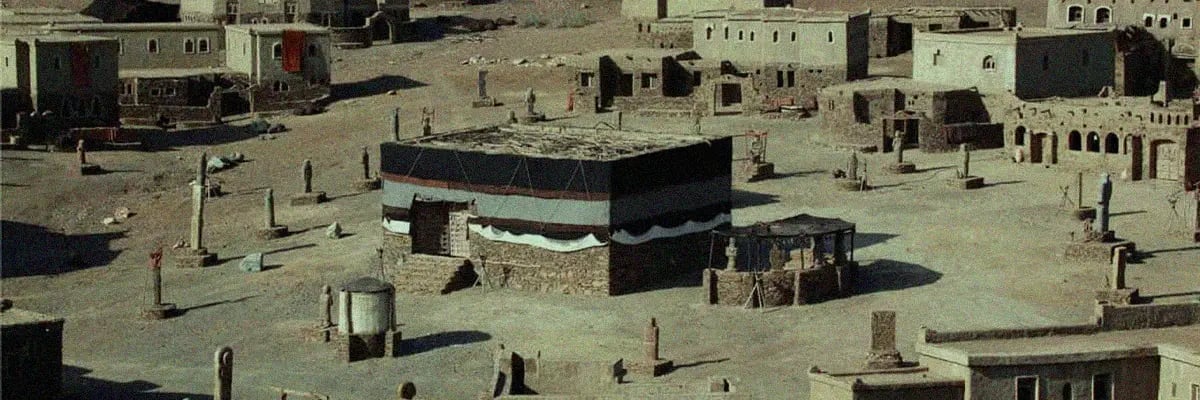
- Ibrahim (Abraham, AS): Known as Khalilullah (the Friend of Allah), he rebuilt the Kaaba and exemplified legendary submission to Allah. In Abrahamic monotheism, three of the contemporary world’s major religions converge.
- Lut (Lot, AS): Warned his people against immorality, but they rejected him and were destroyed.
- Ismail (Ishmael, AS): A symbol of obedience, he supported his father, Ibrahim, in building the Kaaba.
- Ishaq (Isaac, AS): The son of Ibrahim, revered for his wisdom and devotion.
- Yaqub (Jacob, AS): Known for his patience and faith, even in the face of great trials.
- Yusuf (Joseph, AS): Exemplified integrity and forgiveness, rising from the depths of betrayal to the heights of leadership in Egypt.
- Ayyub (Job, AS): A model of perseverance through suffering, he is remembered for his unwavering faith in Allah.
- Shuayb (AS): Preached justice and honesty to the people of Madyan, who ultimately rejected his message.
- Harun (Aaron, AS): Supported his brother Musa in confronting Pharaoh.
- Musa (Moses, AS): Mentioned 136 times in the Quran, Musa freed the Israelites from Pharaoh’s oppression and received the Torah.
- Al-Yasa (Elisha, AS): Continued the mission of guidance after Ilyas.
- Dhul-Kifl (AS): A righteous and patient leader.
- Dawud (David, AS): A prophet and king, known for his psalms and just rule.
- Sulaiman (Solomon, AS): A king blessed with unparalleled wisdom and the ability to communicate with animals and jinn.
- Ilyas (Elias, AS): Warned against idolatry, calling people back to the worship of Allah.
- Yunus (Jonah, AS): Swallowed by a whale, he was saved after sincerely repenting to Allah.
- Zakariyya (Zechariah, AS): Known for his steadfast prayers for a righteous heir.
- Yahya: A beacon of piety and humility, praised for his chastity and devotion.
- Isa (Jesus, AS): Born miraculously to Maryam (Mary), he performed many miracles by Allah’s will and foretold the coming of Muhammad ﷺ.
25. Muhammad ﷺ: The final prophet, who brought the Quran as the eternal guide for humanity.
Prophets Shared Across Traditions
Islam’s inclusiveness is evident in its recognition of prophets revered in other faiths. Musa (AS), mentioned 136 times in the Quran, is central to Jewish tradition, while Isa (AS) is referenced 78 times and holds a prominent place in Christianity.
However, Islam places all prophets within a consistent framework: they are human beings, not divine, chosen to deliver Allah’s message. They are neither to be worshipped nor regarded as intermediaries to salvation. Instead, they are exemplars of faith, embodying divine guidance in their lives.
Lessons from Their Lives
The prophets’ stories are more than historical accounts; they are timeless lessons. Consider Nuh (AS), who preached for nearly a millennium, only to see a small group embrace his message. His resilience teaches us perseverance in the face of rejection. Similarly, Yusuf (AS) endured betrayal by his brothers but forgave them when he held power, exemplifying mercy over vengeance.
Each prophet's narrative reinforces the same core message: Allah is one, and submission to Him brings peace and purpose.
The stories of the prophets challenge us to reflect on our purpose. They remind us that life is not merely about fulfilling desires but about aligning ourselves with the Creator’s will. The claim "My body, my choice" ignores a fundamental truth: our existence is not entirely our own. Our bodies, lives, and choices are trusts from Allah, and we are accountable for how we use them.
The prophets’ lives are beacons of guidance, urging us to rise above selfish impulses and embrace a higher calling. Their heritage is an invitation to reconnect with our Creator and find meaning in submission to Him. Will you answer that call?