
"Has your menstrual cycle ended?"
"Yes."
"Then go to the poet."
"For what purpose?"
"We need a son, a gifted one—a poet who will elevate our family’s status."
"How do we ensure that?"
"Sleep with him. Return only after confirming pregnancy."
"Very well. As you wish."
"But remember, once you’re certain of conception, leave immediately. Don’t stay a moment longer."
"As you say."
This imagined conversation between a couple in pre-Islamic Arabia reflects one of the accepted practices of the time: Nikah al-Istibda‘—a custom where a husband would send his wife to sleep with another man of influence, such as a poet or warrior, hoping for a talented child to claim as his own.
This practice is but one fragment of the moral disarray that plagued Arabia before the arrival of Islam. The Prophet Muhammad ﷺ emerged as the beacon of reform, teaching a society steeped in moral corruption to honor dignity and purity.
A Society Drenched in Immorality
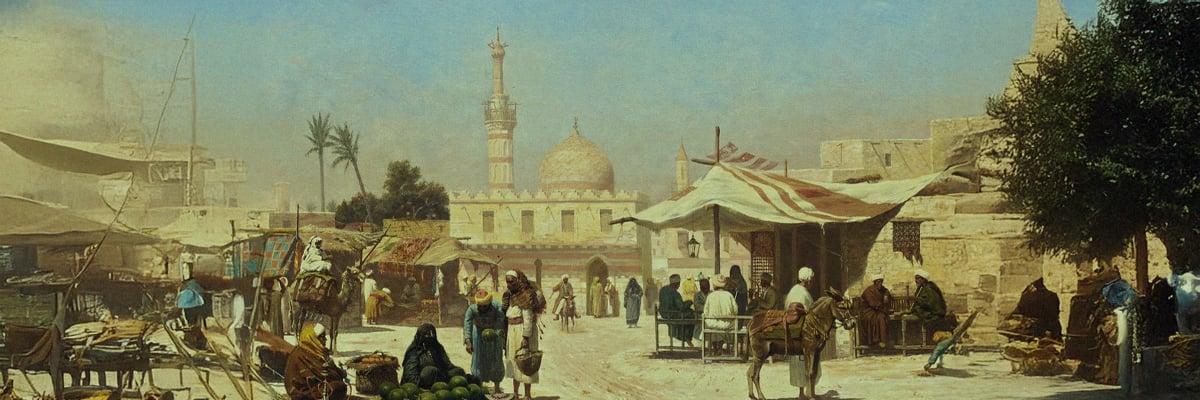
Arabia before the advent of Islam was a society immersed in various forms of moral and social corruption. The practices that governed relationships and human interaction often lacked dignity, fairness, or any semblance of accountability. Women, in particular, bore the brunt of these injustices, as their roles were reduced to commodities in a marketplace of tribal pride and selfish ambitions. The following examples highlight the extent of the immorality that Islam sought to eradicate:
1. Prostitution (al-Sifah):
In pre-Islamic Arabia, prostitution was not merely a hidden vice but an openly accepted practice, especially involving enslaved women. Slave girls were forced into sexual exploitation, with their earnings shared with their masters. Their consent was irrelevant, and they were treated as mere tools of profit. The Quran addressed this cruel system directly, forbidding such coercion and establishing the inherent dignity of all individuals:
“Do not force your slave girls into prostitution if they desire chastity...” (Quran 24:33)
This ruling ended their exploitation and paved the way for a society where women could reclaim their autonomy.
2. Cohabitation Without Marriage:
Today referred to as "living together," this practice was a common arrangement where men and women would live as partners without entering into a formal marital agreement. While it may have seemed to provide freedom, it stripped women of their rights, as there were no legal or moral responsibilities binding the man to support or protect his partner. Islam's insistence on marriage as a formal and sacred institution redefined the expectations of relationships, ensuring that both parties entered into them with mutual respect, rights, and responsibilities.
3. Inheritance Marriage (Nikah al-Maqt):
This practice permitted a son, father, or close male relative to "inherit" a deceased man’s widow. The woman was treated as part of the estate, with no autonomy or consent in her own fate. If the inheritor chose not to marry her, she could be left destitute and unmarried for life. The Quran unequivocally prohibited this, declaring:
“Do not marry women whom your fathers married, except what has already occurred.” (Quran 4:22)
This marked a significant step in restoring women's right to choose their own partners and live with dignity.
4. Wife-Swapping (Nikah al-Badal):
In an arrangement of mutual convenience, men would exchange wives, treating them as mere objects to be traded. This degraded the sanctity of marriage and reduced women to transactional items. Islam abolished such practices, replacing them with the ideals of marital loyalty and respect.
5. Temporary Marriages (Nikah al-Mut‘ah):
Temporary marriages were contracts allowing men and women to marry for a specified duration, often for as short a time as a few hours. These arrangements exploited women under the guise of marital legitimacy, reducing the relationship to a physical transaction. While it was tolerated during the very early days of Islam to address specific societal conditions, the Prophet ﷺ later unequivocally banned it, ensuring marriage remained a lifelong, committed partnership.
6. Gang Sexual Relations (Nikah al-Rah):
In this arrangement, a woman would invite multiple men to have relations with her. Once she conceived, she would choose one of them as the father of her child, often arbitrarily. There was no accountability, and the child bore the social stigma of unclear lineage. Islam eradicated this practice, restoring honor to parenthood and ensuring children were born into secure, responsible families.
7. Public Prostitution (Sahibat al-Rayat):
Women in this arrangement would raise a flag outside their homes, signaling their availability for anyone who desired them. They had no right to refuse or select their clients, further amplifying their vulnerability and exploitation. This practice degraded women to a status beneath humanity. Islam abolished such practices, establishing strict guidelines for modesty and mutual respect in relationships.
8. Incestuous Relationships:
Engaging in relationships with close family members, including mothers, daughters, and sisters, was prevalent in certain cultures, such as ancient Egypt and Rome, and persisted in parts of pre-Islamic Arabia. Islam explicitly prohibited these unions, preserving the sanctity of familial bonds and protecting individuals from exploitation.
Reforming a Society
The Prophet Muhammad ﷺ entered this morally bankrupt society as a harbinger of reform and justice. Through his teachings, women’s dignity was restored, and the sanctity of relationships was upheld. He reminded his followers that the foundation of a strong society lay in mutual respect, accountability, and the protection of the vulnerable.
One of his most powerful statements emphasized this commitment:
“Do not go near adultery, for it is a shameful deed and an evil path.” (Quran 17:32)
By addressing both men and women, his teachings established a moral equilibrium, holding everyone accountable while elevating the status of those who had been marginalized.
The Prophet ﷺ did not merely outlaw practices; he inspired a transformation of hearts and minds. He taught his followers to view others not as objects of pleasure or gain but as individuals worthy of respect and dignity. His legacy continues to shine as a guiding light for societies striving to establish justice, morality, and compassion.
In an age when many of these ancient vices resurface under the guise of modernity, the Prophet’s ﷺ message remains as relevant as ever—a reminder that true progress lies not in indulgence but in the preservation of human dignity.
May peace and blessings be upon him, the one who led us from the darkness of ignorance to the light of understanding and compassion.