
A man walks down a street. A young boy sits on the roadside, polishing shoes. The man stops and lets the boy shine his shoes. As he watches the child work, a pang of sorrow grips his heart. Perhaps, in that fleeting moment, he sees the face of his own son—or the carefree faces of village children, heading to school, playing in the fields. But the boy before him is different. This child, seated at his feet, is a simmering volcano of grief, a mound of sorrows waiting to erupt. If he dares to ask about the boy’s life, he fears the molten pain will burst forth like scalding lava.
And yet, he asks:
“How are you, son? Any news?”
The boy’s reply is a single, familiar word:
“Alhamdulillah!”
The man freezes.
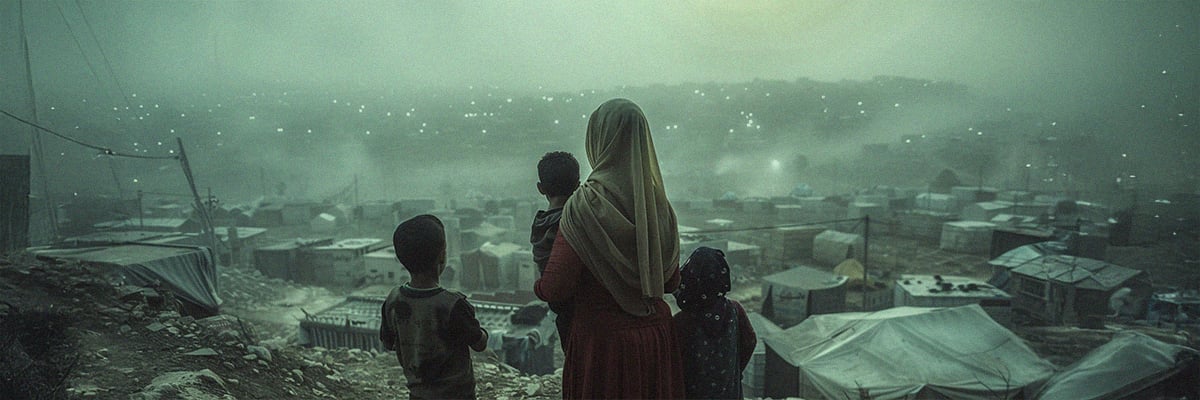
Until that moment, he had belonged to another faith—more than that, he had harbored deep-seated fears about the boy’s religion. But something stirs within him. How? he wonders. How does a boy, this poor, this burdened with hardship, still have the strength to say ‘Alhamdulillah’?
That question sets him on a journey—a pilgrimage of inquiry. He follows the thread of that one word, tracing it to its source. And at the end of his search, he arrives at Islam.
At this point, you might think: Well, that’s just a story, isn’t it?
Perhaps. But I will not argue otherwise. Instead, I will simply leave you a link—an invitation to listen directly to Idris Tawfiq, a British Roman Catholic priest who lived this very experience, while he was holidaying in Cairo:
My Journey To Islam: Idris Tawfiq
The rest, I leave to you.
For we have much to discuss about Alhamdulillah.
Earlier, we mentioned that the opening verses of Al-Fatihah are about Allah Himself. He is Ar-Rahman, the Most Merciful; Ar-Raheem, the Most Compassionate. And in this surah, we declare something profound: Every word of praise and gratitude belongs to Him alone.
To praise someone is to recognize something extraordinary in them. But when we praise, we must also ask: Is this praise truly deserved?
In Arabic, we find two different words for praise:
• Hamd (حمد) – True and rightful praise, acknowledging the inherent worth of the one being praised.
• Madh (مدح) – Flattery, mere admiration, which may or may not be deserved.
A person who loses every contest, who fails every test, who lives in dishonor—does anyone praise them? No. Praise is reserved for those who excel, who deserve admiration, who rise above the ordinary. No one genuinely praises a thief, a tyrant, or a murderer.
Yet, the world is filled with madh—false flattery, insincere praise. Politicians, rulers, and those in power are often showered with excessive admiration, sometimes to manipulate, sometimes to evade harm. Some praise is merely a tool, a means to an end. And history warns us: when the wicked are exalted, when praise is used to shield oppression, we enter a time of corruption, a dark age foretold by the Prophet ﷺ.
But true praise—hamd—belongs only to the one who is entirely, unconditionally worthy of it. That is why the Qur’an does not simply say “Allah is praised.” Rather, it declares:
“All praise belongs to Allah.”
To truly grasp this, we must understand what it means to be Rabbul ‘Alameen—the Lord of All Worlds.
To say that Allah is our Rabb is to acknowledge that He nurtures and sustains everything, guiding it from inception to perfection.
Look around. Everything in this vast universe grows under His care. The whales of the ocean, consuming tons of food daily—who provides for them? The sharks, the salmon, the billions of sardines—who nourishes them all?
Consider the lion in a zoo. The keepers know exactly how much meat it needs each day. But in the wild, who feeds the thousands of lions, the tigers, the eagles, the falcons, the countless predators who have roamed the earth for millennia? Who ensures that every beast, every bird, every insect, even the tiniest microbe, finds its sustenance?
Not only does He nurture the creatures of the earth, but He also nurtures us—physically, intellectually, emotionally, and spiritually. He raises us, stage by stage, molding us to fit the balance of His creation. Imagine if the body grew but the limbs did not align, or if the face formed without symmetry—human beings would become grotesque, distorted forms. But no, He nurtures us with precision, with beauty, in the best of forms (Ahsani Taqweem).
Yet, physical growth is not enough. Mental, emotional, and moral growth are just as vital. A child obsessed with toys at five is natural; a man in his sixties sobbing for balloons is tragic. A woman, grown and married, running to her mother and complaining, “When we are in bed, my husband doesn’t fold his arms when he sleeps!”—is this not a failure to mature, a sign of her inability to recognize and respond to the unspoken language of intimacy?
Allah, as Rabb, nurtures us at every level—body, mind, and soul. He is the one who ensures our growth at the right time, in the right way, with the right balance.
And it is not just us—our careers, our wealth, our knowledge, our businesses, our families—everything must grow. Stagnation is not the way of the world. Commerce expands, lands flourish, generations rise. A field of mango trees must bear fruit. A house must be filled with love. Children must thrive. Growth is life.
And who ensures this? Our Rabb.
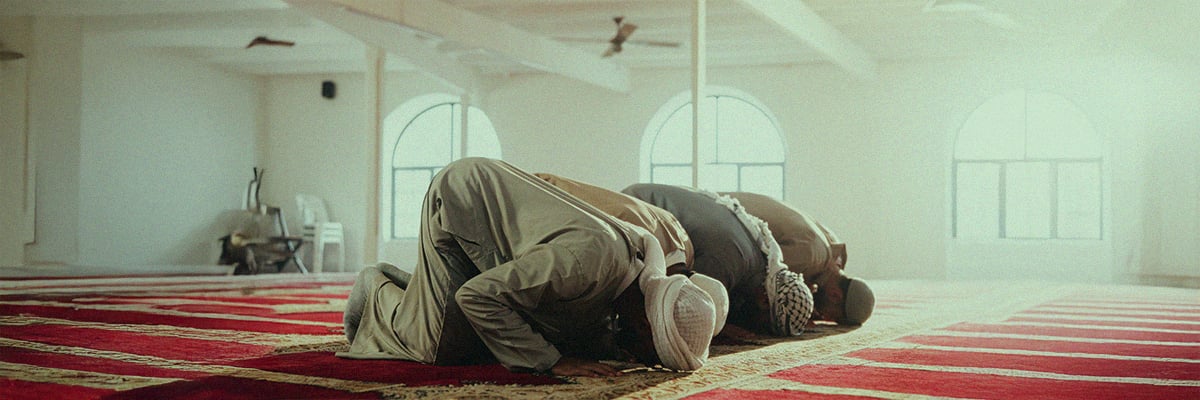
To know this truth, to feel it in your heart, and to stand before Him in prayer, emptying your worries, submitting your soul—this is Alhamdulillah.
So, when you pray next, slow down. Let your heart understand. Let your soul speak. And say it not as a mere phrase, but as a declaration, a testimony, a realization:
Alhamdulillahi Rabbil ‘Alameen!