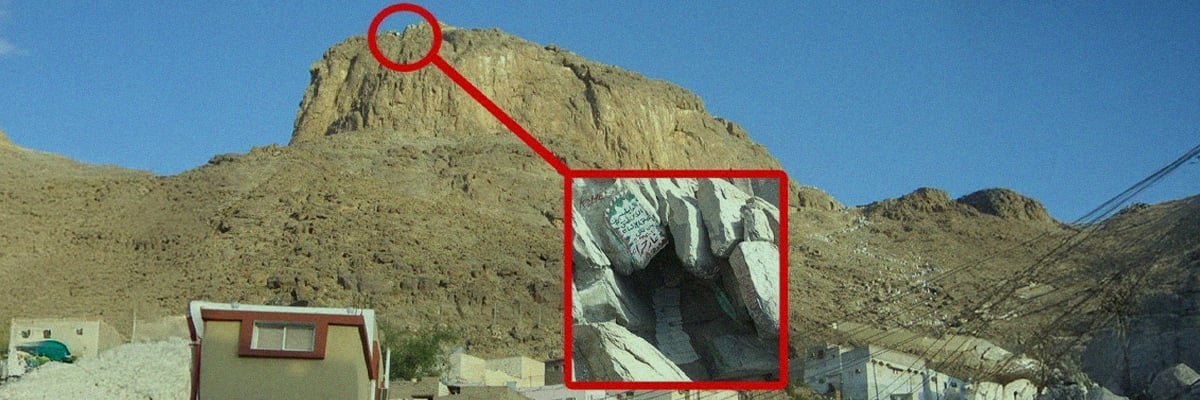

“We showed them our necks, and they struck as they pleased, arresting and killing us,” Abu Sufyan ibn Harith recounted, half-jokingly, when Abu Lahab inquired about the Quraysh’s devastating loss at Badr. Abu Lahab, a prominent elder of the Quraysh, wasn’t merely curious. His inquiry was loaded with layers of guilt and fear. Why had he avoided the battlefield in the first place? To understand, let us step back to the base of Mount Safa, where the Prophet ﷺ had once gathered his family and clansmen.
A Call That Stirred Defiance
It was the beginning of the call. The Prophet ﷺ had received the divine command:
"O you who are wrapped in garments, arise and warn! Proclaim the greatness of your Lord." (Surah Al-Muddathir: 1-3)
The air was heavy with anticipation as the Prophet ﷺ stood atop Mount Safa. Below him, his clansmen gathered, their faces reflecting curiosity and expectation. This was Muhammad ﷺ, the one they trusted, the one they called Al-Amin, summoning them with a rare urgency. What could he possibly have to say?
He raised his voice, cutting through the murmurs: “Come close!”
The crowd pressed in, eager to hear. Among them were elders who had seen him grow from a child into a man of impeccable character, traders who had dealt with him and never known deceit, and family members who had shared his life’s joys and struggles. When he was certain he had their full attention, he asked a question that none could dismiss:
“If I were to tell you that an army was advancing upon you from behind this hill, would you believe me?”
A murmur of agreement rippled through the crowd. “Yes,” they said. “We have never known you to lie.”
Satisfied with their response, he took a deep breath. His voice carried the weight of the revelation he had been entrusted with:
“There is no god but Allah. I am His Messenger sent to warn you of a great reckoning. Those who believe will find Paradise, and those who reject will face Hellfire. Save yourselves from the fire, for I cannot intercede for you.”
The words hung in the air, sharp and clear, like the tolling of a distant bell. One by one, he called out to each clan by name: “O sons of Hashim! O sons of Abd al-Muttalib!” His plea was the same, imploring them to turn away from falsehood and save themselves from the torment he described.
For a moment, there was silence. His words had stirred something deep within them—fear, perhaps, or anger. And then it came:
“May you perish! Is this why you gathered us?”
The voice was unmistakable. Abu Lahab, his uncle, stepped forward, his finger pointed accusingly at the Prophet ﷺ. His face was twisted in fury, his words dripping with venom.
The crowd turned to watch, their attention now divided between the one who called them to the oneness of Allah and the one who dismissed him so viciously.
Abu Lahab’s vicious outburst marked a turning point in the opposition to the Prophet ﷺ. Soon after, the words of Surah Al-Masad were revealed, delivering a divine response to his hostility.
"Perish the hands of Abu Lahab, and perish he! His wealth and gains will not avail him. He will burn in a flaming fire, along with his wife, the carrier of firewood, with a rope of palm fiber around her neck."
(Surah Al-Masad: 1-5)
The words of Surah Al-Masad echoed like a divine verdict, final and absolute. Abu Lahab stood stunned, his rage now mingled with fear. The crowd, too, was shaken. What had just happened?
For Abu Lahab, this was no ordinary opposition. He had drawn the wrath of the One who revealed these words. But his pride and arrogance would not allow him to yield. Instead, his hatred for the Prophet ﷺ deepened, setting him on a path that would fulfill every word of the prophecy he so desperately feared.
The Prophet ﷺ, undeterred by his uncle’s rage, stepped down from Mount Safa, knowing that his call to truth had just begun—and so had the trials that would accompany it. The seeds of division were sown that day, but so too were the seeds of a faith that would one day unite hearts across the world.
The Shadow of the Curse
Abu Lahab was shaken. The curse seemed to seal his fate, and fear took root. Would the Prophet’s words come to pass?
Though urged by Abu Jahl to join the battle of Badr, Abu Lahab refused. Instead, he sent a proxy, Asim ibn Hisham, in his place, convinced that keeping a low profile was the only way to avoid the prophecy’s fulfillment.
When the Quraysh forces returned from Badr defeated, Abu Lahab interrogated Abu Sufyan ibn Harith for details. Abu Sufyan’s somber recounting of the loss came with an eerie twist:
"I saw strange beings—white-robed men on black and white horses. They descended as if from the heavens. That must be the secret of Muhammad’s strength."
A Slave’s Testimony and an Oppressor’s Wrath
As Abu Sufyan recounted the strange and supernatural sights on the battlefield—beings in radiant white riding otherworldly horses—Abu Rafi’, the servant of Abbas (RA), listened intently. His heart, already inclined toward the Prophet ﷺ, swelled with emotion. Unable to contain himself, he exclaimed with conviction, “By Allah! Those were the angels!”
The air in the room shifted. Abu Lahab, whose pride and rage already simmered from the crushing defeat at Badr, turned his piercing gaze toward Abu Rafi’. To hear such words from a servant was intolerable.
In a fit of anger, Abu Lahab struck Abu Rafi’ with such force that he fell to the ground. The sudden violence startled everyone in the room, but before the stunned servant could even rise, Umm al-Fadl, the wife of Abbas (RA), stepped forward.
Her presence was commanding, her voice sharp as she picked up a wooden staff nearby. Striding toward Abu Lahab, she struck him squarely on the head. “How dare you mistreat a helpless servant just because his master is away?” she thundered, her righteous indignation filling the space.
Abu Lahab staggered back, humiliated and furious. Blood trickled down his forehead from the blow, and those present held their breath, anticipating his response. But the elder of the Quraysh, consumed by both his anger and the mounting pressure of his fears, turned and left without another word.
The wound, though seemingly minor at first, began to fester. Days passed, and the infection spread, manifesting as ulcers across his body. Abu Lahab’s once-commanding presence began to wither, and the man who had arrogantly opposed the Prophet ﷺ now found himself beset by an ailment that would isolate him from even his own family.
The staff that struck him, wielded in defense of justice, had become the first mark of his fall—a fall that would end in disgrace and decay.
The Eventual Fall of Abu Lahab
His body broke out in ulcers, and an unbearable stench surrounded him. Even his family abandoned him, fearing the contagious disease. He was left to die alone, his body decaying in an isolated shelter outside the city. Days later, his corpse began to rot, and the stench became unbearable for the people of Makkah. Complaints arose: “The smell will spread disease!”
Under public pressure, his sons reluctantly addressed the situation. Too afraid to approach the body, they doused it with water from a distance and used long poles to push it into a shallow grave. They covered it with stones, making no effort to offer dignity in death.
The prophecy had been fulfilled in a manner as chilling as the words of Surah Al-Masad.
The Weight of Hatred
What sin had condemned Abu Lahab to such an end? His crimes were rooted in an unrelenting enmity toward the Prophet ﷺ and his message. From the earliest days of prophethood, Abu Lahab resisted with venomous hatred, wielding his hands, words, and influence as weapons. He coerced his sons into divorcing the Prophet’s daughters. When the Prophet ﷺ spoke in marketplaces, Abu Lahab would follow, heckling and throwing stones, often leaving the Prophet ﷺ bloodied.
His wife, Umm Jamil, was no less complicit. Like a thorn-laden path to match her husband’s fiery heart, she scattered sharp thorns where she knew the Prophet ﷺ would walk. She once approached him with a stone to attack, but Allah placed a veil over her eyes, rendering her unable to see him.
The Qur’an immortalized their actions and their doom:
"Perish the hands of Abu Lahab, and perish he!"
The name Abu Lahab, meaning “Father of Flame,” was not used as a term of honor but as a scathing condemnation. He was not merely an individual but a symbol of those who ignite and stoke the flames of enmity against truth and goodness.
The Eternal Lesson of Surah Al-Masad
The Qur’an’s prophecy extended beyond Abu Lahab’s death. It declared that neither he nor his wife would embrace faith. At a time when many accepted Islam publicly, even insincerely, for worldly gain or social pressure, Abu Lahab could have easily done so to undermine the Prophet’s credibility. A single proclamation of “La ilaha illallah” would have rendered the prophecy false. Yet, he did not.
Why? Because the Qur’an’s words were not merely statements but divine truth. Abu Lahab’s hatred was so consuming that he could neither bring himself to utter the words nor escape the destiny foretold for him.
Surah Al-Masad transcends its immediate context, serving as a warning against those who weaponize their influence to suppress truth and spread discord. It is a stark reminder of the eventual downfall of those who align themselves with the forces of falsehood.
Abu Lahab’s end was not just a personal tragedy but a symbol of the inevitable collapse of arrogance and enmity in the face of divine truth. As his story echoes through time, it reassures believers that justice, though sometimes delayed, is always served—and that the flames of hatred will ultimately consume their own creators.