
“Whatever the case may be, I’ve had enough. I’ve said my piece. We’ve been waiting here for over half an hour now. What are we even doing? Should we just grab him by the collar, land four solid punches, and drive a knee into his gut before making a run for it?” suggested my friend, with increasing frustration.
The man for whom we had come to mobilize funds had been working abroad to provide for his family when a fatal accident cut his life short. Left behind were four children who had yet to learn how to fly. No property to his name—just a mere six cents of land. And so, the support committee was formed, to build a modest shelter for his widow and children.
The moment we stepped inside, we were told that the man we had come to see was in the bathroom. A man hiding in the bathroom for this long? What was it, some sacred sanctuary? Finally, he emerged, his expression anything but welcoming—more like an ancient Egyptian mummy that had just chewed on a sour tamarind. He didn’t even bother with pleasantries, not even an offer of water. The air was thick with nothing but disdain.
And then, with surgical precision, he dissected us:
“These collections are all the same nowadays.”
“Most of them are scams.”
“Institutions are mushrooming just to collect donations.”
“These so-called charities are nothing but business ventures.”
He didn’t stop there. He threw in some gossip about his daughter studying in Canada, about how he’d been swindled out of lakhs with a bounced check, about his agonizing fistula.
Even then, he wasn’t done. His parting shot? “These donation drives are nothing but a business now. A hefty commission gets sliced off the top.”
That was the last straw for my friend. He clenched his fists and whispered, “Shall we turn off the lights, give him a proper beating, and walk out?”
“Whoever you are, just go beat someone up, huh? Is this even something to say?” I held him back. We were here for those kids. We made time we didn’t have for their sake.
But let’s set that aside for a moment. Think of this scenario in a different light. Imagine we are not standing at this man’s doorstep but instead before the Lord of all worlds. Imagine, in the context of Surah Al-Fatihah, how Allah would respond to us.
How graciously does He welcome us! Never with a wary expression, never with hesitation, never with the reluctance of “Do I really have to give?” Instead, He begins by declaring, “I am the One who gives abundantly.” No distinctions of religion, caste, nation, time, gender, or status—His generosity knows no limits. He gives, and He gives without measure.
And not just to those in our locality. Not just to people from our country. Not just from our state. The entire world, every nation, every community—He provides for all. He is Ar-Rahman, Ar-Raheem. He doesn’t say,
“I used to give, but now I’ve tightened my purse strings.” No. He makes it clear, unmistakably clear: “I will continue to give, endlessly.”
But don’t get too comfortable. Get ready for a U-turn!
Yes, He gives without limit, but don’t assume there’s no accountability. You cannot forge letters, slap on fake seals, and siphon off crores under the pretense of charity. He has precise records. Every institution, every charity trust, every social service project, every organization—who received what, when, and how much—it is all documented. There is no escaping it.
There will come a day when every account will be settled. On that day, no backdoor deals, no bureaucratic delays, no political influence, no lobbying, no under-the-table settlements—none of it will work. There will be no ministers, no secretaries, no prime ministers, no emperors—only one sovereign ruler: Allah.
The Qur’an paints the scene: “To whom does all dominion belong today?”
And the response echoes back: “To Allah, the One and Only, the Almighty.”
On that day, you will stand before Him—hands bound, heads bowed, hearts trembling, offering your entire being in submission.
Allah has two attributes—Jalaliyya (Majestic Might) and Jamaliyya (Graceful Beauty). The Prophet ﷺ was sent with both. As a Bashir (Bearer of Glad Tidings) and as a Nadheer (Warner). There is a necessary balance between the two. The modern world, however, often clings to one and discards the other.
Take, for instance, our schools. In an attempt to make classrooms “child-friendly,” discipline has been entirely eroded. Teachers are now mere facilitators, stripped of authority, leading to a generation with no respect for values or mentors. Conversely, there was a time when classrooms were akin to military barracks—where teachers ruled with fear, crushing students under the weight of their knowledge instead of elevating them. Neither extreme is right. Balance is key.
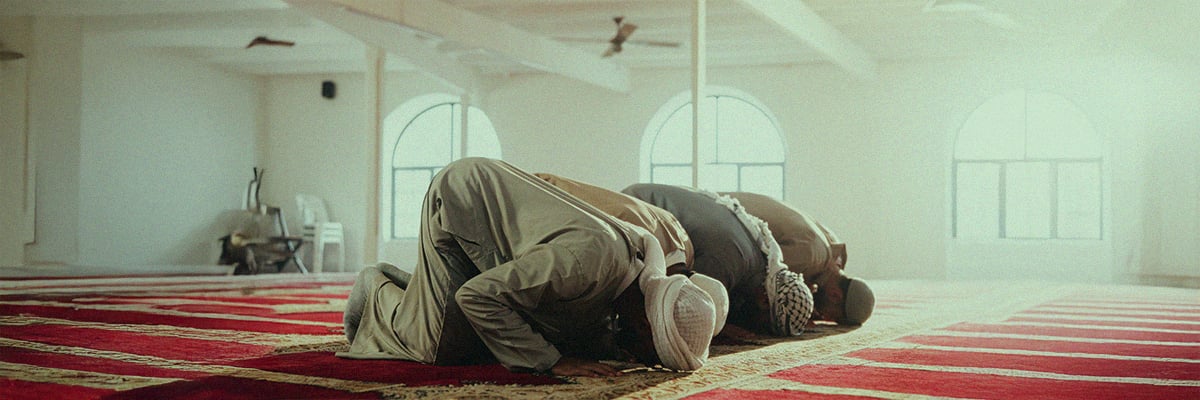
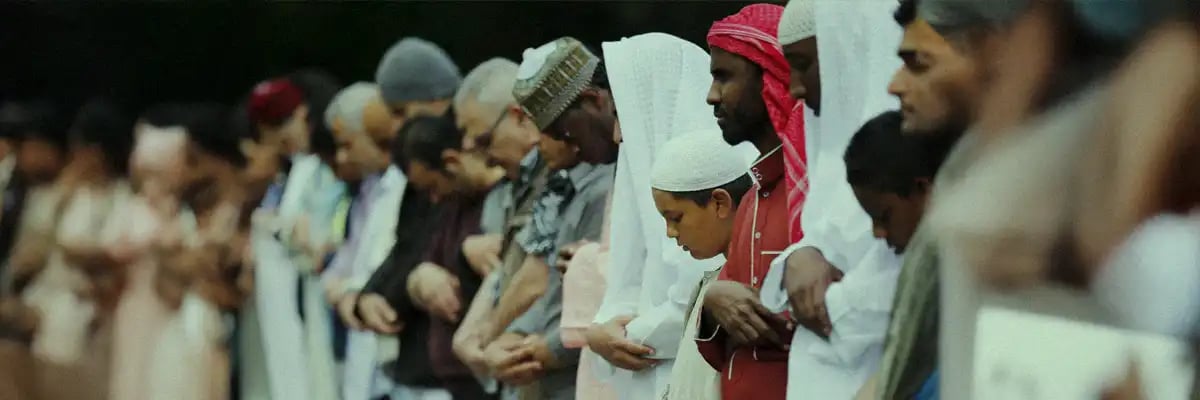
When a believer recites Maliki Yawmid-Deen (Master of the Day of Judgment) in prayer, the entire mood shifts. The illusion of personal grandeur shatters. Suddenly, death is real. One day, he too will be bathed, shrouded, carried on a bier, and lowered into the soil. The realization grips him: That day could come at any moment. His arrogance melts away.
The awareness of an impending reckoning makes a person more cautious. He begins to conduct a spiritual audit of his actions. Just as corrupt officials dread the moment an investigation is launched, knowing their secret accounts will be exposed, every believer in prayer stands in self-examination.
It doesn’t matter if he is rich or poor, a CEO or a janitor, a ruler or a servant—each one knows he will be questioned.
Even those who travel with police convoys and armed security, those who wield political power, those who command armies and rule nations—all of them, when they stand in prayer, proclaim: “Maliki Yawmid-Deen.” “Master of the Day of Judgment.”
The word Malik also means King. And in that moment, every ruler, every authoritarian, every despot realizes: There is a King above me.
This is precisely why Pharaoh resisted the concept of a higher power. He wanted absolute dominion, refusing to acknowledge any authority greater than himself. But when an arrogant leader, accustomed to wielding unchecked power, stands in prayer and utters “Maliki Yawmid-Deen”, his false sense of supremacy crumbles.
Some still question whether the world will truly come to an end. But the Qur’an leaves no doubt: The sun will be extinguished. The moon will shatter. The stars will fall. The earth will quake violently. The mountains will be reduced to dust. Humanity will be in utter panic, running in all directions.
Every single act—good and evil—will be brought to account. Those who oppressed others, who plundered, deceived, murdered, and escaped justice will face their reckoning.
They may have thought they got away with it. They may have laughed, thinking, “I outsmarted everyone.”
But there is a day approaching when every debt will be paid in full.
Do you see now how Al-Fatihah shakes the very core of a believer?
Do you see how prayer prevents us from corruption and transgression?
And yet, there are those who still take it lightly. But once you truly understand its weight, you will never stand in prayer the same way again.