
"Are you truly going to pray for that man? Do you not recall the vile deeds he committed? Have you forgotten everything?"
Umar could no longer contain himself.
When the Prophet ﷺ stood to offer the funeral prayer for Abdullah ibn Ubayy ibn Salool, Umar (RA) leapt forward, seized the Prophet’s blessed cloak, and demanded this question.
Oh Lord, did Umar have such audacity before the Prophet ﷺ?
And what kind of leader must the Prophet ﷺ have been, to inspire such freedom among his followers?
But what did the Prophet ﷺ do in response to Umar's outburst?
The Prophet ﷺ turned to him, smiled gently, and said, “Step aside, O Umar.”
Yet Umar was not one to relent. He persisted, repeating his objections, his fervor growing with every word. Finally, the Prophet ﷺ replied with serene authority, “Allah has granted me a choice, and this is what I have chosen.”
The choice he referred to was rooted in the verse revealed earlier:
"Whether you ask forgiveness for them, or do not ask forgiveness for them—even if you ask seventy times—Allah will not forgive them."
(Surah At-Tawbah: 80)
The Prophet ﷺ, in his infinite mercy, then said, “If I knew that seeking forgiveness seventy times—or more—would grant them pardon, I would do so.”
But who was this man that evoked such a strong reaction from Umar?
And why was the Prophet ﷺ insistent on praying for him?
This man was Abdullah ibn Ubayy ibn Salool, the leader of the hypocrites (the so-called Munafiqun). He was the one who had orchestrated the slander against Aisha (RA), the Prophet’s wife. He had hurled veiled insults at the Prophet ﷺ, once even mockingly claiming he would drive the believers out of Madinah. Yet outwardly, he professed Islam, prayed with the believers, and paid his zakat.
It was for this man that the Prophet ﷺ, the embodiment of mercy, chose to lead the funeral prayer. The Prophet ﷺ was acutely aware of the torment of the Hereafter. Perhaps, he thought, if even a man like Abdullah could be spared, then let it be so. Such was the Prophet’s compassion, an ocean with no shore.
Islam teaches us to judge based on outward actions, leaving the secrets of hearts to Allah alone. The Prophet ﷺ acted within the framework of existing laws, for no divine prohibition had yet been revealed regarding funeral prayers for hypocrites. Moreover, there were societal considerations: Abdullah’s son was a sincere believer, and the Prophet ﷺ did not wish to cause him grief. Abdullah was also a leader among the Khazraj tribe, and the prayer helped maintain harmony among the Muslims.
And so, the Prophet ﷺ prayed.
But as he walked away from the grave, a new revelation descended:
"Do not ever pray over any of them who dies, nor stand at his grave. They disbelieved in Allah and His Messenger and died as defiantly disobedient."
(Surah At-Tawbah: 84)
This decree, aligning with Umar’s initial objection, became the final ruling.
Reflecting on this event, Umar (RA) would later express surprise at his own boldness toward the Prophet ﷺ on that day. "I was amazed at myself," he would say, recalling how passionately he had pressed his perspective. Despite Umar’s intensity, the Prophet ﷺ responded with calm patience, meeting his companion’s fervor with a gentle smile and clear resolve.
This story reveals much about the Prophet ﷺ—his compassion, patience, and deep commitment to justice. It also shows the dynamic between him and his companions, who felt free to voice their concerns, knowing that their leader’s wisdom would prevail.
In moments like this, the Prophet ﷺ’s mercy becomes a guiding light for all of humanity, a testament to the balance between divine law and human compassion.
For those who investigate impartially, incidents like these reveal the distinct roles of Allah and His Messenger ﷺ.
Allah, the Creator, is the Owner, Lawmaker, and the One who revealed the Qur'an. Muhammad ﷺ, the servant of Allah, is the human being who obeys and implements these laws.
Some mistakenly conflate the two, claiming they are one and the same. Others mockingly suggest that Allah is merely a 'fake identity' of Muhammad ﷺ. Such conclusions arise from biases and a lack of impartial inquiry.
This particular incident was narrated by Umar (RA) himself. It was not the first time that Qur'anic revelations aligned with Umar’s preferences. Similar instances occurred concerning the rulings on hijab, praying at Maqam Ibrahim, and the treatment of captives, where Umar’s sentiments echoed the eventual divine decrees.
Umar’s resolute stance on matters of religion often earned recognition from the Prophet ﷺ. On one occasion, the Prophet ﷺ remarked, “Allah has placed truth upon Umar’s tongue. If Umar walks down one path, Satan flees to another.”
One day, Aisha (RA) and Sawda (RA) found themselves sharing a delightful and mischievous moment together. Sawda had come to visit Aisha, and as a gracious hostess, Aisha prepared a delicious dish and presented it to her guest. But Sawda, with a playful glint in her eye, stubbornly refused to eat.
“If you don’t eat, I’ll smear this food on your face!” Aisha declared with mock seriousness. Sawda, unable to suppress her laughter, teased back, “Go ahead, I dare you!”
The scene played out in the comforting presence of the Prophet ﷺ, who sat between them, one leg resting on Aisha and the other on Sawda. Without hesitation, Aisha scooped up a bit of food with her fingers and playfully smeared it across Sawda’s face. Sawda erupted in laughter, her mirth echoing through the room.
The Prophet ﷺ, watching the moment unfold with gentle amusement, shifted his leg from Sawda, signaling to her that she was free to respond. Seizing the opportunity, Sawda scooped up some food and smeared it back onto Aisha’s face, her laughter now joined by the Prophet’s ﷺ soft chuckles.
Their joyous moment was suddenly interrupted by a voice from outside. It was Umar himself calling out to his son, Abdullah. The Prophet ﷺ, sensing Umar’s stern nature, chuckled and said, “Here comes Umar. Quick, wash your faces! He’ll get angry!”
The Prophet ﷺ’s expression turned into a knowing smile. “Here comes Umar,” he said, humor lacing his voice. “Quick, wash your faces! He’ll get angry!”
This lighthearted exchange offers a rare glimpse into the intimate world of the Prophet ﷺ and his household. It speaks of the easy companionship shared by co-wives visiting one another, the spirited youthfulness of Aisha, and the Prophet’s ﷺ own warmth and humor. He was a husband who relished the laughter and playfulness of his family, always allowing room for harmless fun.
Yet, the mention of Umar brought a contrasting tone—a reminder of his renowned seriousness and unyielding nature. The Prophet ﷺ appreciated this, as he did all the unique traits of his companions, and often spoke of their individual virtues. On one occasion, he described them with striking clarity:
“Among my companions, the most compassionate is Abu Bakr. The most resolute in matters of faith is Umar. The most modest is Uthman. The best judge is Ali. The one with the greatest knowledge of what is lawful and unlawful is Mu’adh. The most knowledgeable in inheritance laws is Zaid ibn Thabit. The best reciter of the Qur’an is Ubayy. And every nation has a trustworthy guardian, and the guardian of my ummah is Abu Ubaidah.”
In these words, the Prophet ﷺ painted a portrait of his community, each companion representing a vital quality that enriched the whole. Abu Bakr’s boundless compassion, Umar’s resolute faith, Uthman’s profound modesty, and Ali’s keen sense of justice—all came together to form a mosaic of virtues that defined the early Muslim community. The Prophet ﷺ’s ability to nurture and celebrate these traits ensured that his companions would guide and inspire generations to come, their virtues forever woven into the fabric of the ummah.
The scene where the Prophet ﷺ speaks about Uthman’s modesty is both deep and delightful in its simplicity. Aisha (RA) narrates this memorable moment from her home.
The Prophet ﷺ was reclining in her room, relaxed and at ease, his shins uncovered—a sign of his comfort in his own home. As they sat, Abu Bakr (RA) arrived and asked for permission to enter. The Prophet ﷺ granted it, remaining as he was, his demeanor unchanged. Abu Bakr came in, exchanged words, and left.
Shortly after, Umar (RA) sought permission to enter. Again, the Prophet ﷺ allowed him in without adjusting his posture. Umar, too, conversed with the Prophet ﷺ, and then departed.
But when Uthman (RA) requested entry, something remarkable happened. The Prophet ﷺ sat up, adjusted his garments to cover himself fully, and straightened his posture before allowing Uthman to enter. They spoke, and Uthman eventually left.
Curious about this change in demeanor, Aisha (RA) couldn’t help but ask, “When Abu Bakr came in, and even when Umar came in, you didn’t change your position. But when Uthman arrived, you sat up and adjusted yourself. Why?”
The Prophet ﷺ smiled gently and replied, “Should I not show modesty before someone whom even the angels feel shy in front of?”
This incident captures the extraordinary character of Uthman (RA), whose modesty was so magnanimous that it influenced even the angels. It also highlights the depth of the Prophet ﷺ’s sensitivity, recognizing and honoring the unique qualities of each companion in ways that were subtle yet deeply meaningful. Such moments offer a glimpse into the richness of the relationships within the Prophet’s ﷺ life, where human interactions were infused with divine wisdom and grace.
In many traditions, the Prophet ﷺ spoke of Abu Bakr and Umar together, often without being asked, as if their companionship was inseparable. On one occasion, when someone expressed doubt upon hearing about a cow that had spoken, the Prophet ﷺ affirmed, "I believe in it, and so does Abu Bakr."
Such was the closeness of their bond that their names were often paired in his words and actions. In the science of hadith, the term Shaykhain—"the two elders"—refers to none other than Abu Bakr and Umar.
Their companionship extended beyond life into death. Both Abu Bakr and Umar are buried beside the Prophet ﷺ in Madinah, a physical testament to their persistent closeness. Following them in prominence is Uthman, often mentioned third after Abu Bakr and Umar in hadith, and whose name naturally followed theirs in discussions of leadership and virtue. However, Uthman’s grave lies a little farther from theirs, in Madinah’s Baqi' Cemetery.
One story illuminates the connection between their burial places and their roles in life. Abu Musa al-Ash’ari (RA) narrates:
“One day, after completing my ablution, I resolved to spend my entire day in the service of the Prophet ﷺ. I inquired about his whereabouts and was directed to the well of Bir Aris. I went there and found the Prophet ﷺ sitting on the edge of the well, with his legs dangling down.
I greeted him with salam and said, ‘Today, I am entirely at your service.’ I then sat by the entrance to the garden, which was secured by a gate made of palm stalks.
While I was there, Abu Bakr arrived. He knocked on the gate, and I asked, ‘Who is it?’
‘Abu Bakr,’ he replied.
I informed the Prophet ﷺ of his arrival. The Prophet ﷺ said, ‘Allow him to enter and give him the glad tidings of Paradise.’
I returned to Abu Bakr and told him what the Prophet ﷺ had said. Abu Bakr entered, thanked Allah, and sat to the Prophet’s right, with his legs also dangling down from the edge of the well.
A short while later, Umar arrived. He knocked on the gate, and I asked, ‘Who is it?’
‘Umar,’ he answered.
Once again, I informed the Prophet ﷺ of his arrival. The Prophet ﷺ said, ‘Allow him to enter and give him the glad tidings of Paradise.’
I returned to Umar and conveyed the Prophet’s words. Umar, too, thanked Allah, entered, and sat to the Prophet’s left, with his legs also dangling down from the edge of the well.
Time passed, and then Uthman came and knocked on the gate. I asked, ‘Who is it?’
‘Uthman,’ he said.
As before, I informed the Prophet ﷺ. This time, the Prophet ﷺ said, ‘Allow him to enter and give him the glad tidings of Paradise, along with the news of a great trial that he will face.’
I returned to Uthman, shared the Prophet’s words, and he entered. Upon hearing the news, Uthman thanked Allah and sought His protection from any calamity. Unlike the others, he sat across from them, on the opposite side of the well.”
Zayd, the narrator, adds, “I later understood this to be an indication of their burial places.”
This profound story intertwines their lives, virtues, and destinies. Abu Bakr and Umar, close in life and death, rest beside the Prophet ﷺ in his eternal abode. Uthman, though a little farther away in burial, remains eternally linked to them through his faith, leadership, and the immense trial he bore with patience. These moments are not just stories of the past—they serve as windows into the profound bonds of love, trust, and destiny shared by these luminous figures of Islam.
The fulfillment of the prophecy concerning Uthman (RA) was both heart-wrenching and tragic. Uthman, the third caliph of the believers after the Prophet ﷺ, faced an upheaval orchestrated by the hypocrites, who stirred unrest among the people against him. They besieged his home, cutting off access to water and food. Despite the immense hardship, Uthman observed fasts, recited the Qur’an, and remained steadfast in his worship.
In those final moments, as he sat in his home reciting the Qur’an, the rebels forced their way inside. They brutally attacked him, shedding his blood upon the very pages of the Qur’an. His blood fell upon the verse in Surah Al-Baqarah: “Allah will suffice them, and He is the All-Hearing, the All-Knowing” (2:137).
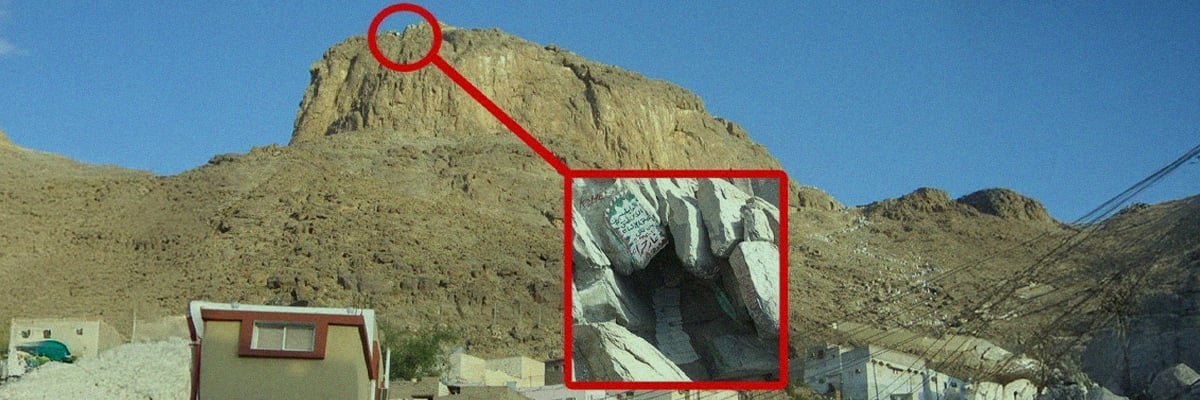
Another poignant moment connects Abu Bakr, Umar, and Uthman to a singular event. One day, the Prophet ﷺ ascended Mount Uhud with these three companions. The mountain trembled beneath their feet. The Prophet ﷺ gently addressed it, saying, “Be still, O Uhud, for standing upon you are a prophet, a siddiq, and two martyrs.”
The title "Siddiq" was a unique honor bestowed upon Abu Bakr (RA). It was after the miraculous Night Journey of the Prophet ﷺ that this title became his. When the disbelievers mocked the event, they approached Abu Bakr, saying, “Your companion claims he traveled to Jerusalem and back in one night.” Without hesitation, Abu Bakr responded, “If he said it, then I believe him. And I would believe him in matters even greater than this.” From that moment onward, he became known as As-Siddiq, the truthful one.
The Prophet’s ﷺ prediction of martyrdom for both Umar and Uthman also came to pass. Umar (RA) was leading the Fajr prayer in Masjid An-Nabawi when he was struck by a dagger wielded by Abu Lu’lu’a, a fire worshipper. Severely wounded, Umar succumbed to his injuries, fulfilling the prophecy of his martyrdom.
As for Ali (RA), the fourth caliph, his legacy as the cousin and son-in-law of the Prophet ﷺ is deeply interwoven with the history of Islam. While this account does not delve into his story in detail, Ali’s contributions and role will emerge naturally in the narratives to come, for his presence looms large in the annals of Islamic history.
These moments illuminate not only the lives of these remarkable companions but also the prophetic insights of the Prophet ﷺ, who foresaw their destinies with clarity. Their sacrifices and unwavering faith continue to inspire and guide generations of believers.