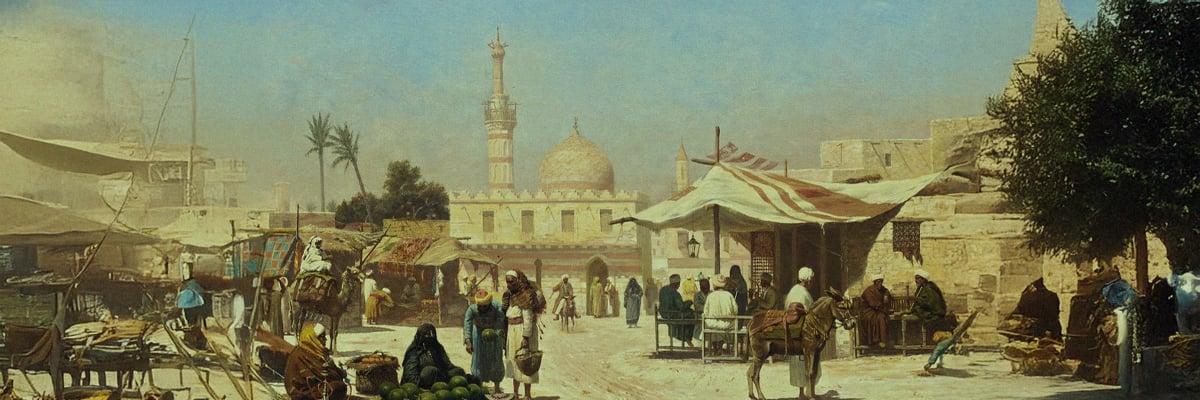

Scene One: The Poet of the Quraysh
“Do you know the Quraysh are planning to collect money for you?”
“For me? Why?”
“So, they can give it to you.”
“And for what reason?”
“They’ve heard you’ve been listening to Muhammad.”
Mughira couldn’t help but laugh. “Are they trying to buy me off? Do they forget I am one of the wealthiest men among them?”
This exchange between Abu Jahl and Mughira ibn Shu‘ba reveals a simmering tension. Mughira, a poet and a leader of the Quraysh, had attended one of Muhammad’s gatherings and heard the Qur’an recited. The words had touched something deep within him, something beyond what his poetry had ever reached. For Abu Jahl, this was unacceptable. Mughira was influential; if he were moved by Muhammad’s message, many others might follow.
When bribes and persuasion failed to deter Mughira, Abu Jahl sought another strategy. “You must denounce Muhammad publicly,” he urged. “Say something that will assure the people you are not swayed by his words.”
Mughira sighed, then replied, “What can I say? You know I am the most learned among us in the art of poetry. I know every meter, rhyme, and rule of this craft. Yet, what he speaks is not poetry. There is a sweetness to it, a mastery that captivates. His words bear fruit—lush and abundant at the top, nourishing and solid at the roots. Nothing can surpass it; it crushes all beneath it. I swear, this is not the word of any human being.”
What had he heard? It was the 90th verse of Surah Al-Nahl:
"Indeed, Allah commands justice, excellence, and giving to relatives, and He forbids immorality, bad conduct, and oppression. He admonishes you so that you may take heed."
Mughira, a master of words, stood humbled before this miraculous verse.
Scene Two: Al-Waleed’s Advice
It was a bustling day in the market, where merchants from across Arabia gathered to trade their wares. Among the crowd, Al-Waleed ibn Al-Mughira, an elder of the Quraysh, drew attention. The people, curious about his thoughts on Muhammad, pressed him for his opinion.
“Let us come to an agreement,” Al-Waleed began. “The tribes will ask us about Muhammad and his message. We must respond with one voice. A divided answer will only expose us to ridicule.”
The elders nodded, agreeing to unite their narrative.
“Then tell us, what should we say?” they asked.
“You first,” Al-Waleed said. “What do you propose?”
“Let’s call him a soothsayer.”
“No. He is not a soothsayer. We’ve seen soothsayers and heard their chants. This is nothing like their mutterings.”
“Then perhaps he’s mad.”
“Madness? We know madness and its symptoms. He displays none of them.”
“What about calling him a poet?”
“He is no poet. I know poetry as well as anyone. This is not poetry.”
“Then a sorcerer?”
“Neither is he a sorcerer. We’ve seen sorcery and its effects. His words are something else entirely.”
Exasperated, they demanded, “What do you suggest, then?”
Al-Waleed paused. “What he recites is profoundly sweet. Its roots are fertile, its branches heavy with fruit. If we must say something, let’s call him a sorcerer—not because he is one, but because his words create division. He has separated father from son, husband from wife, brother from brother. Let us call him a disruptor of families.”
This became their strategy. They stationed themselves at every market entrance, warning travelers about Muhammad.
Scene Three: The Poet of Daws
The Quraysh spotted him from afar—a lone traveler approaching the market.
“Is that Tufayl ibn Amr?” one of them asked.
“Yes, it’s him. A poet, a leader, and a wealthy man from the tribe of Daws.”
Alarmed, they devised a plan. Tufayl’s influence could not be allowed to bolster Muhammad’s message. They surrounded him, speaking in urgent tones.
“Tufayl, beware! A man named Muhammad has brought something strange to our land. His words sow discord—between fathers and sons, husbands and wives, brothers and brothers. Don’t listen to him. His words are a spell that you must avoid.”
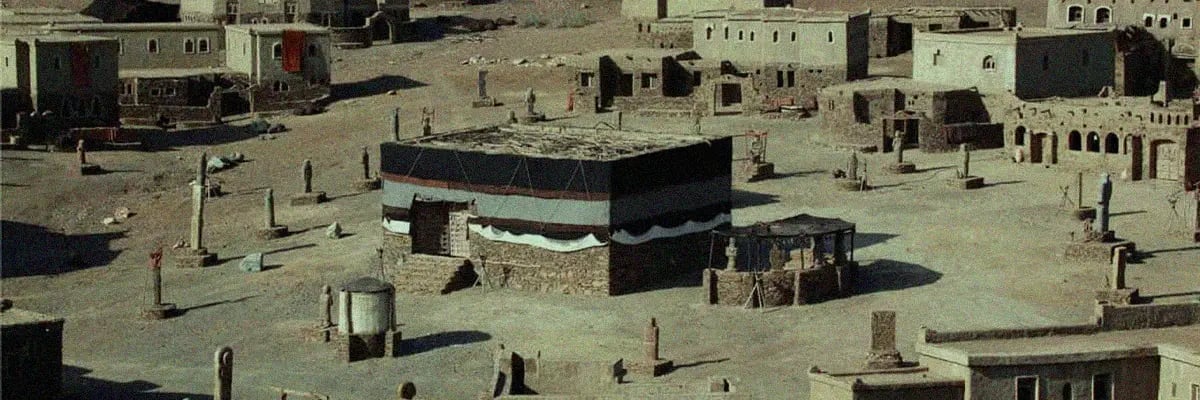
Taking their warnings seriously, Tufayl stuffed cotton into his ears. Determined, he entered the Kaaba, careful to avoid any sound from Muhammad. But as he approached, he glimpsed Muhammad praying and heard fragments of the Qur’an.
Tufayl paused. The words reached him even through his self-imposed barrier. A seed of curiosity took root.
“What am I afraid of?” he thought. “I am a poet; I can discern good from bad. Should I not judge for myself?”
He approached Muhammad. “Tell me, what is it you proclaim?”
Muhammad recited verses from the Qur’an, and Tufayl’s heart was moved. “I have never heard anything so beautiful, so just,” he later said. “It is nothing like poetry; it is truth.”
He returned to his tribe and became a caller to Islam, bringing many into its fold.
Scene Four: The Quraysh Elder’s Encounter
Utbah ibn Rabi‘a sat among the Quraysh, watching Muhammad pray alone near the Kaaba. Turning to his companions, he said, “Let me speak to him. Perhaps I can convince him to abandon his mission.”
They agreed, desperate for a resolution.
Utbah approached Muhammad and spoke with measured calm. “Nephew, you are of noble lineage, and your people respect you. Yet you have brought a message that has divided us. Tell me, what do you want? If it is wealth, we will make you the richest among us. If you desire power, we will crown you king. If you are afflicted by something you cannot control, we will pay for your cure.”
Muhammad listened patiently. When Utbah finished, he asked, “Are you done?”
“Yes.”
“Then listen to me.”
Muhammad began to recite Surah Fussilat:
"Ha Meem. A revelation from the Most Merciful, the Most Compassionate. A Book whose verses are detailed—a Qur'an in Arabic for people who know..."
Utbah sat entranced, unable to move. When Muhammad finished, he said, “This is my response. Now it is your choice.”
Utbah returned to his people, his demeanor changed. “I have heard words today unlike anything I’ve ever heard before. Leave Muhammad be. If his message prevails, it will bring honor to us all. If it fails, we lose nothing.”
The Quraysh dismissed him, accusing him of falling under Muhammad’s spell.
Scene Five: The Conversion of Cat Stevens
In the 1970s, the world knew Cat Stevens as a musical sensation, a voice that carried the youth of his time into euphoria. His songs dominated charts, and his fame seemed boundless.
During a visit to Marrakesh, Stevens heard the adhan—the Muslim call to prayer—for the first time. Its melody resonated deeply, unlike anything he had ever encountered. “What is this sound?” he asked.
“It is the music of God,” came the reply.
Later, in California, Stevens experienced a near-death moment while swimming in the ocean. Struggling against the waves, he called out, “Oh God, if You save me, I will dedicate my life to You.” Miraculously, the tides turned, and he reached the shore.
His spiritual quest intensified. Exploring various traditions, he found no peace—until his Jewish brother gifted him a copy of the Qur’an. It was the story of Prophet Yusuf (Joseph) that moved him to tears.
On December 23, 1977, Cat Stevens embraced Islam, taking the name Yusuf Islam. Reflecting on his journey, he said, “The Qur’an is more beautiful than music. Its rhythm and cadence surpass anything man can create.”
Across time, from the deserts of Arabia to the modern West, the Qur’an’s beauty continues to astonish. Its verses, neither poetry nor prose, hold a melody that touches hearts and transforms lives—forever resonating as the divine music of God.