
The necessary requirements for any act of worship to be valid are called Shurut (conditions). These conditions must be maintained throughout the act of worship until its completion.
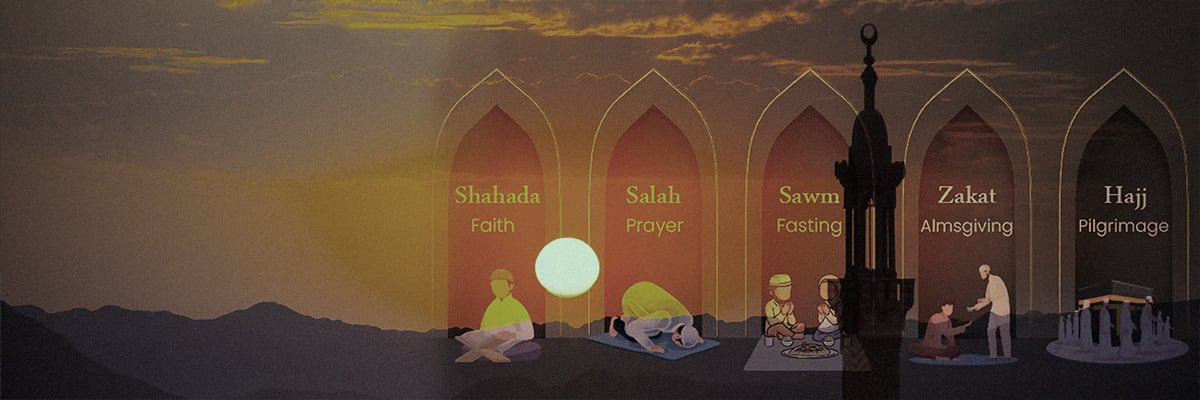
There are five conditions for the validity of the daily prayer (Salah):
1. Purification from Minor and Major Impurities
One must purify themselves from both minor and major impurities before performing prayer.
• If ablution (Wudu) is required, it is considered minor impurity.
• If a full ritual bath (Ghusl) is required, it is considered major impurity.
(Details on these impurities will be explained later.)
2. Ensuring Cleanliness of the Body, Clothing, and Prayer Space
The body, clothing, and place of prayer must be completely free from impurities.
(Details on what constitutes impurity will be explained later.)
3. Covering the Prescribed Parts of the Body (Awrah)
A person must stand in prayer in the most dignified and respectful attire.
• For Men:
• The area from the navel to the knees must be always covered, both in and outside of prayer.
• If a person wears trousers or clothing that does not properly cover this area, or if any part of it becomes exposed during prayer, the prayer will be invalid.
• Modern clothing that may reveal this area while bowing or prostrating should be avoided.
• Rolling up sleeves or folding clothes in a way that reveals these areas is also not permissible.
• For Women:
• The entire body must be covered except for the face and hands (from fingertips to the wrist).
• No other part of the body should be visible during prayer.
• Special care should be taken to ensure that when raising the hands, the forearm or any part of the body does not become exposed.
• If wearing a scarf or veil, it should cover the head and neck properly so that the hairline, jawline, or any lower part of the chin is not exposed.
• Wearing thin or see-through clothing that reveals the skin color is not valid for prayer.
Outside of prayer, a woman should wear modest, loose-fitting clothing that does not reveal her body shape, especially in the presence of non-mahram men. Islam prescribes these clothing guidelines to preserve the dignity and protection of women.
4. Ensuring the Correct Time for Each Prayer
Each prayer must be performed within its designated time frame.
• A person must be sure that the time for a specific prayer has entered before performing it.
• Praying based on mere assumption that the time has arrived is not valid.
The time periods for the five obligatory prayers are:
1. Dhuhr (Midday Prayer) – Begins after the sun moves from its highest point until the shadow of an object becomes equal to its length.
2. Asr (Afternoon Prayer) – Begins after the Dhuhr time ends until sunset.
3. Maghrib (Sunset Prayer) – Begins immediately after sunset and lasts until the red twilight in the sky disappears.
4. Isha (Night Prayer) – Begins after the red twilight disappears and lasts until the break of dawn.
5. Fajr (Dawn Prayer) – Begins from the first light of dawn until sunrise.
It is best to perform prayers as soon as their time begins.
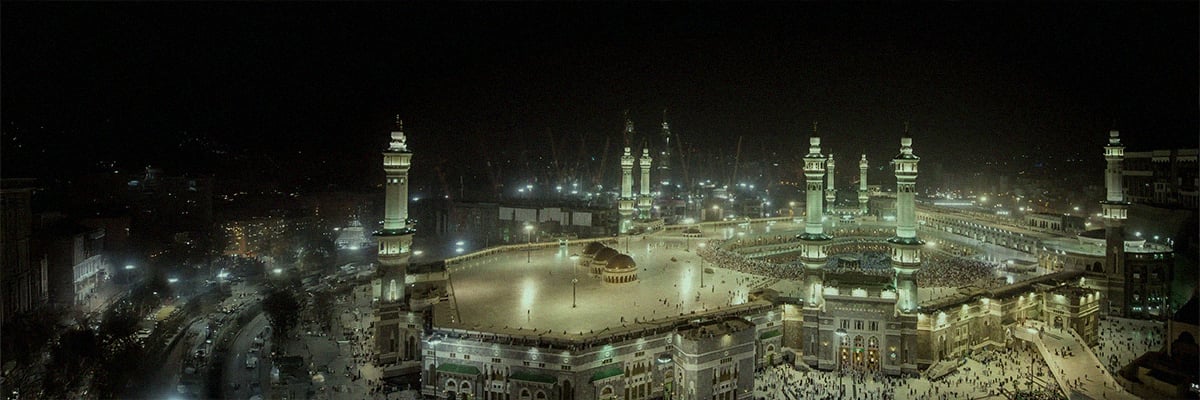
5. Facing the Qibla (Direction of the Kaaba in Mecca)
• One must face the Qibla (Kaaba in Mecca) while performing prayer.
• Exception: During optional (Sunnah) prayers while traveling, one does not need to face the Qibla and can pray in the direction they are traveling.
• If someone is traveling and does not know the direction of the Qibla, they must try their best to determine it through available signs and then pray.
• If they later realize their direction was incorrect, they must repeat the prayer.
• It is Sunnah (recommended) to place a barrier (sutrah) such as a wall, pillar, or object at least three hand spans in height in front of oneself while praying.
• Walking in front of a praying person is prohibited. However, when praying in congregation, only the leader (Imam) needs to have a barrier in front.