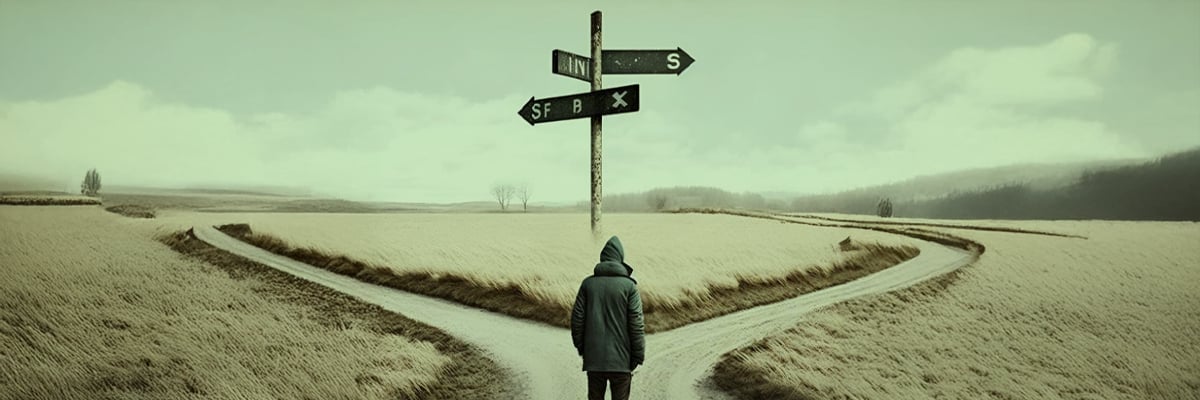

Once upon a time, a curious question surfaced in a quiet classroom: “What lies beyond what we know?” The teacher posed this to the students, gesturing with a twinkle in his eye as if inviting them to peer through the crack of a door leading to the unknown.
The lesson began with something as familiar as water. We all know water. A single drop—clear, delicate, holding the weight of nothing yet carrying the power of storms. Drops gather to form trickles, trickles grow into streams, and streams weave into rivers. Rivers, mighty and unyielding, tumble toward oceans that stretch farther than the eye can see. But the ocean, grand and limitless as it seems, is not the end.
“Imagine something beyond the ocean,” the teacher said. “Not a bigger ocean, but something so vast it makes oceans feel like puddles.” He called it Aquaglose, a name as peculiar as it was intriguing. The students chuckled nervously. How big could something like that be? Bigger than oceans? Bigger than rivers? The teacher’s grin widened as he said, “It’s only the beginning.”
Beyond Aquaglose lay Hydrablim, a realm where waves would tower like mountains, making ordinary seas look like playthings for children. But even Hydrablim wasn’t the summit. Far greater still was Pelagiaskura, a scale of magnitude that dwarfed Hydrablim by billions of times. And then, looming above all, came Coymozare—a cosmic reservoir so immense that its mere mention seemed to silence the room.
The teacher paused and asked, “Now, how do you picture it? Can you feel the weight of these words? Or does your mind stumble, trying to grasp something so far beyond your reach?” The students fidgeted. A few smiled politely, unsure whether to answer or stay quiet. But the truth was apparent: their imaginations had already hit a wall.
A shift in tone brought the conversation back to earth. The teacher began to recount a local tale: a young woman had gone missing from her village. Rumors spread like wildfire. She was last seen walking by the rice fields at dusk, hand in hand with a man—a familiar yet mysterious figure. The chatter grew louder: someone spotted her at the bus stop; another swore she bought chocolates at the bakery; and a third claimed she had tea at a roadside stall. Early the next morning, the police found the pair in a rented flat in the city.
The students laughed softly. They recognized the scenery in the story—the rice fields, the bus stop, the bakery. They could picture the village, the winding roads, the chatter of neighbors. Each detail felt familiar, tangible, and alive. But as the teacher returned to his earlier tale of Aquaglose and Coymozare, the room grew quiet again. The familiarity was gone, replaced by an abstract vastness that felt unreachable.
This is how the human mind works. We can vividly imagine what is close to our experience: the warmth of a teacup, the rustle of leaves in a field, the creak of a bus stop bench. But ask us to picture something beyond our reach, something truly infinite, and our imagination falters. Our minds cling to the concrete, leaving the abstract shrouded in haze.
“And yet,” the teacher said, “this limitation teaches us something profound.”
He turned to the subject of time. We’re comfortable with time measured in centuries: 500 AD, 3000 BC, or even a million years ago. But what happens when we try to imagine ten billion years? A trillion? A quadrillion? Our thoughts buckle. Multiply these numbers further, and the concept of time itself seems to unravel, stretching endlessly into the past, ungraspable and overwhelming.
“Here lies a lesson about knowledge,” he continued. “What we know is a mere fragment, limited by our experience. And yet we often carry the arrogance of believing we can know it all.”
In moments like these, humility becomes a gift. The teacher quoted an ancient text: “They know only the outward appearance of life in this world, but they are heedless of the greater reality.” Our understanding is shaped by what we see, hear, and touch, but the unseen—the infinite and the eternal—lies beyond the reach of even the sharpest mind.
“Now imagine,” he said, leaning forward, “a Creator who exists beyond all of this. Not bound by time or space, not measurable by any scale we know. The ocean, vast as it is, was created. Even Aquaglose, Hydrablim, and Coymozare—if they existed—would be created. But the Creator? Uncreated, eternal, and beyond comparison.”
The students sat quietly, their minds churning. They weren’t sure they could grasp it fully, and that was the point. Understanding the infinite isn’t about picturing it as we do a familiar landscape. It’s about accepting that some things are greater than our imagination can hold.
The teacher concluded, “When we let go of the need to fully comprehend, we open ourselves to awe. And in that awe, we find humility. The same humility that allows us to recognize the limits of our minds and the boundlessness of what lies beyond.”
The students left the classroom that day with much to think about. They couldn’t quite picture Coymozare, but perhaps they didn’t need to. Some things are meant to be felt, not seen.