
A building rises with grace. Its strength lies in a firm foundation. At its base are six immovable pillars. These support an upper level with five additional columns. The entire structure relies on the foundation’s integrity. If the upper-level collapses, the foundation may remain intact. But if the foundation falters, the whole building will crumble.
Such is the architecture of Islam: belief forms its unshakable foundation, while actions comprise the structure it supports. Without this foundation, even the most outwardly impressive deeds lack stability and meaning.
The six tenets of faith in Islam are the essential pillars of this base, and at the very core lies belief in Allah, the Creator.
Belief in Allah is more than an intellectual acknowledgment—it is a recognition of Him as the Sustainer of all existence, the Source of life, and the Guide of all that is. To know Him as He ought to be known is to align oneself with the purpose of creation itself. With this understanding, everything else falls into place. It is like planting a perfect seed in fertile soil. The roots, trunk, branches, leaves, and fruit do not require separate attention—they emerge and flourish naturally.
The Qur’an captures this reality with exquisite imagery: “Do you not see how Allah compares a good word to a good tree? Its root is firm, and its branches reach to the sky. It always bears fruit by the will of its Lord. Allah presents examples for the people so that they may reflect” (Surah Ibrahim: 24–25).
But what happens when faith is weak or unstable? The Qur’an offers a contrasting image: “And the example of a bad word is that of a bad tree, uprooted from the surface of the earth, having no stability” (Surah Ibrahim: 26).
Faith that wavers, riddled with doubt, cannot anchor a person. It is like a tree with shallow roots, swaying in every wind, unable to stand firm when tested by life’s storms.
When the foundation of belief in Allah is firm, the other pillars of faith naturally rise, creating a complete and resilient structure. These six pillars are interconnected, each essential to the stability and beauty of the whole.
The belief in angels forms the second pillar. Angels are not mythical creatures but beings of light, unseen forces through which Allah carries out His will. They oversee both the visible and hidden workings of the universe, ensuring the divine plan unfolds with precision. From recording human deeds to managing the cosmos, angels serve as a constant reminder that life is deeply interconnected with realms beyond human perception.
The third pillar is the belief in divine scriptures. For Muslims, the Qur’an is the final and complete revelation, a complete and eternal guide for humanity. However, it is not the first divine book. Earlier communities received scriptures: the Psalms (Zabur) given to David, the Torah (Tawrah) to Moses, and the Gospel (Injeel) to Jesus. These revelations conveyed the same fundamental truths. They were tailored to the needs of their times. Together, they form a lineage of divine guidance that culminates in the Holy Qur’an.
Belief in prophets forms the fourth pillar. Prophets are the messengers chosen by Allah to guide humanity, embodying the principles of faith in their words and deeds. Across the ages, approximately 124,000 prophets were sent to different communities, each serving as a guide and a source of hope. From Adam to Muhammadﷺ, these messengers exemplified virtue and wisdom. Muhammad ﷺ, as the Seal of the Prophets, delivered the universal message of Islam, making it accessible to all peoples and times.
The fifth pillar is the belief in the Hereafter. Life does not end with death; rather, death is a transition to another realm, where ultimate justice prevails. The Qur’an challenges the idea that life simply ends without accountability: “Does man think that he will be left aimless? Did We not create him from a drop of fluid? Then We made him into a clinging clot, then shaped him into a perfect form. And then We made him into two paths: some grateful, some ungrateful” (Surah Al-Qiyamah: 36–40).
The Hereafter is the harvest of one’s deeds. Just as a farmer reaps what is sown, so too does every soul receive the fruits of their actions. For the virtuous, it is a realm of eternal reward; for the wicked, it is the place of accountability.
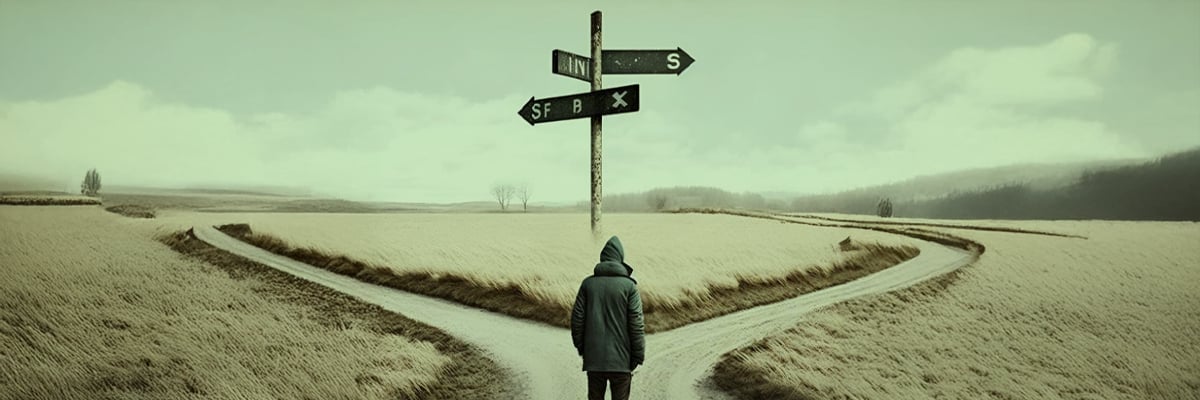
Finally, belief in predestination (qadr) completes the foundation. Life unfolds within the framework of Allah’s divine decree; every good and bad is from Allah. Humans possess free will and the intellect to choose between good and evil, yet everything ultimately occurs according to Allah’s plan. This belief does not negate human effort but places it within the larger context of divine wisdom. It instills trust in Allah and inspires resilience, knowing that every hardship and blessing serves a purpose.
These six tenets—belief in Allah, His angels, His scriptures, His prophets, the Hereafter, and His decree—are the roots of the tree of faith. Together, they provide stability, nourishment, and growth. This allows the upper structure of actions and deeds to rise with grace and purpose.
The Qur’an often uses the imagery of trees, growth, and rootedness. It emphasizes that faith is not static. Faith is alive, growing, and bearing fruit. A tree deeply rooted in fertile soil provides shade, sustenance, and beauty. In the same way, a life grounded in faith becomes a source of benefit for oneself and others.
Without these roots, actions are fleeting—like leaves scattered by the wind. To live a meaningful life, one must first cultivate the soil of belief, plant the seed of faith, and nurture it with understanding and sincerity. Only then can the fruits of one’s deeds flourish. They endure both in this world and in the life to come.
Islam’s foundational beliefs are not abstract concepts but the framework that gives life its meaning, direction, and purpose. From these roots grows a life of integrity, beauty, and strength, grounded in the worship of the Creator and the service of His creation. The structure of faith, when built upon these pillars, stands resilient, its strength enduring through the trials and storms of time.