
Belief often feels like an ancient river, flowing beneath the surface of our busy lives. Sometimes, we hear its murmurs; other times, it is quiet, hidden beneath the din of logic and the immediacy of experience. And yet, belief has shaped the human story for as long as we can remember. What is it that makes us believe? How does one trust in something unseen, something that defies the limits of touch, sight, and reason?
To approach belief, we must first examine the human being in all its depths. For millennia, humanity has marveled at its own capacities, observing the many layers of its existence. At the surface lies the physical: the body’s strength and grace, its ability to leap, climb, and endure. This realm is one of visible achievement, where athletes, dancers, and performers astonish us with feats of discipline and skill. With rigorous practice and scientific understanding, the human body can be pushed to extraordinary limits.
But we are not merely bodies. The intellect—the realm of thought—is another layer of our existence. Here, we find humanity’s great gift for reason, discovery, and creativity. It is the intellect that allows us to pose questions about the stars and then build tools to explore them. From the smallest child solving a puzzle to the most accomplished philosopher or scientist, the human mind burns with a curiosity that shapes our understanding of the world.
And then there is the emotional layer, which too often escapes notice in our rush to praise reason. Emotions are the force behind art, the heartbeat of poetry, and the soul of music. They are what allow us to weep at a story, to laugh at the smallest joy, and to see beauty where others might see only the mundane. It is here, in the emotional realm, that humanity touches something beyond itself—a flicker of transcendence in the act of creation.
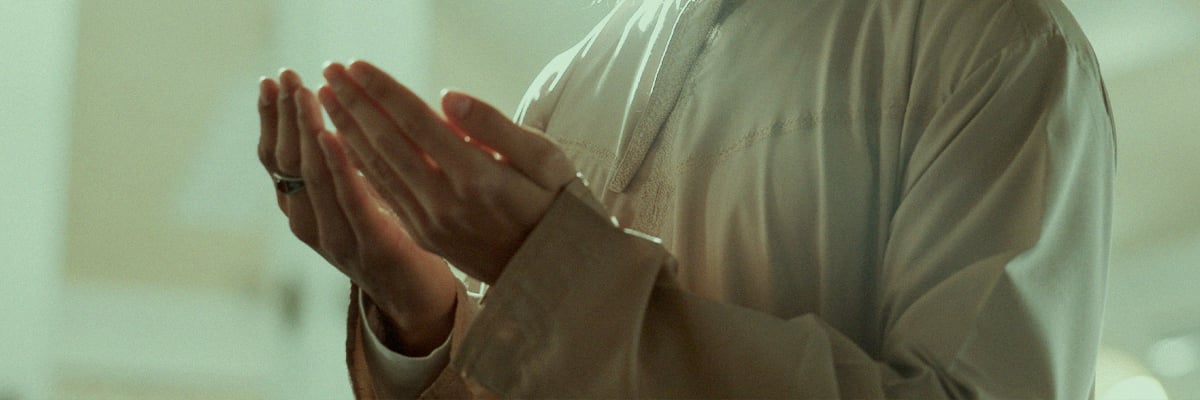
These layers—physical, intellectual, and emotional—are profound, but they are not the whole. Beneath them lies a deeper, quieter core: the spiritual. It is here, in this often-neglected realm, that belief takes root.
The spiritual self is not easy to articulate, for it does not function like the body or the mind. It is not a thing to measure, nor a process to perfect. Rather, it is the part of us that asks: What is this all for? It is the whisper within that seeks meaning, the longing that turns us toward the infinite. Without it, the human being remains incomplete—a complex machine of flesh, thought, and feeling, but lacking the unifying thread that makes life whole.
Howard Gardner, the scholar who famously proposed the theory of multiple intelligences, originally left spirituality out of his framework. He divided human intelligence into seven domains: linguistic, logical-mathematical, bodily-kinesthetic, spatial, musical, interpersonal, and intrapersonal. Each of these captured a different facet of human ability, but none spoke to the yearning of the spirit. Over time, however, Gardner came to acknowledge what many before him had known: that there is a kind of intelligence rooted in the spiritual—a way of perceiving and navigating the world that transcends the material.
This spiritual intelligence, or SQ, is not as widely understood as IQ or EQ, but it is no less significant. It speaks to our ability to reflect on ultimate questions, to find purpose, and to see ourselves as part of something greater. It is this intelligence that allows us to believe—not blindly, but with a clarity that reaches beyond reason.
Consider Abu Bakr al-Siddiq, the closest companion of the Prophet Muhammad ﷺ. When the Prophet shared news of his miraculous night journey to the heavens, many struggled to believe. The story defied the logic of the time, and doubt spread quickly. Yet Abu Bakr did not waver. “Did the Prophet say this?” he asked. Upon hearing confirmation, he simply said, “Then I believe.”
This was not the credulity of a simple man, but the conviction of one whose spiritual intelligence had been awakened. Abu Bakr understood that belief does not reside in the intellect alone. It is not a hypothesis to be tested, nor a theory to be proven. Belief is a leap of the soul, a trust that springs from knowing, even when the knowing cannot be explained.
Not all are gifted with this capacity in equal measure. Just as some excel in physical strength while others shine in intellectual pursuits, the ability to believe—deeply and completely—is a gift that varies among individuals. Yet, like all gifts, it can be nurtured.
Belief, at its core, is not a rejection of reason but an acknowledgment of its limits. It recognizes that there are truths which cannot be confined to equations or experiments, that life’s most profound realities are often those that elude measurement.
In the end, belief is an act of courage. It is the willingness to trust in something greater than ourselves, to see beyond the surface of the world, and to embrace the possibility that our lives have meaning—meaning that cannot always be explained but can always be felt.
And so, belief is belief is belief. It is the thread that binds us to the infinite, the light that guides us when all else fades.