
Metals are refined by melting them in a crucible. The process is anything but gentle—it involves heat, pressure, and purification. A piece of raw metal, content in its unpolished state, must endure the fire to be transformed. Similarly, a wild elephant is not tamed with sweet whispers. It is restrained, disciplined, and trained until it is fit for companionship with humans.
Now, take another entity—one that, like the metal, carries impurities, and, like the elephant, possesses raw instincts. That entity is none other than you—human beings.
Humans must undergo a process of inner purification, a form of refinement that does not happen through indulgence but through discipline. Luxuries and comforts do not bring out the best in us; rather, it is through challenges that we are tested and made stronger. Every form of training requires some level of rigor. And if there is one thing that has tested humans throughout history, it is hunger.
The Duality of Human Nature
In a way, humans are amphibious beings—caught between two worlds. Unlike animals, which live by instinct alone, and angels, who exist in pure obedience, humans are suspended between conflicting tendencies. Have you ever heard of a saintly bear, an ascetic fox, or a meditative hippopotamus? No. Animals do not aspire to virtue, nor do they fall into sin. They simply exist within the boundaries of their instincts.
Angels, on the other hand, are created in a state of perfect goodness. They do not err, nor do they need to struggle against temptation. That is why the great scholar Fakhr al-Din al-Razi concluded that a righteous human is superior even to the angels—for humans must wrestle with inner inclinations, conquer base desires, and actively choose righteousness.
Humans were created from earth, and the qualities of earth remain within us—dense, heavy, and prone to sinking. Yet, despite our lowly origins, we were appointed as God’s vicegerents on earth, endowed with a divine potential that reaches towards the heavens. Within us rages an eternal battle between the angelic and the satanic. On one side, angels call us toward righteousness; on the other, Iblis and his forces lure us towards destruction.
The War Between Fire and Clay
Satan finds support in the very material we are made of—earth. We refer to dirt and mud as something lowly, something incapable of higher understanding. We call a person with crude speech a “mudslinger” and dismiss foolishness with phrases like “his head is full of mud.”
Yet, paradoxically, it is from clay that light emerges. The very substance used to mold angels was called nūr—light. Fire and clay are natural opposites. Fire always rises, striving upwards, while clay seeks to settle, sinking downwards. This battle rages within us at all times. If we indulge the body—feeding it, pampering it, worshipping its desires—then we become nothing more than hardened, lifeless clay. The inner fire of the soul will dim, eventually extinguishing altogether. But if we guard that fire, nurturing it with discipline, then the darkness within us is burned away, leaving behind only light.
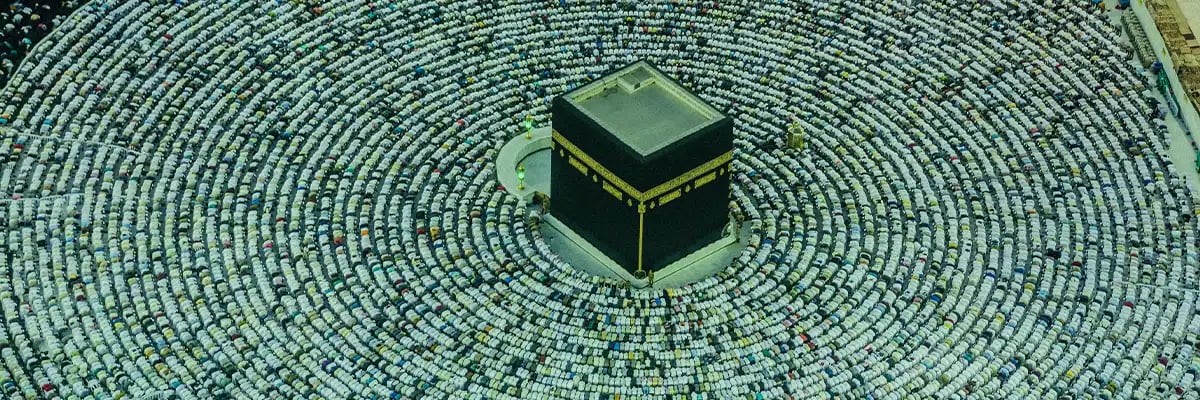
This is the purpose of fasting. Fasting is the most creative expression of hunger. It is not a passive state but an active force of refinement. In Islam, fasting is not optional; it is an obligation, commanded for an entire month—Ramadan. The very name Ramadan comes from words meaning burning heat and scorching fire. But it is not just fire; it is also the purifying rain that follows the blaze.
The Fire That Purifies
There is no need to elaborate on the meaning of burning. We began this discussion with metal, after all. Fire is what removes impurities. Likewise, fasting burns away the accumulated weight of our sins, our indulgences, and our heedlessness.
To sin is human. It is an inevitable part of our nature. Angels do not sin, and animals do not sin. But humans are caught in between—constantly pulled in both directions. Sins do not always manifest as outward actions; they may fester silently in our thoughts, in our hearts, in the whispers of our minds. God, in His infinite mercy, does not abandon us to these faults. Instead, He gives us opportunities to cleanse ourselves—to burn away the filth that clings to our souls.
That is what Ramadan does. Thirty days of fasting—thirty days of fire. It is an extraordinary process: an intense, transformative purification of the self. And when it is over, when we emerge from it, we feel new, cleansed, reborn.
The First Rain After a Drought
Ramadan is also like the first rain of the year—the downpour that follows months of dryness. A parched earth, cracked and barren, comes alive at the touch of fresh rain. Tiny green shoots break through the soil, signs of renewal and life. The rushing waters wash away filth and debris, cleansing the land. That is exactly what fasting does to the soul. And it all begins with hunger.
Hunger is the fundamental force of human motivation. It is what compels the lazy to rise, the seated to stand, and the standing to move. All of civilization—agriculture, trade, labor, war—has been driven by the pursuit of sustenance. Sometimes, it drives humans to cruelty—killing, exploiting, shedding blood for the sake of survival. Even the greatest works of art and poetry often emerge from a place of deep longing, of hunger for meaning.
Fasting, however, reverses this equation. For once, the body does not dictate. The hunger that normally commands is now restrained. The self that once demanded to be fed is now told to wait. “You have been indulged all year—now, be silent.”
At first, hunger gnaws at the stomach, a physical discomfort. But slowly, it rises, affecting the heart and mind. It softens the spirit. The same person who once ate lavishly without thought now feels something stir within him when he sees a starving child. The pangs of his own hunger teach him empathy.
That is why the Quran says: “Fasting is prescribed for you, so that you may attain piety.” (2:183) God does not seek to burden us. He seeks to refine us. To make us lighter, freer, more luminous.
So welcome, O beloved Ramadan! Conquer us, purify us, make us shine.