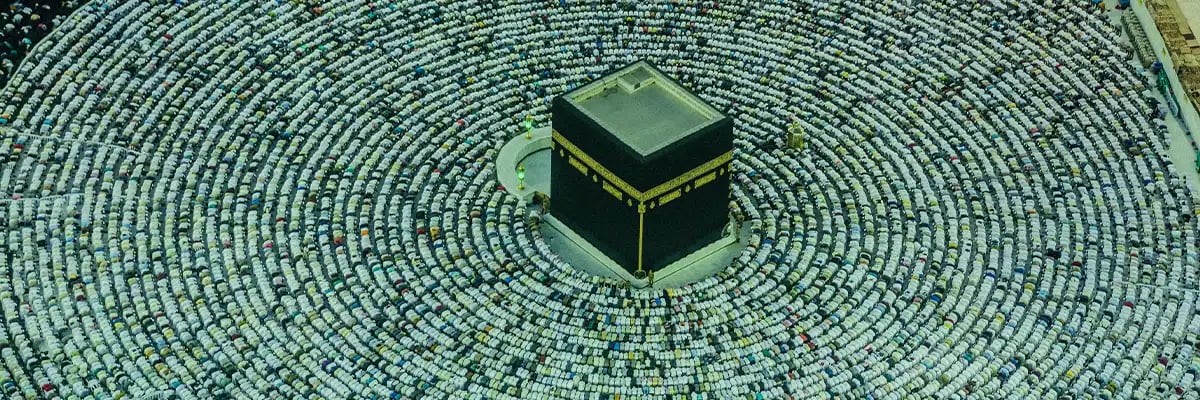

There is no compulsion in faith.
A river always flows downstream. Its course is steady and resolute. It traces a path as though honoring an unspoken covenant with the earth. Try standing by its banks and shouting, “Flow uphill, you foolish river!” The river won’t heed your threats. Its course cannot be dictated by mere words or force. Sure, you might build a dam to stop it in its tracks, but even then, the water doesn’t climb upwards on its own. And when you see grand fountains spraying water high into the air, know that this is not the river defying its nature. It is the pressure of enormous machines forcing the water to go where it does not belong.
The human mind is like that river. It flows in directions of its own choosing, governed by a deeply personal rhythm. Unlike the body, which can be restrained or manipulated—a hand twisted, a foot bound—the mind cannot be bent against its will. It is untouchable, flowing freely toward what it deems true and meaningful.
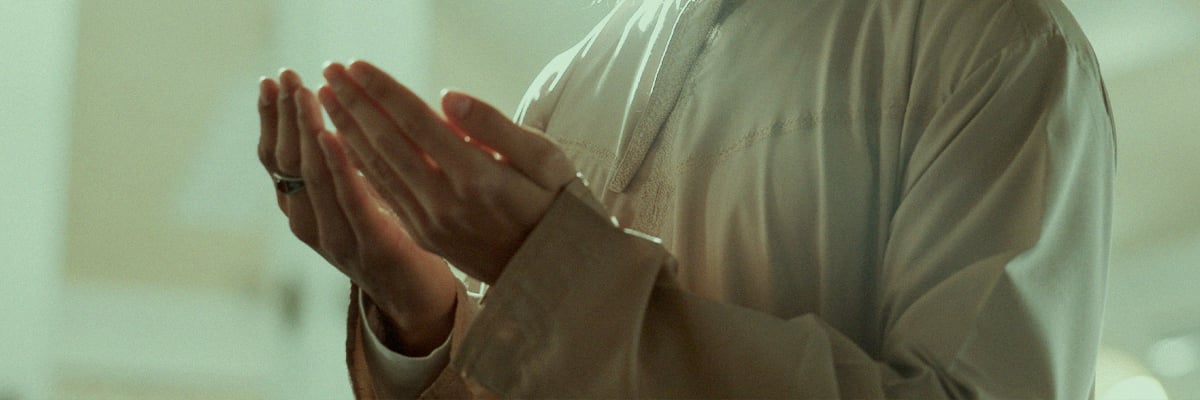
Faith resides in this realm of the mind. In Islamic belief, faith is not a mere ritual of words but a deeply rooted conviction. For someone to embrace Islam, they must first believe—truly, deeply—with both heart and mind, that there is no deity worthy of worship but Allah, and that Muhammad ﷺ is His Messenger. This belief must spring from within, as naturally as the river flows downstream.
But can belief be forced? Hold someone at gunpoint and demand they recite words of faith—what happens? They might comply out of fear, but would those words carry the weight of true belief? No threat, no machinery, no form of coercion can plant faith in a heart where it does not naturally take root. The Quran says, “Let there be no compulsion in religion. Truth stands out clear from error” (2:256). Faith, in its truest sense, must arise freely, unforced, uncoerced. Without understanding and inner acceptance, mere words are empty vessels.
This principle is not the product of human systems—no government decree or census authority enforces it. It is woven into the very fabric of Islam itself. To put it in perspective, during an election, what if a political party declared, “Voting for us isn’t enough. You must wholeheartedly embrace our vision for your vote to count”? The absurdity is self-evident. Similarly, in Islam, faith is not measured by outward compliance but by the inward alignment of the heart.
Islam is the religion of Allah, and Allah operates through systems, not through brute intervention. He is Musabbib al-Asbab—the Creator of Means. He sets the stage for human action, granting free will while also providing guidance. He does not impose outcomes. Each choice comes with its own consequences, leaving individuals and societies to bear the fruits of their actions, whether sweet or bitter.
When someone drinks alcohol, Allah doesn’t knock the cup out of their hand. When violence is unleashed upon innocent lives, Allah does not disarm the aggressor. Even in the quiet moments when someone sleeps through their prayer, Allah doesn’t shake them awake with a booming voice. Instead, He allows human choices to unfold within the framework of His wisdom.
The Quran repeatedly affirms this: Allah provides guidance but does not compel. He sent Prophets as guides, not as enforcers. Their role was to illuminate the path, to model the way, and to call others toward truth—but never to coerce. Even the Prophet Muhammad ﷺ, with his unparalleled compassion and dedication, was reminded of this boundary: “You are only a reminder; you have no authority over them” (88:21–22).
This principle is illustrated throughout history. Take the story of Prophet Nuh (Noah), who spent 950 years calling his people to the truth. Day and night, he patiently invited them to reflect, to see the signs around them, to believe. Yet, despite his tireless efforts, only a handful responded. The rest turned away, plugging their ears, dismissing his words. Allah could have transformed their hearts with a command, but He did not. Why? Because true faith cannot be imposed—it must be freely chosen.
Similarly, when Allah sent Prophet Musa (Moses) and Prophet Harun (Aaron) to Pharaoh, He knew Pharaoh’s heart was hardened beyond change. Yet, He still sent His messengers to confront him—not to compel belief, but to offer Pharaoh the opportunity to choose.
Even the Prophet Muhammad ﷺ, in his moments of grief over his people’s disbelief, was consoled by Allah. The Quran gently reminded him: “Perhaps you will destroy yourself with grief because they do not believe in this message” (18:6). Time and again, Allah reassured His Prophet that his mission was to deliver the message, not to enforce it.
Faith, then, is like the river’s flow—an organic, unhurried movement that cannot be forced. Attempts to artificially manufacture belief are like machines forcing water uphill: they may create the illusion of success, but they do not alter the river’s true nature. Faith aligns with the fitrah—the innate disposition with which Allah has created every human being. The Quran describes this beautifully: “So direct your face toward the religion, inclining to truth. Adhere to the fitrah of Allah upon which He has created all people. No change should there be in the creation of Allah. That is the correct religion, but most of the people do not know” (30:30).
This is why the Quran declares: “If your Lord had willed, all those on Earth would have believed—all of them together. So will you then compel people, against their will, to become believers?” (10:99). Faith, in its purest form, is a gift of free will, not a product of compulsion.
Reflect on the grandeur of this principle. Imagine a society where belief was enforced—where people were herded into religion like cattle into pens. Would such belief carry meaning? Would it endure? Faith is not about submission to human authority; it is about the soul’s recognition of the divine. It is the natural inclination of the heart, like a river flowing downstream, unburdened and free.
The Holy Quran reminds us, time and again: “There is no compulsion in religion.” Share the truth, embody it, and trust that its light will find its way into the hearts it is meant to reach. Just as a river carves its path, so too does faith flow where it is welcomed—naturally, effortlessly, and beautifully.