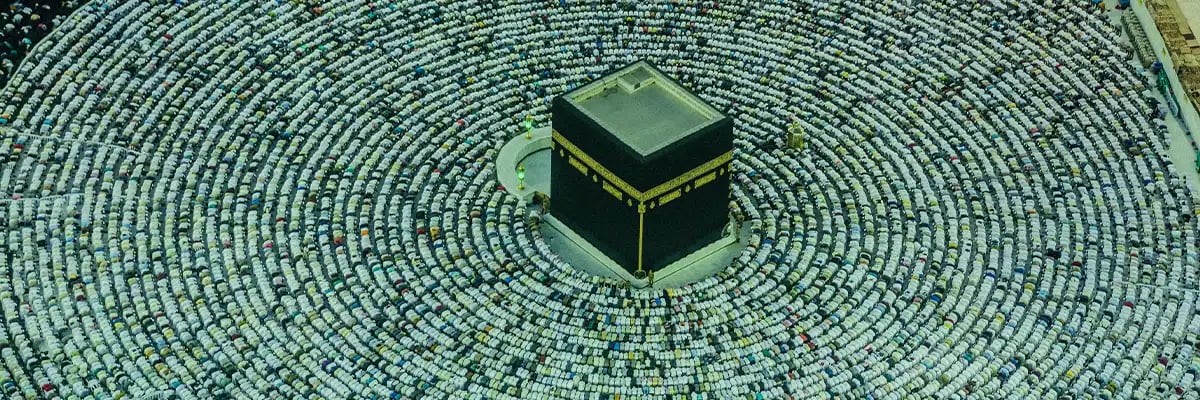

In a world driven by rapid discoveries and technological revolutions, knowledge evolves faster than ever before. Paradigms once considered unshakable crumble under the weight of new evidence, only to be replaced by others. From the Copernican Revolution to quantum mechanics, from Darwin’s theories to the Big Bang, science has constantly rewritten humanity’s understanding of the universe. Yet, amidst this unending cycle of discovery and revision, the Quran has remained unchanged, its relevance enduring through centuries.
The Quran is not a science textbook or a treatise on natural laws. It does not claim to teach empirical methods or exhaustive theories. Instead, it speaks in a way that transcends time, offering reflections on the natural world that ignite curiosity, inspire inquiry, and direct attention to the one and only Creator. As science continues to evolve, it increasingly aligns with insights that the Quran offered over 1,400 years ago—insights that modern scholars are only now beginning to understand.
Delving into the Quranic References
The Quran provides a remarkable array of references that span across numerous fields of study. These are not exhaustive accounts but invitations to explore deeper truths about the universe and humanity’s place within it.
- Astronomy: Mentions the creation and movement of the sun, moon, and stars (6:75, 10:3).
- Biology: Describes the stages of human development in the womb (23:12-14, 36:77-80).
- Botany: Discusses the creation of plants and their role in sustaining life (6:98, 20:54).
- Climatology: Explores the phenomena of wind and rain as signs of divine power (2:164, 24:43).
- Geology: Highlights the stability of mountains as part of Earth’s design (81:3-4).
- Hydrology: Details the water cycle and its role in sustaining life (23:18, 35:9).
- Oceanography: Describes the vastness, depth, and boundaries of seas (24:40, 55:36).
- Paleontology: Refers to remnants of past communities as lessons (6:158, 36:34).
- Physics: Discusses the properties of light and energy (2:258, 24:35).
- Seismology: Mentions the earth’s quaking as a divine sign (99:1-3).
- Zoology: Reflects on the creation and roles of various animals (6:38).
- Anatomy: Describes the formation of bones and flesh (86:6-7).
- Physiology: Highlights the faculties of vision and hearing (22:5).
- Cosmology: Speaks of the universe’s creation from a single entity (21:30, 50:1).
- Navigation: Highlights the use of stars for direction (16:80, 2:164).
- Reproduction: Refers to the creation of humans from a single drop of fluid (2:221, 76:2).
- Agriculture: Describes the growth of seeds and crops (2:260, 20:54).
- Alchemy: Symbolically refers to transformation processes (81:19-20).
- Anthropology: Stresses the diversity of humanity and cultural understanding (2:213, 49:13).
- Mathematics: Discusses the significance of measurement and fairness (6:96).
- Entomology: Highlights the intricate creation of crawling creatures (27:62).
- Genetics: Refers to the idea of creation in pairs, hinting at hereditary traits (31:34).
- Logic: Encourages reasoning and reflective debate (2:111, 16:125).
- Medicine: Mentions healing properties in foods and plants (16:69).
- Nutrition: Guides on healthy dietary choices (2:168, 6:141).
- Psychology: References human emotions and inner struggles (12:100, 16:98).
- Sociology: Emphasizes understanding social structures and human interactions (2:213, 49:13).
These references are striking not for their exhaustive detail but for their enduring relevance. They align with modern discoveries, not by coincidence but by design, offering timeless reflections that guide humanity toward understanding the vastness and intricacy of creation.
Shifting Paradigms and the Quran’s Consistency
Thomas Kuhn, in The Structure of Scientific Revolutions, famously argued that science advances through paradigm shifts—moments when established frameworks are challenged and replaced by new ways of understanding. The Copernican Revolution shattered the geocentric worldview, while the Big Bang theory replaced the belief in an eternal universe. Each shift brought humanity closer to understanding the mechanics of creation, yet each also revealed the transient nature of scientific knowledge.
Today, we stand at the brink of yet another paradigm shift, driven by artificial intelligence, machine learning, robotics, and genetic engineering. Some envision a world where AI achieves singularity, surpassing human intelligence. Others dream of a future where humans achieve immortality through advanced technology. These aspirations, while ambitious, often overlook the most fundamental truths about existence.
Beyond Technology: The Quran’s Enduring Message
While technology evolves, creating tools to extend life and enhance capabilities, it remains powerless to address life’s ultimate questions. AI may analyze data, but it cannot ponder the meaning of existence. Robotics may replicate human functions, but they cannot comprehend the soul. Even if humanity achieves biological immortality, it cannot escape the realities of death, resurrection, and the afterlife.
The Quran invites reflection on these deeper truths. It speaks of the Day of Judgment, the life of barzakh (the intermediary state between death and resurrection), and the eternal hereafter. These are not abstract concepts but central to the Quran’s worldview. They challenge humanity to consider not just the mechanics of existence but its purpose and ultimate destiny.
As science has evolved to embrace ideas once dismissed—such as the universe’s creation from a singularity—it will one day be compelled to reconsider its views on resurrection, accountability, and life beyond death.
The Truth Will Prevail
In the end, the Quran’s message will prevail. Just as humanity revised its understanding of the universe’s origins, it will be forced to confront the reality of the afterlife. The Quran’s enduring verses, unaltered by centuries of scientific progress, serve as a reminder of truths that transcend human comprehension.
سَنُرِيهِمْ آيَاتِنَا فِي الْآفَاقِ وَفِي أَنفُسِهِمْ حَتَّىٰ يَتَبَيَّنَ لَهُمْ أَنَّهُ الْحَقُّ ۗ أَوَلَمْ يَكْفِ بِرَبِّكَ أَنَّهُ عَلَىٰ كُلِّ شَيْءٍ شَهِيدٌ
“We will show them Our signs in the horizons and within themselves until it becomes clear to them that it is the truth” (Quran 41:53).
This promise reflects the Quran’s enduring relevance. While paradigms shift and technologies evolve, the Quran remains a constant, inviting humanity to reflect on creation, accountability, and eternity. In a world of fleeting discoveries, it stands as a testament to the unchanging truths that govern existence—truths that will ultimately guide humanity back to its Creator.