
What is it that draws people to Islam? What do they see, feel, or discover that causes their hearts to turn toward this ancient faith? These are questions worth exploring, not merely for the sake of curiosity but because they lead us to insights about the human spirit, the search for meaning, and the transformative power of faith.
Through the centuries, countless individuals—poets and philosophers, scientists and artists, journalists, diplomats and above all ordinary mortals—have encountered Islam in ways that changed their lives forever. Some came to it directly through the Qur’an, while others found their path illuminated by the lives of Muslims or the wisdom emanating from Islamic teachings. Each journey is unique, yet a common thread runs through them all: a deep yearning for truth.
Let us reflect on some stories of such transformation. They are narratives that might resonate with your own search for meaning, reminding us all of the enduring beauty and guidance that faith can bring to life.
Maurice Bucaille was not a man prone to flights of fancy. A respected French physician, he lived a life guided by reason, science, and his Christian upbringing. Yet, his scientific curiosity led him to study the Qur’an alongside the Bible. He was struck by the harmony between the Qur’an and modern scientific discoveries, something he did not find in other scriptures. For Bucaille, this was not merely an intellectual realization but a profound spiritual awakening. He embraced Islam, and his journey is chronicled in The Bible, The Qur’an, and Science, a book that continues to inspire readers today.
Leopold Weiss, who would later become Muhammad Asad, offers another path to faith. Born into a Jewish family in Poland, Weiss was a journalist and diplomat whose travels brought him face-to-face with Islam. What captivated him was the unwavering simplicity of its message, the coherence of its worldview, and the dignity it bestowed on human beings. His book, The Road to Mecca, tells not only of his conversion but also of his love for a faith that values both reason and submission to the Divine.
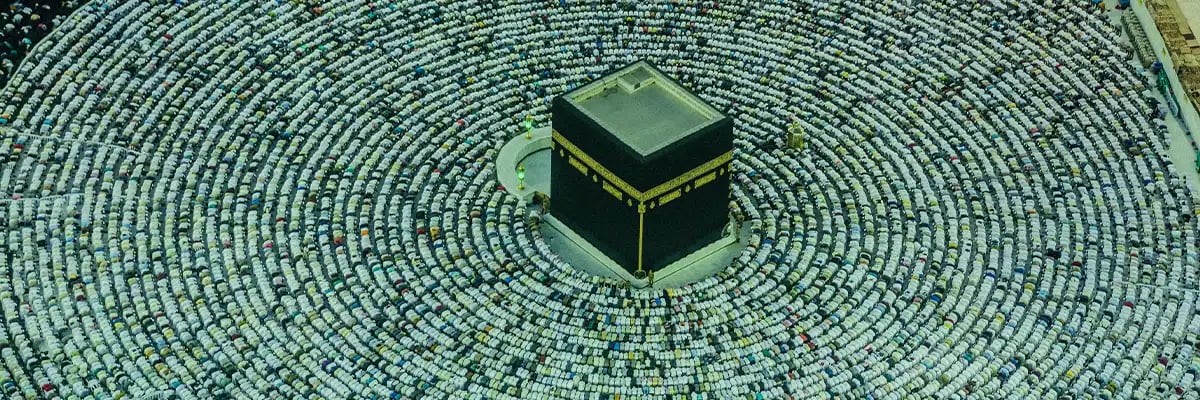
For Malcolm X, the path to Islam was through justice. Born into a world scarred by racial segregation, he found in Islam a vision of humanity that transcended color and class. His pilgrimage to Mecca was transformative; there, he saw people of all races praying together, united by faith. It was an experience that shattered his previous notions of race and inequality and gave him a new vision for justice and peace. “It is only when you believe in something greater than yourself,” he said, “that you can truly be free.”
Jeffrey Lang, a mathematician and former atheist, approached Islam with the skepticism of a scientist. Raised Catholic, Lang had abandoned his faith due to unanswered questions. But when a Muslim student gave him a copy of the Qur’an, he began to read with curiosity. What he found was astonishing: the Qur’an seemed to address the very doubts and questions that had plagued him for years. Night after night, its verses spoke directly to his heart. Lang’s journey reminds us that faith and reason can coexist, that belief can be as much a product of the intellect as it is of the soul.
Maryam Jameelah, born Margaret Marcus, found Islam through its ethical clarity and profound spirituality. A Jewish-American writer, she felt the limitations of her inherited faith and began exploring Islam. Her essays remain a powerful testament to her love for the faith she embraced in 1962. Similarly, Alexander Russell Webb, an American journalist, came to Islam after a deep study of religions. Dissatisfied with his Christian upbringing, Webb found in Islam a pure monotheism and a spiritual simplicity that resonated deeply. His conversion in the late 19th century made him one of the earliest prominent Western converts.
The arts and sciences, too, have brought people to Islam. Consider A.R. Rahman, the legendary Oscar-winning Indian composer. Born into a Hindu family, he converted to Islam during a period of personal loss and searching. Rahman found solace in Sufi spirituality, and his faith became the foundation of his creativity. Or think of Muhammad Ali, the boxing champion who left behind the name Cassius Clay to embrace Islam. For Ali, Islam was not just a faith but a way to challenge injustice and live with dignity.
Not all journeys to Islam begin with admiration. Joram van Klaveren, a Dutch politician, spent years campaigning against Islam and even began writing a book to critique it. Yet, as he researched, he found himself moved by the faith’s teachings. By the time his research was complete, so was his transformation. He embraced Islam in 2018, surprising many but finding peace within himself.
Lady Evelyn Cobbold, a Scottish noblewoman, offers yet another perspective. Raised in a Protestant Christian family, she traveled extensively and encountered Islam during her time in North Africa. She was drawn to its simplicity and spirituality, eventually converting in 1915. Her book, Pilgrimage to Mecca, is a beautiful account of her faith and her journey to the heart of Islam.
For many, the road to Islam is paved with questions—questions about justice, purpose, and the nature of existence. Why should someone consider this path? What does Islam offer that is so transformative?
First, Islam provides clarity in a world of confusion. Its monotheism is uncompromising, emphasizing the oneness of God and the unity of creation. For those tired of complex theological debates or conflicting doctrines, Islam offers a straightforward relationship with the Divine: worship the Creator, not the creation.
Second, Islam speaks to the intellect. The Qur’an challenges its readers to think, to reflect, and to question. It does not demand blind faith but invites exploration and understanding. For seekers like Jeffrey Lang or Maurice Bucaille, this intellectual openness was a revelation in itself.
Third, Islam transforms the heart. It offers not just a way of thinking but a way of being—a life grounded in peace, compassion, and justice. For Malcolm X, it was the egalitarianism of Islam that inspired him; for Muhammad Ali, it was its courage; for Lady Evelyn Cobbold, its serenity.
Finally, Islam provides community and brotherhood. It unites people of all races, classes, and backgrounds under a single banner of faith. The prayer mat becomes a leveler, where kings and paupers stand side by side, equal before God.
These stories are not just about individual transformations; they are about the universal human search for truth and meaning. They remind us that faith is not a leap into the dark but a step into the light—a light that has guided millions before and continues to beckon seekers today.
If you are curious, why not begin your own journey? Open the Qur’an. Read its words not as a skeptic but as a seeker. Ask your questions, voice your doubts, and see where the journey takes you. You may find, as so many others have, that it leads not just to answers but to a life transformed.