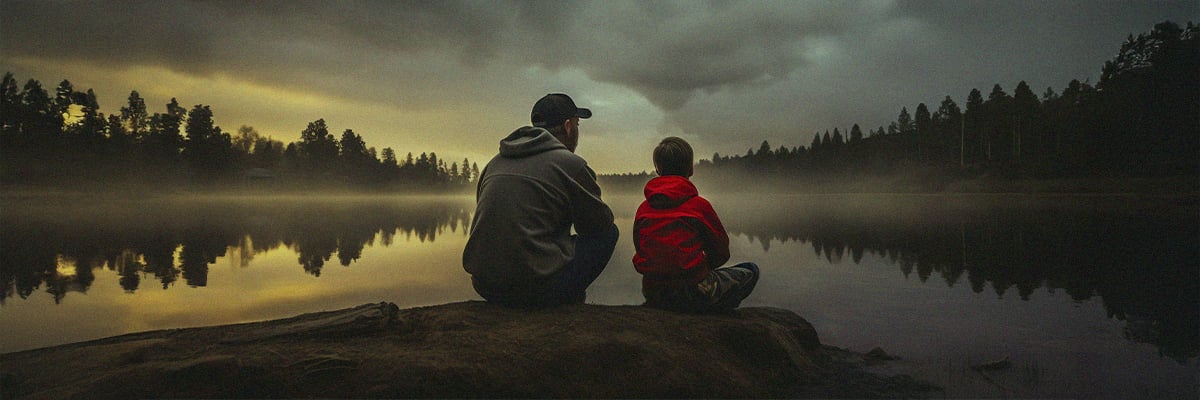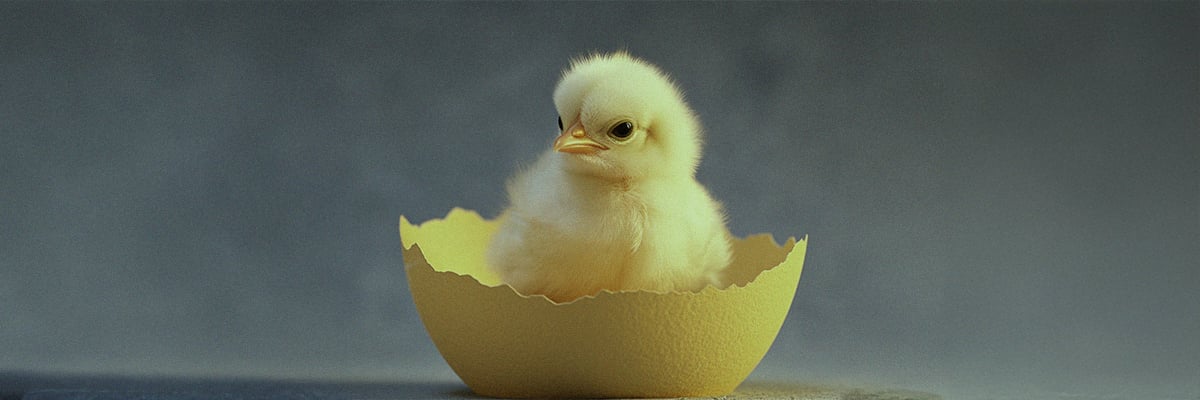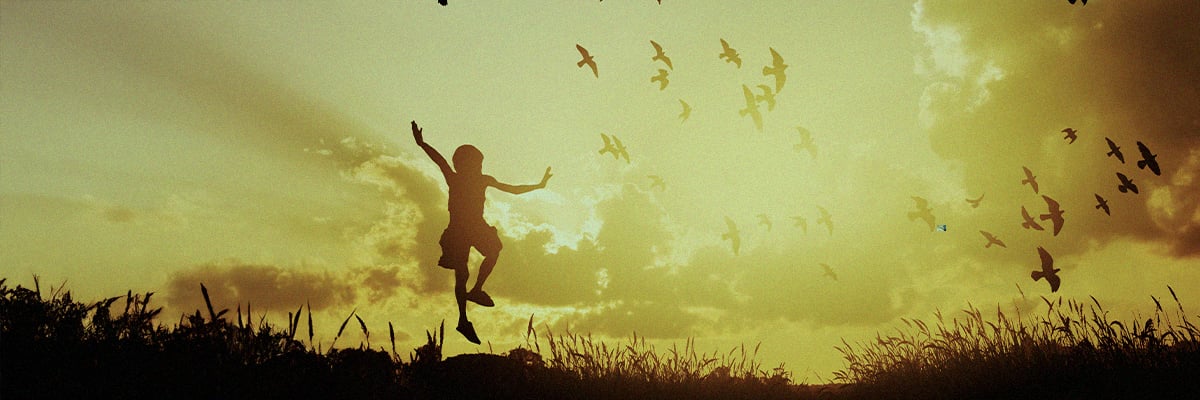

Every moment of existence carries a hum—a vibration that connects us to something vast and mysterious. It’s as if life itself is part of an unfinished symphony, one whose first notes we never heard but whose echoes surround us still. This symphony draws us in, stirring something deep within, yet the missing beginning leaves us restless. What struck the opening chord? Who, if anyone, conducted the first movement? And why does the melody resound the way it does?
For centuries, we’ve sought answers to these questions, tracing threads of thought through philosophy, religion, and science. Each offers its narrative, but the heart of the mystery—our origin—remains just out of reach. It’s a pursuit not of idle curiosity but of a longing as old as humanity itself: to understand why we are here and what it all means.
The Universe in a Grain of Dust
Science, with its luminous precision, tells us that it all began with the Big Bang—a moment of unimaginable energy and light that birthed the cosmos some 13.8 billion years ago. Stars were forged in this cosmic furnace, galaxies spun themselves into delicate spirals, and planets coalesced from stardust. It’s a tale of grandeur, and yet, even as it explains so much, it hesitates at the crucial question: what came before?
Now, you are standing on a beach, watching the sun rise over an endless expanse of water. The waves crash in rhythm, their origins stretching far beyond the horizon. The Big Bang feels like that—a wave we can observe and measure but whose source remains hidden. Why did the universe begin precisely when it did? Why not a billion years earlier or a billion years later? And who—or what—set the wave in motion?
Such questions are like trying to trace the origin of a single grain of sand on that beach. Science can tell us its composition, its journey through rivers and mountains, but it cannot tell us why it exists at all. The closer we come to understanding, the more we realize how much remains unknown.
From Stone to Soul
Even more mysterious than the origins of the universe is the transition from lifeless matter to living, thinking beings. How does a world of rocks and gases give rise to consciousness? How does stardust evolve into a creature that gazes back at the stars with wonder?
Consider the metamorphosis of a caterpillar into a butterfly. The creature weaves itself into a cocoon, dissolves into an unrecognizable soup of cells, and emerges as something entirely different—a being of flight and color. This transformation, though astonishing, is part of a natural order. But what of the leap from stone to soul? How does matter, inert and cold, become capable of love, anger, creativity, and reflection?
This is where science offers mechanisms but falters at meaning. Evolution explains the how—random mutations, natural selection, the survival of the fittest—but not the why. Why does the universe insist on pushing toward complexity? Why didn’t it stop at rocks and gases? It would have been simpler, certainly, for Earth to remain a lifeless planet. Yet here we are, writing poetry, solving equations, falling in love, and questioning everything.
The Quiet Order of Chaos
Look closely at a snowflake, and you’ll see a tiny masterpiece of geometry—sixfold symmetry, each branch a perfect reflection of the others. Now imagine billions of such flakes, each unique, drifting together to form a blizzard. Is this randomness, or does it hint at something more—a quiet order beneath the surface of chaos?
The natural world is filled with such mysteries. A flower blooms in response to the sun, its petals unfolding with delicate precision. Birds migrate across continents, guided not by maps but by instincts we barely understand. Even the human heart, with its steady rhythm, beats according to a design that sustains life without our conscious effort.
To call this order mere coincidence feels inadequate, as though we were describing a symphony as a random clanging of instruments. Could it be that the cosmos has a composer—a hand that guides its patterns, its rhythms, its quiet miracles?
The Weight of Doubt
Doubt is as natural to the human mind as breathing. It keeps us skeptical, sharp, unwilling to accept easy answers. But doubt, if left unchecked, can become a prison. It is one thing to question, another to refuse every answer on principle.
A traveler stands at a crossroads, unable to choose a path. They pace back and forth, questioning the wisdom of every direction, until night falls and they’ve gone nowhere at all. This is the danger of skepticism without purpose—it becomes a cul-de-sac, trapping us in endless questioning without progress.
Doubt should be a bridge, not a wall. It should lead us toward greater understanding, not leave us mired in cynicism. To doubt everything is to risk believing in nothing, and a life without belief—whether in meaning, purpose, or connection—is hardly a life at all. Without something to anchor us, existence becomes hollow, a mere shadow of what it could be.
Listening for the Symphony
Perhaps the purpose of our existence is not to find definitive answers but to learn how to listen—to attune ourselves to the symphony playing all around us. This requires more than intellect; it demands wonder, humility, and the courage to admit that some questions may remain unanswered.
The universe, with its vastness and beauty, invites us to seek meaning not through absolute certainty but through the journey itself. What if the act of searching—of asking, doubting, learning, and marveling—is the purpose? What if our role in the symphony is not to understand it fully but to add our own note, however small, to its ongoing melody?
The mystery of existence may never be solved, but that doesn’t diminish its power. Like a great piece of music, life’s meaning is felt rather than explained, experienced rather than defined. And perhaps that is enough. To live in wonder, to seek and question, to find joy in the beauty of the unknown—this is the symphony of existence. Will you listen?