
The years when the Prophet Muhammad ﷺ lived with his foster mother, Halimah, were marked by extraordinary events. Among them, none was more striking than the incident when his chest was miraculously split open.
The Prophet ﷺ was only four years old. He was playing with other children when the event occurred. Anas ibn Mālik — who later served the Prophet ﷺ for many years — recounts:
“The Angel Jibrīl (Gabriel) came to the Prophet ﷺ. He laid him down, split open his chest, and removed his heart. From it he took out a small portion, saying: ‘This is the portion of satan within you.’ Then he washed the heart in Zamzam water, placed in a vessel of gold, and returned it to its place.”
The children who had witnessed this scene ran in terror to Halimah, crying, “Muhammad has been killed!” Alarmed, she rushed to him. But she found her foster son alive and unharmed. Later, in the narration Anas added: “I myself saw a mark of stitching upon the Prophet’s chest.” The young boy, Muhammad himself explained the matter to Halimah in his own words, and though she trembled with fear, she accepted what had happened.
Shaken by this incident, Halimah soon brought Muhammad ﷺ back to Makkah and entrusted him to his mother and grandfather.
Even during his years among the Banū Sa‘d tribe, some scholars of the earlier scriptures had foretold the future greatness of the child. At the same time, news reached Halimah about ill-intentioned men who were searching for the promised prophet, seeking to harm him. Well-wishers advised her to guard the child with special care. These worries, combined with the terrifying event of the chest being split, compelled Halimah — with a heavy heart — to return the boy to his family.
Later in life, the Prophet ﷺ would often recall his childhood in the desert. He would describe to his companions the beauty of the Bedouin dialect of Arabic and the distinct eloquence of the language he had absorbed in those formative years.
By the time Muhammad ﷺ was six years old, his mother Āminah took him on a journey to Yathrib (later known as Madinah). She wanted to visit her relatives there and also to stop at the grave of her late husband, ‘Abdullāh, who had died before the Prophet’s birth. The journey was filled with tender emotions — first the joy of family visits, then the sorrow of standing at her husband’s resting place.
But tragedy soon struck. On their return, at a place called Abwā’, Āminah fell ill. Her sickness worsened, and there, in that very spot, she passed away. Muhammad ﷺ, who had already lost his father before birth, was now left without his mother as well. He became, in the truest sense, an orphan. Yet within this orphanhood lay a divine purpose, as later events would make clear.
The woman who had accompanied them, Umm Ayman al-Barakah, brought the young boy safely back to Makkah. There, his grandfather, ‘Abd al-Muttalib, took him in with full responsibility and tender affection.
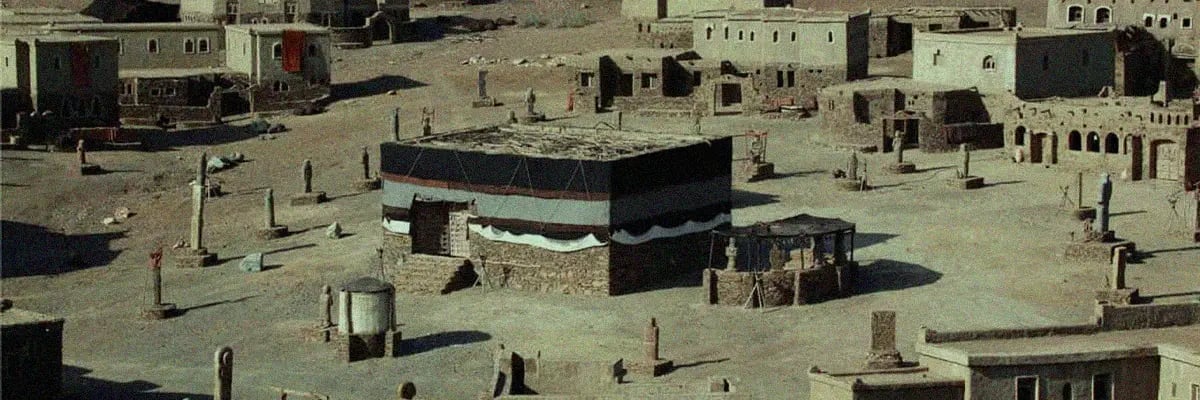
‘Abd al-Muttalib was the most respected leader of Makkah, a man of dignity and compassion. Near the Ka‘bah, he had a special mat on which none but he was allowed to sit. Yet he would place his grandson Muhammad ﷺ upon it, honoring him above all. When questioned about this unusual favor, he would reply: “I see in this child signs unlike any other.”
But this care too was short-lived. Not long afterwards, ‘Abd al-Muttalib also passed away, when Muhammad ﷺ was just eight years old. For the boy — who had already lost both parents — the loss of his grandfather, who had been both guardian and source of love, was another deep sorrow. Yet with extraordinary maturity, he bore the grief with composure.
Before his death, ‘Abd al-Muttalib had entrusted the child to his son, Abū Tālib, the Prophet’s uncle. Abū Tālib fulfilled the trust, raising Muhammad ﷺ with greater care than he gave even his own children — ‘Alī, Ja‘far, and ‘Aqīl.
When Muhammad ﷺ was nine, Abū Tālib prepared for a trade caravan to Syria. It was to be a long journey for commerce. As he set out, young Muhammad ﷺ clung to him so tenderly that Abū Tālib’s heart could not refuse him. He decided to take the boy along.
On the way, they reached the town of Busra in Syria. Near it stood a monastery where a Christian monk named Baḥīrā resided. The monk, who had never before shown interest in caravans, suddenly paid special attention to this one. He invited the travelers to a feast. Surprised, they wondered at his unusual hospitality.
Baḥīrā then explained: through his knowledge of the scriptures, he had recognized signs in the boy that marked him as the long-awaited Prophet. Privately, he warned Abū Tālib: “This child has a future of greatness. Beware of the Jews, for they may seek to harm him. Protect him, and take him back to Makkah without delay.”
Abū Tālib, taking his words to heart, cut short the journey and returned with his nephew safely to Makkah.
As Muhammad ﷺ grew, the people of Makkah could not help but notice his distinct character. Despite being deprived of parental care, he never fell into the corrupt ways of his surroundings. Instead, his beauty, noble qualities, and gentle manners shone in every interaction.
His life was a model that drew hearts. There was none of the careless mischief usually found in childhood and youth. His honesty and trustworthiness stood out with unusual brilliance. It was as though he was being prepared by a training beyond this world, for a destiny far greater than anyone could yet imagine.
Explanatory Notes
- Halimah al-Sa‘diyyah – A Bedouin woman from the Banū Sa‘d tribe who fostered the Prophet ﷺ during his early childhood, as was customary for noble families in Makkah to send their children to be raised in the desert for health and language.
- The Chest-Splitting (Shaqq al-Ṣadr) – This miraculous event, narrated in multiple hadith traditions, is understood by Muslim scholars as a divine purification and preparation for the Prophet’s future mission. The “portion of satan” symbolizes the removal of any inclination to evil.
- Zamzam Water – Water from the sacred well of Zamzam in Makkah, believed to have sprung forth for Hājar and her son Ismā‘īl. It is considered blessed in Islam.
- Anas ibn Mālik – A young companion of the Prophet ﷺ who served him for about ten years in Madinah and transmitted many hadith.
- ‘Abd al-Muttalib – The Prophet’s grandfather, chief of the Quraysh, known for his honor and generosity.
- Abū Tālib – The Prophet’s uncle who became his guardian after ‘Abd al-Muttalib’s death. Though he never embraced Islam, he loved Muhammad ﷺ dearly and protected him throughout his youth.
- Baḥīrā the Monk – A Christian monk in Syria who, according to Islamic sources, recognized signs of prophethood in the young Muhammad ﷺ and warned Abū Tālib to protect him.


_1777358421433.webp&w=3840&q=75)