_1777358421433.webp&w=3840&q=75)
The very name Muhammad is a marvel. Across nations and centuries, it has echoed unceasingly — in prayer, in memory, in song. Even today, more than 150 million people bear this name. It is inscribed in books, spoken in classrooms, invoked in discussions, and celebrated in gatherings. Fittingly, the name itself means “the Praised One.”
The last Prophet, Muhammad ﷺ, is a figure whose life is preserved with unparalleled detail in historical records. Entire disciplines exist simply to study his life. Scholars note that no one else in world history has been the subject of so many biographies. Even beyond Islam, he has been admired and written about by others. This is the life-story we now turn to: a story foundational, luminous, and endlessly meaningful.
His Birth, Parents, and Lineage
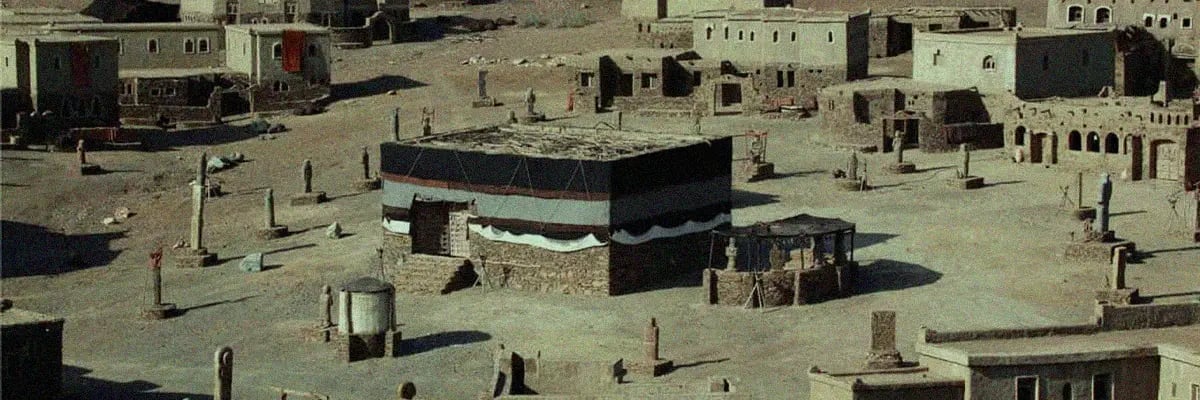
According to the majority of scholars, it was Monday, April 20, 570 CE, in Makkah, that Muhammad ﷺ was born — the only son of ‘Abdullāh and Āminah. According to the Islamic calendar, it was the 12th of Rabī‘ al-Awwal, in the famous “Year of the Elephant,” when the Abyssinian general Abraha had attempted to destroy the Ka‘bah. At the same time, the Persian Emperor Khusrow Anūshirvān was in the fortieth year of his reign.
The Prophet’s lineage is preserved with clarity:
Muhammad – ‘Abdullāh – ‘Abd al-Muttalib – Hāshim – ‘Abd Manāf – Quṣayy – Kilāb – Murrah – Ka‘b – Lu’ayy – Ghālib – Fihr – Mālik – al-Naḍr – Kinānah – Khuzaymah – Mudrikah – Ilyās – Muḍar – Naẓar – Ma‘ad – ‘Adnān.
‘Adnān, the last in this chain, belonged to the line of Prophet Ibrāhīm’s son Ismā‘īl.
The Prophet’s mother, Āminah, was the daughter of Wahb, a chief of the Banū Zuhrah tribe. Her ancestry merged with that of her husband’s family at their common forefather, Kilāb.
Among Quraysh, the clan of Quṣayy held special honor. On his death, leadership was divided among his sons. Of them, ‘Abd Manāf rose highest, his family entrusted with hosting pilgrims. After him, his son Hāshim inherited the position.
Hāshim, originally named ‘Amr, was renowned for organizing caravan journeys in summer and winter, and for providing food to pilgrims — particularly a dish of bread crumbled into broth — which earned him the name Hāshim (the one who crumbles bread). After him, his son ‘Abd al-Muttalib became leader. Raised in Madinah, he resembled his great ancestor Quṣayy.
It was he who rediscovered and restored the well of Zamzam, long buried in floods. At one point, he made a solemn vow: “If I am granted ten sons, I will sacrifice one of them.” When he indeed had ten sons, the vow came due.
Lots were cast among them, and fate fell upon his dearest son, ‘Abdullāh. With heavy heart, ‘Abd al-Muttalib took him to the Ka‘bah with a knife to fulfill the vow. Quraysh objected. His brothers, uncles, and six sisters — Umm Ḥakīm, ‘Atīqah, Umaimah, Arwā, Barra, and Ṣafiyyah — wept and protested. All insisted: “Do not sacrifice beloved ‘Abdullāh!”
Wise men proposed an alternative: draw lots between ‘Abdullāh and ten camels. If the lot fell on ‘Abdullāh again, add ten more camels, and repeat, until the lot fell on the camels. The lots were drawn: first ‘Abdullāh, then again, then again… until the number of camels reached one hundred. At last, the lot fell on the camels, which were sacrificed.
Thus began the custom of ransoming life with camels — a precedent that Quraysh and other Arabs followed, and which the Prophet ﷺ later confirmed.
This event echoed the trial of Prophet Ibrāhīm, who had been commanded to sacrifice his son Ismā‘īl. Because of these two spared sacrifices — of Ismā‘īl and of ‘Abdullāh — the Prophet Muhammad ﷺ called himself in a famous narration as Ibn al-Dhabīḥayn, “the Son of the Two Sacrificed Ones.”
The Passing of His Father
While Āminah was pregnant, her husband ‘Abdullāh died in Madinah, among his maternal relatives. Widowed, she came under the care of her father-in-law, ‘Abd al-Muttalib. Six months later, she gave birth to her son.
Overjoyed, ‘Abd al-Muttalib carried the newborn into the Ka‘bah, praised Allah in long supplication, and named him Muhammad — an unusual name among the Arabs. When questioned, he replied: “I named him Muhammad so that he will be praised in this world and in the next.” Some traditions hold that he had received a spiritual inspiration to choose this name.
The birth was marked by unusual signs. Āminah felt none of the usual pains of labor. The child was born already circumcised, astonishing her. For a short time, Thuwaybah — the slave of Abū Lahab, Muhammad’s uncle — suckled the infant. When she brought Abū Lahab the news that his late brother’s widow had borne a son, he freed her in joy.
Fosterage in the Desert
It was customary among the Arabs of Makkah to entrust their infants to foster mothers in the desert. The reasons were practical and cultural: children would grow strong in the pure desert air, master the most eloquent dialect of Arabic, and be spared the diseases of the crowded town.
Among those who came seeking foster children was Ḥalīmah, daughter of Abū Dhu’ayb and wife of Ḥārith, of the Banū Sa‘d tribe. Usually, foster mothers expected support from the child’s father, so they avoided orphans. Thus, no one wished to take the fatherless son of Āminah. But Ḥalīmah felt a strong affection for the child. She confided to her husband: “I feel blessings will come with him.” Having found no other infant, they decided to take him.
From the moment they set out with him, blessings poured into their lives. The camel that bore the child, once slow, now walked swiftly. Their companions marveled: “Ḥalīmah has surely received a blessed child.”
In their village, prosperity followed. Their goats yielded abundant milk, and their livelihood flourished. The entire tribe rejoiced in the child. Among his foster siblings, he was embraced as one of their own. Ḥalīmah’s daughter Shaymā’ often sang lullabies to soothe him to sleep. Years later, after the Battle of Ḥunayn, the Prophet ﷺ met her again, in a reunion of deep emotion recorded by history.
Muhammad ﷺ remained with Ḥalīmah for two years. Then she returned him to his mother in Makkah. Yet, at Āminah’s request, she later took him back again, to continue growing in the purity of desert life.
Explanatory Notes
- Year of the Elephant (570 CE): The year Abraha, a Christian general from Yemen backed by Abyssinia, marched on Makkah with elephants to destroy the Ka‘bah. The Qur’an (Sūrah al-Fīl) describes their defeat by divine intervention.
- Zamzam Well: A sacred well in Makkah, originally revealed for Hājar and her son Ismā‘īl. Rediscovered by ‘Abd al-Muttalib.
- Vow of ‘Abd al-Muttalib: A solemn promise to sacrifice one of his sons if granted ten. Fulfilled through ransom with camels — a practice later normalized.
- Ibn al-Dhabīḥayn (“Son of the Two Sacrificed Ones”): A title given to Muhammad ﷺ, linking him to both Ismā‘īl (almost sacrificed by his father Ibrāhīm) and to his own father ‘Abdullāh (almost sacrificed by ‘Abd al-Muttalib).
- Thuwaybah: The slave of Abū Lahab who first suckled Muhammad ﷺ. She was freed in joy when she brought news of his birth.
- Ḥalīmah al-Sa‘diyyah: The noblewoman of Banū Sa‘d who became the Prophet’s foster mother. Through her, he gained foster siblings including Shaymā’, who later met him in Madinah.
- Shaymā’: Foster sister of the Prophet ﷺ, remembered for caring for him as an infant. Their reunion after the Battle of Ḥunayn is a noted event in Islamic history.