
Even when darkness spread all around, Makkah carried within her a lamp of light: Muhammad ﷺ. Not once was he tainted by the corruptions of his time. He never participated in the idolatrous rituals that filled the air with polytheism. Instead, much of his time was spent in solitude, worshipping near the Ka‘bah. At times he would seek out quiet places to immerse himself in meditation. He never joined in the frivolous amusements, festivities, or night gatherings that were so common among his people.
Signs were evident that he was being protected by a special grace. History preserves accounts of how, on the rare occasions when he thought of attending a festivity, an unseen protection intervened. Ibn al-Athīr narrates the Prophet’s own words:
“There were two occasions in the Age of Ignorance when I thought of joining the practices of that time, but each time Allah placed a barrier and protected me. On one occasion, I asked a fellow shepherd boy to watch over my sheep while I went to a gathering of the youth of Makkah. As I approached, I heard the sound of music from a house. Curious, I learned it was a wedding. I thought of listening to the songs, but just then Allah closed my eyes, and I fell into a deep sleep. I did not wake until the morning sun was hot on my face. I returned to my companion and told him everything. The same thing happened again on another night. After that, I never felt any inclination for such gatherings.”
Another event illustrates how he lived in purity amidst impurity. Jābir ibn ‘Abdillāh recalls:
“During the rebuilding of the Ka‘bah, the Prophet ﷺ was carrying stones with his uncle al-‘Abbās. Al-‘Abbās asked him to loosen his waistcloth and place the stones on his bare shoulder. But the Prophet ﷺ refused. Al-‘Abbās tugged at his garment, and immediately he fell unconscious to the ground. When he awoke, he exclaimed: ‘My garment! My garment!’”
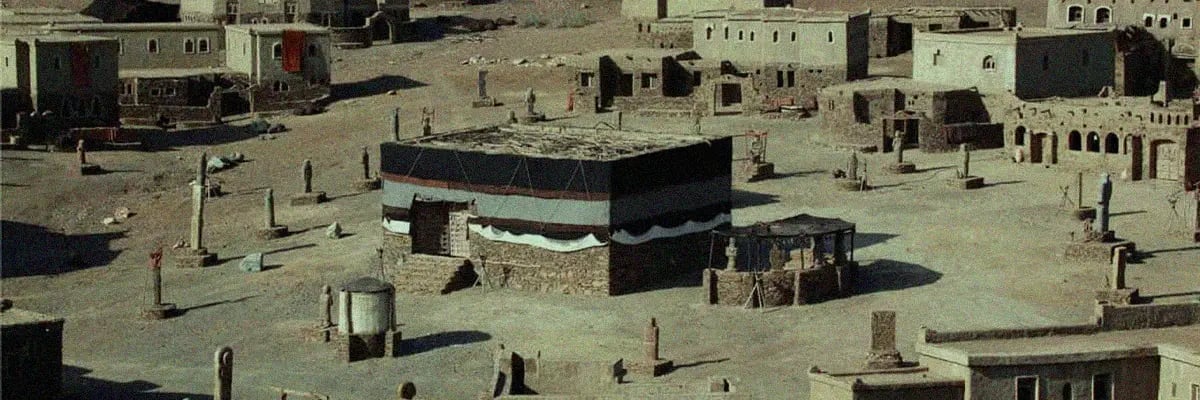
At that time, it was not considered indecent for men to circle the Ka‘bah unclothed, but never once was the Prophet’s modesty exposed.
In a society where lies and deceit were commonplace, Muhammad ﷺ lived as a shining moon of truth. Where trustworthiness was devalued, he stood as its model. Intelligence, discernment, service to society, hospitality, generosity — all these virtues shone in his character. Step by step, he was being shaped into the priceless jewel prepared for prophethood.
The Mouth of a Solitary Cave
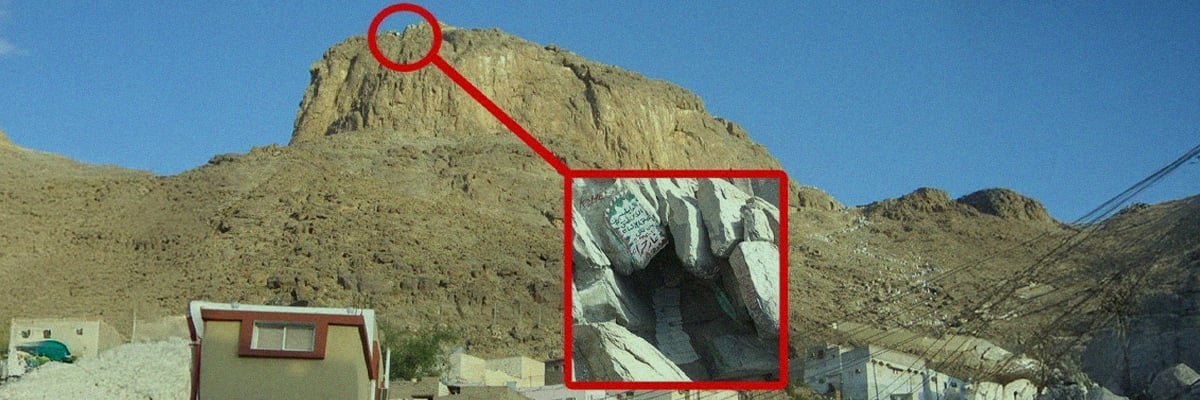
Increasingly, Muhammad ﷺ sought solitude. To sit apart from the pollution of his society and devote himself to worship became his practice. For this retreat, he chose above all the Cave of Ḥirā’, in the Mountain of Light (Jabal al-Nūr), just outside Makkah.
The cave was about four cubits long and three cubits wide, set 870 meters high, four miles from his home. From its opening, one could see directly toward the Ka‘bah.
At times he would remain there for days, sometimes for a whole month, absorbed in reflection. He would take provisions with him; when they ran out, he would return home, gather more supplies, and climb back to the cave. Often his wife Khadījah herself would carry food up the mountain, spending a little time with him before descending again. On one occasion they met midway in the valley below.
He remained in that cave for stretches as long as a month, immersed in contemplation of the mysteries of creation and longing for the Creator. From the age of thirty-seven, his inclination toward such concentrated solitude grew stronger.
The sight of his people lost in empty idol-worship grieved him deeply. In the cave, he pondered their condition, yearning for truth. It was part of the divine preparation — training for the great mission that awaited him.
During these retreats, Muhammad ﷺ experienced unusual inner states. He began to sense that a task was drawing near, that some charge was to be entrusted to him. The dreams he saw in those days came to him with the clarity of daylight, and he often shared his experiences with Khadījah.
This seclusion, far from the clamor of Makkah’s rituals, gave him complete detachment from their corrupted practices. Meanwhile, in Makkah and beyond, talk spread of a prophet who was awaited, a redeemer who would bring light into the darkness of an age gone astray. Those learned in the scriptures, too, were watching for the rise of the promised Messenger.


_1777358421433.webp&w=3840&q=75)