The proclamation of Muhammad’s ﷺ prophethood was not a sudden, isolated phenomenon. The time and the world itself were yearning for a redeemer. Scriptures and sages of old had foretold that a final prophet would be appointed. That noble soul was the son of ‘Abdullāh: Muhammad ﷺ.
The Prophet ﷺ himself was gradually being led to the awareness that he was moving toward a divinely ordained mission. When every preparation was complete, the moment arrived for the declaration of prophethood.
The visions he saw in dreams were among the first signs. Lady ʿĀ’ishah, one of his noble wives, later explained: the earliest part of revelation (waḥy) began as true dreams, radiant like the light of dawn. For six months before the announcement of prophethood, such visions came to him repeatedly, each one clear and filled with meaning.
In one dream, he saw a man approach him, with two others standing behind, observing him closely. One of them asked the other: “Is this not the man we are seeking?” The Prophet ﷺ awoke disturbed and told his uncle Abū Ṭālib. Abū Ṭālib reassured him: “It was only a dream, nephew. Do not let it trouble you.” But when the dream repeated, the Prophet ﷺ spoke of it again. This time, Abū Ṭālib took him to a renowned physician. The man examined Muhammad ﷺ carefully — his feet, his shoulders, every part of him — and said: “O Abū Ṭālib, there is no cause for worry. This youth is of the noblest character. Great goodness is destined for him. He will never be touched by evil or madness. The Namūs (Gabriel) is near to visiting him; these are its signs.”
Thus, inwardly, the Prophet ﷺ was being prepared. Those of insight saw in him the marks of the divine envoy. Even his surroundings seemed to echo with hints of the promised Messenger.
Greetings from Stones and Trees
The famous hadith scholar Imām Muslim records the Prophet ﷺ saying: “There was a stone in Makkah that used to greet me with salām before my prophethood. I still recognize it.”
It was not only one stone. Many inanimate things greeted him. ʿAlī ibn Abī Ṭālib recalled: “I walked with the Prophet ﷺ in Makkah. Whenever we passed trees or hills, they would call out: ‘Peace be upon you, O Messenger of Allah!’” In another narration he added: “Every tree and rock near us would greet him, and I could hear it clearly.”
Such reports fill the hadith and historical sources. They are not to be dismissed as exaggeration or metaphor. Rather, they are counted among the miracles (muʿjizāt) Allah granted to His Prophet ﷺ. The Qur’an itself refers to stones that fall from fear of Allah, and declares that not a thing in creation fails to glorify Him. Imām al-Nawawī explained that these miraculous greetings were part of the same truth: even the seemingly inanimate are conscious of their Creator and His Messenger.
Strange Sights and Sounds
Before the public announcement of prophethood, the Prophet ﷺ often heard mysterious voices and saw unusual lights in the heavens. Once he confided in Khadījah: “O Khadījah, I hear unseen voices and see extraordinary lights. What could this mean? Might something happen to me?”
His wise and faithful wife reassured him: “Do not be troubled. Allah is Truth, and He would never allow harm to come to you. You are a man of honesty, one who preserves family bonds and lives uprightly.”
Step by step, transformations were taking place within him, preparing him for the immense mission to come. Allah was readying His Messenger to carry a message of guidance for all of humanity.
Even when the Prophet ﷺ walked alone through deserted places, voices would call out: “Peace be upon you, O Messenger of Allah!” He had already begun to experience the honor of being addressed by creation itself.
The Gift of Solitude
The Prophet ﷺ came to cherish solitude. More and more, he would withdraw to reflect, worship, and remember Allah alone. This seclusion was not a plan devised by him, as if he were a philosopher seeking to escape society’s evils, nor like monks who retreat to the wilderness as part of set rituals. Rather, it was Allah who inspired him to solitude, shaping him for prophethood.
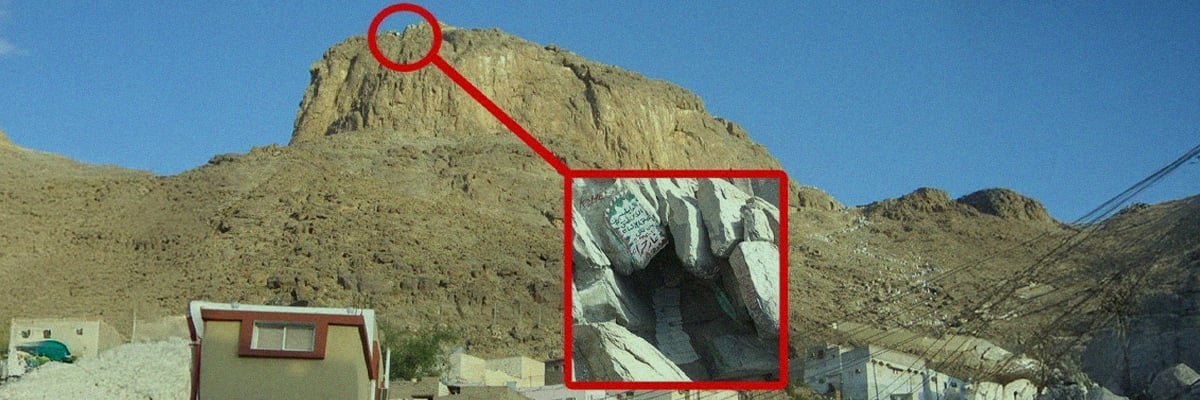
For him, these retreats were filled with inward delight. Drawn by an inner call, he would climb the Mountain of Light (Jabal al-Nūr) outside Makkah, to the small cave of Ḥirā’, where he immersed himself in devotion and contemplation. It was there that the awaited mission would descend — the call the entire world had been awaiting.
Explanatory Notes
- Namūs: A title used by earlier monotheists for the angel of revelation, referring to Jibrīl (Gabriel). The physician who examined Muhammad ﷺ recognized the signs of coming revelation.
- True Dreams: In Islamic belief, true dreams are a form of revelation. The Prophet ﷺ’s six months of visions are seen as the dawn of his mission.
- Miraculous Greetings: Stones and trees greeting the Prophet ﷺ are reported in authentic hadith and understood as miracles granted by Allah to affirm his special status.
- Khadījah’s Support: As in earlier accounts, Khadījah’s reassurance was vital. Her faith and wisdom anchored the Prophet ﷺ through the uncertainty before revelation.
- Ḥirā’ Cave: The chosen site of the Prophet’s retreats. His solitude here was divinely inspired, not a product of human philosophy, but a preparation for his prophetic call.


_1777358421433.webp&w=3840&q=75)