
Between Makkah and Madinah, in the valley of Safrāʾ, lived the tribe of Ghifār. Their chieftain was Abū Dharr. When news reached him that Muḥammad ﷺ had declared prophethood in Makkah, he sent his brother Anīs to investigate. Anīs—himself a poet—returned saying: “I met him. He calls to the worship of the One God and to noble character. People call him a poet, a soothsayer, a sorcerer—but what he recites is none of that. His words are true.”
Abū Dharr wasn’t satisfied. He went to Makkah himself. There, asking discreetly about “the Ṣābiʾī,” he was spotted and beaten unconscious. He revived at Zamzam, washed, drank deeply, and survived on Zamzam alone—thirty nights—until his strength returned.
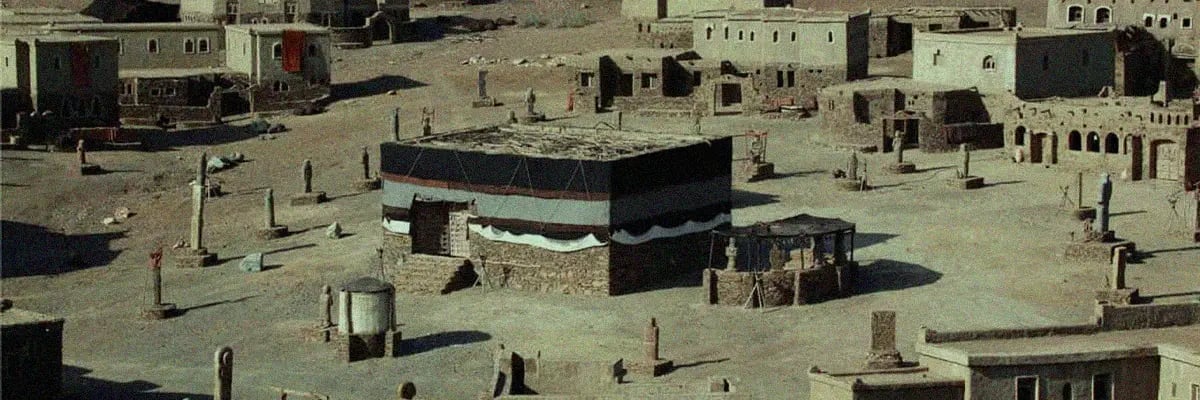
One moonlit night, after two women circumambulated the Kaʿbah calling on the idols Isāf and Nāʾilah (which he mocked), the Prophet ﷺ arrived with Abū Bakr. Abū Dharr approached, greeted him with “al-salāmu ʿalayk, O Messenger of Allah,” and declared the shahāda. The Prophet’s face lit with joy and he returned the greeting. On learning Abū Dharr had lived on Zamzam alone, he said, “Blessed water—it is food and a cure.”
Another report tells how ʿAlī found the stranger sleeping in the mosque and hosted him—three nights—then quietly led him to the Prophet ﷺ. Abū Dharr embraced Islam, and the Prophet ﷺ advised secrecy and to return home to spread the message. But Abū Dharr’s nature was fearless: he went straight to the Kaʿbah and proclaimed the shahāda aloud—twice—each time beaten by Quraysh and rescued by al-ʿAbbās.
That night Abū Bakr hosted him; dried grapes from Ṭāʾif were his first meal in Makkah. The Prophet ﷺ hinted at migration to a palm-grove land—understood to be Yathrib—and asked Abū Dharr to call his people. He returned; his brother and mother embraced Islam, half of Ghifār accepted, and the rest said they would wait until the Prophet ﷺ reached Yathrib—then all believed. Their neighbors Aslam followed, too. The Prophet ﷺ rejoiced and prayed with a gracious wordplay: “May Allah forgive (ghafara) Ghifār; may He grant safety (salāmah) to Aslam.”
Abū Dharr also said he prayed for three years before meeting the Prophet ﷺ—turning to whatever direction Allah turned him at night—and some accounts list him among the very earliest (around fifth) to embrace Islam.
Tufayl ibn ʿAmr al-Dawsī
Tufayl—poet, chief of the Daws tribe (with sway in parts of Yemen)—visited Makkah in the eleventh year of prophethood. Quraysh warned him: “Don’t listen to Muḥammad—his words are sorcery.” He plugged his ears as he entered the Ḥaram—but a shard of Qur’ān reached him. Chiding himself (“I can judge truth from falsehood”), he waited until the Prophet ﷺ left the Kaʿbah and approached him.
The Prophet ﷺ recited Qur’ān to him—beginning with Sūrat al-Ikhlāṣ, then al-Falaq and al-Nās—and invited him to Islam. “What beautiful words, what just teachings!” Tufayl said as he accepted faith, then asked for a sign to help call his people. On his journey home, a light appeared between his eyes like a lamp; fearing it might draw mockery, it moved to the tip of his staff, glowing to guide him through the dark.
He first invited his aging father (“Your religion is mine”), then his wife; both embraced Islam after purification. But Daws, as a tribe, dragged its feet. Tufayl returned to the Prophet ﷺ, distressed, asking him to pray against his people. The Prophet ﷺ instead prayed for Daws and told Tufayl to return with gentleness. He remained with his tribe until after the Hijrah, then brought Dawsī believers to join the Prophet ﷺ at Khaybar.


_1777358421433.webp&w=3840&q=75)