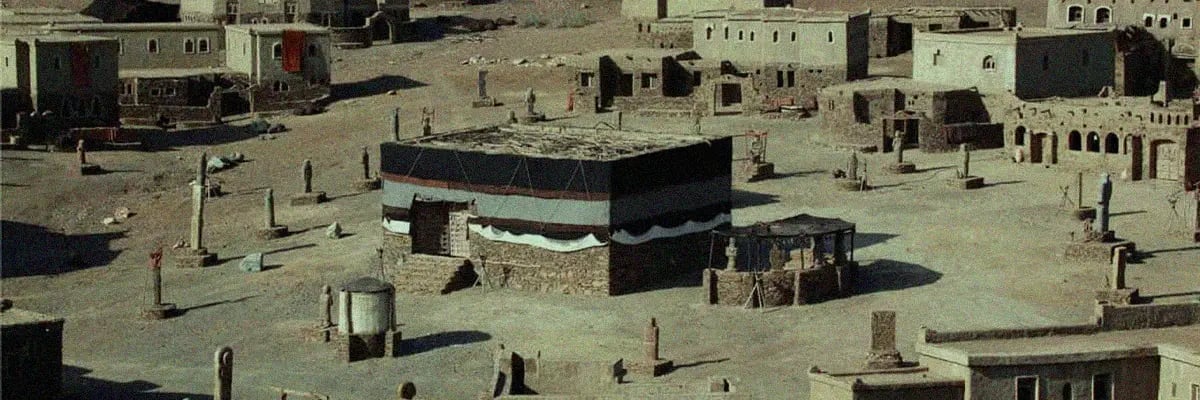

8 September 622 CE. On a Friday night—the 26th of Ṣafar in the first year of Hijrah—the Messenger of Allah ﷺ left the house in Makkah where he had lived with his wife Khadījah. He headed first to Haswīrah, to the courtyard of his paternal cousin Umm Hānīʾ, the daughter of Abū Ṭālib—today near the Bāb al-Widāʿ by the ʿAbd al-ʿAzīz gate of the Sacred Mosque. From there he walked straight to the home of Abū Bakr al-Ṣiddīq. That house would later be made into a small mosque called Masjid Abī Bakr; in time it was demolished, and the Abraj Makkah (the Makkah Clock Tower) now stands in that vicinity.
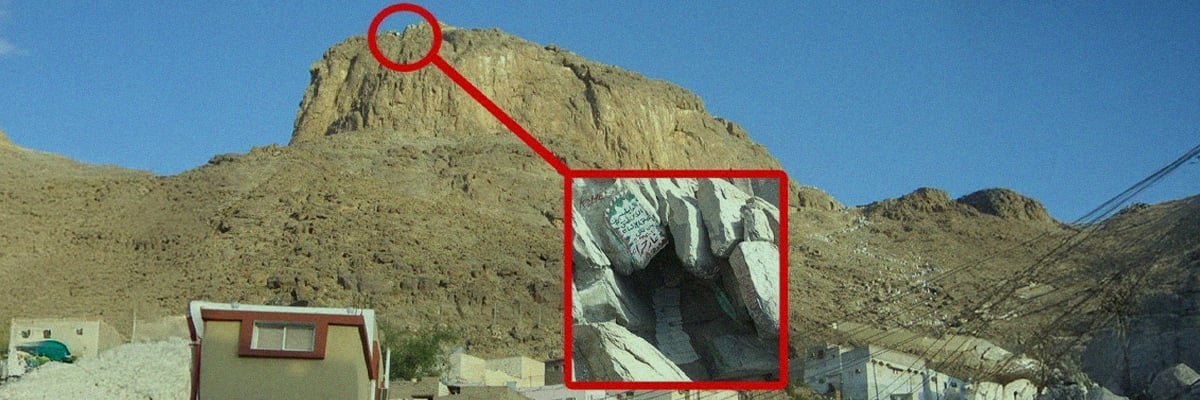
From that point the caravan path to Madinah would normally turn north by way of the Qudāy ridge. Instead, the Prophet ﷺ and al-Ṣiddīq went south, toward Mount Thawr, and took shelter in its cave. On the third day ʿAbdullāh ibn Urayqiṭ arrived with the camels.
On the night of Sunday the 29th of Ṣafar—11 September—they departed Thawr. The Prophet ﷺ, Abū Bakr, ʿĀmir ibn Fuhayrah, and their hired guide took ways travelers rarely used, angling toward the Red Sea coast. Along the way the Prophet ﷺ supplicated:
O Allah, who brought me forth from nothing—praise is Yours. Be my Companion on this journey and Guardian of my family. Protect me from the dangers of night and day, and from the harms of this world and its time. Make me a humble servant; bless what You provide; set me in the company of the righteous and increase my love for You. You are my Protector and the Protector of all the weak. I seek refuge in You from Your wrath and displeasure. By Your decree the heavens and earth rose and darkness turned to light. You dispose the affairs of those gone and those to come. O Allah, I seek Your protection that the well-being You have given me not be withdrawn; that calamity not befall; and that I not become a target of Your anger. All movement and power are by You alone.
They kept the mountain chain of Bushaymāt to the right and followed the valley of Ibrāhīm (the Makkan basin) as far as possible. Reaching Wādī ʿUrnah, they turned north. To the left lay the orchard of Umm al-Hushaym, in the territory of Khuzaʿah. Before Mar al-Ẓahrān they passed a site where, years later, the Treaty of Ḥudaybiyyah would be concluded; today it borders al-Shumaysī, near the boundary markers of the Ḥaram.
From Mar al-Ẓahrān they moved toward al-Murrār, traveling between the ridges of Muqassir and Daff. That rise, later known as al-Fajj al-Karīm, would be the very approach the Prophet ﷺ and 1,400 companions used when they attempted ʿUmrah in the year of Ḥudaybiyyah.
The first day out from Thawr, they came down into the lava field of Ḍajnān—Ḥarrat Ḍajnān—a black basalt plain fifty kilometers from Makkah, about 240 meters above sea level. Quraysh once asked the Prophet ﷺ about a trading caravan he had encountered on the Night Journey; he pointed to this very road.
They entered Wādī al-Sughu, threading the passes of Jibāl al-Khashkhāsh. A flat stretch lay to the west, beside another volcanic field. Here, years later in the sixth year after Hijrah, Khālid ibn al-Walīd would lead two hundred horsemen out from Makkah to intercept the Muslims on their ʿUmrah al-qaḍāʾ—an episode that ended at Ḥudaybiyyah and, on the return, with the revelation of Sūrat al-Fatḥ.
Al-Barāʾ ibn ʿĀzib’s father once asked Abū Bakr about that march from the cave. Abū Bakr told it simply: “We set out by night and walked on through the day. At noon the sun burned; we searched for shade and found the shadow of a rock. I went in first, cleared the ground, spread what we had, and said to the Messenger ﷺ, ‘Rest here while I scout around.’ I went a little way looking for any sign of pursuers. A shepherd approached, heading for our shade. I asked where he was from—Makkah—and learned his name. ‘Do your goats give milk?’ ‘They do.’ ‘Could you milk one for us?’ He tied a goat and I cautioned him to wipe the udder clean of dust. He milked, and I brought the vessel—covered with a cloth—to the Prophet ﷺ. He was asleep; I waited. When he awoke, I mixed water with the milk and said, ‘Please drink.’ He drank until I was satisfied. Then he asked, ‘Shall we move on?’ and we continued.”
By the second day they had passed ʿUsfān—about 13 September, 2 Rabīʿ al-Awwal—and chose again to avoid the busy caravan road. Skirting ʿUsfān, they entered Wādī Ghawl, then crossed the western edge of the volcanic tract of Nakhkhār near Amaj, continued through Wādī ʿUwayj, and came by Mount al-Akhal. It was in this region that the fourth chapter of the Qurʾān, Sūrat al-Nisāʾ, verse 102—detailing prayer in fear—would later be revealed. Classical measures place the distance of qaṣr (shortened prayer) from Makkah to ʿUsfān at forty-eight miles—about 132 kilometers by the Hāshimī mile of 2.75 km.
They reached the junction of the valleys of Ghawl and Ghawlān, beside the eastern caravan route, and again entered ʿUwayj with Mount Akhal on the Prophet’s left. Moving on, they traveled parallel to Mount Jundān. On another journey along this way, the Prophet ﷺ would say to his companions, “This is Jundān. Go on ahead; the mufarridūn have triumphed.” Abū Hurayrah asked, “Who are the mufarridūn?” He replied, “Men and women who make abundant remembrance of Allah.”
They came to the hamlet of Amaj and then into the volcanic flats of Baqqāwiyyah. There stood two rough shelters. The travelers approached and asked the household—kept by Umm Maʿbad—if there was any dried curd or meat to buy. “There is nothing here,” she said, uneasy at sending away needy guests. She explained their state plainly: she would gladly give if she had. The Prophet ﷺ noticed a goat tethered in the corner. “Whose is this?” “One of our goats—too weak to graze,” she answered. Her husband, Abū Maʿbad, had taken the flock to pasture. “May we try to milk her?” the Prophet ﷺ asked. “She has no milk,” she replied. He drew the goat near, invoked the name of Allah, and stroked the udder. Milk gathered. He poured and served everyone, then drank last himself. He milked a second time, filled the vessel, and left it with the household before resuming the journey.
Abū Nuʿaym records Umm Maʿbad’s later testimony: that goat remained with them for years. In the eighteenth year of Hijrah, during the caliphate of ʿUmar, when famine scorched the land—the “Year of Ashes” (ʿĀm al-Ramādah)—that very goat still gave them milk morning and evening. Hishām ibn Hubaysh said, “I myself saw that goat.”
And so, step by step, prayer by prayer, aided by hidden mercies, the Hijrah advanced—away from pursuit and toward Qubāʾ—where a new chapter would open for the Messenger ﷺ and his community.


_1777358421433.webp&w=3840&q=75)