The conversion of ʿUmar and Hamzah forced the Quraysh to rethink their strategy. Violence and ridicule had failed; perhaps persuasion might succeed. Their new plan was to win the Prophet ﷺ over with promises.
One day ʿUtbah ibn Rabīʿah, a chief of Quraysh, said in their assembly:
“O Quraysh, what if I go and speak directly with Muhammad? I will offer him certain proposals. If he accepts even one, then our disputes may end.”
They agreed: “Yes, Abū al-Walīd, try it.”
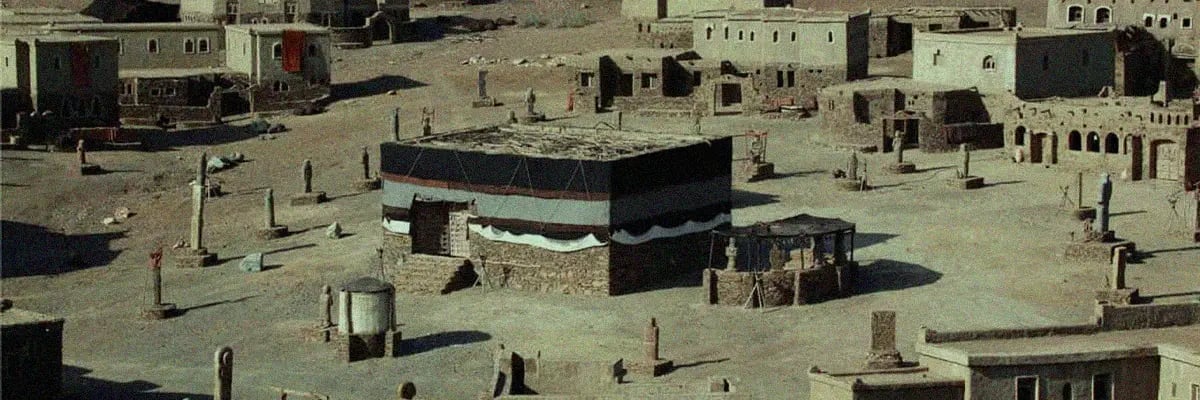
ʿUtbah went to the Prophet ﷺ, who was sitting alone near the Kaʿbah. Sitting close, he began:
“Nephew, you know your place among us — a man of lineage and honor. Yet by your message you have divided our people, condemned our gods, and declared our forefathers misguided. Listen to me. I will place before you some options. Perhaps you will accept one. If it is wealth you desire, we will gather riches until you are the wealthiest among us. If it is leadership, we will make you our chief and take no decision without you. If it is kingship, we will crown you as our king. If it is illness, some spirit that troubles you, we will spare no expense to seek a cure.”
The Prophet ﷺ listened silently until ʿUtbah had finished. Then he asked, “Abū al-Walīd, have you said all that you intended?”
“Yes.”
“Then hear me.”
The Prophet ﷺ began to recite from the Qur’an, Sūrah Fuṣṣilat:
In the Name of Allah, the Most Merciful, the Compassionate.
A revelation from the Most Merciful, the Most Compassionate.
A Book whose verses are explained in detail, an Arabic Qur’an for a people who know.
Bearing glad tidings and warnings — but most of them turn away, so they do not hear.
They say, ‘Our hearts are veiled from that to which you call us…’
ʿUtbah sat still, leaning back on his hands, listening intently to the cadence of the words. When the Prophet ﷺ reached the verse of prostration, he bowed down — and ʿUtbah, almost unconsciously, lowered his head as well. When the recitation ended, the Prophet ﷺ said, “You have heard, Abū al-Walīd. Now choose your course.”
ʿUtbah returned to the Quraysh, his face altered. They pressed him: “What news?”
He said, “By Allah, I have heard words from Muhammad the like of which I have never heard before. They are neither poetry, nor sorcery, nor soothsaying. My people, leave this man to his way. His words bear a weight. If the Arabs overcome him, you are rid of him. If he prevails over them, his glory will be yours as well.”
They scoffed: “Abū al-Walīd, he has cast a spell on you with his words!”
“That is all I have to say,” ʿUtbah replied, and walked away.
Another report relates that when the Prophet ﷺ recited the verse of warning about the fate of ʿĀd and Thamūd, ʿUtbah leapt up in fear, covering the Prophet’s ﷺ mouth with his hand: “For God’s sake, stop! Lest calamity befall us.”
In either case, the Prophet’s ﷺ answer — the recitation of Qur’an — swept away the lures of wealth, power, and pleasure. His mission was clear.
The Quraysh’s Curiosity
Still the Quraysh debated. Perhaps Muhammad ﷺ had not understood ʿUtbah’s offers? They summoned him again, this time in a full gathering near the Kaʿbah. The Prophet ﷺ came, and they repeated the same proposals in unison.
His reply was simple and firm: “I seek none of this. Neither wealth, nor rule, nor kingship brought me here. Allah has sent me as His Messenger. He has revealed a Book to me and commanded me to deliver glad tidings and warnings. If you accept, it will be your portion in this world and the next. If you reject, I will be patient until Allah decides between us.”
They responded with mock demands: Pray to your Lord to move the mountains, to cause rivers to flow, to raise our dead ancestors — especially Quṣayy ibn Kilāb — so that we may ask him what you say. The Prophet ﷺ only repeated his message.
They pressed further: Summon an angel to us, bring treasures of gold and silver, cause the heavens to fall in pieces upon us. Again his answer was the same: “If Allah wills, it shall be so.”
Frustrated, they warned him: Your Lord has told you what will happen if we disbelieve. Very well — let us see. By Allah, we will not cease until one of us destroys the other.
The Prophet ﷺ left them sorrowful. They turned to fresh conspiracies.
Abū Jahl’s Humiliation
When persuasion failed, Abū Jahl saw a chance to inflame the mood. He declared to Quraysh:
“By God, I can endure no more. Tomorrow, when Muhammad bows in prostration, I will crush his skull with a stone. Stand with me, and let come what may from Banū ʿAbd Manāf.”
They pledged their support. The next morning, the Prophet ﷺ prayed at the Kaʿbah. Abū Jahl lifted the great stone and advanced — but suddenly froze. His face blanched, his hands trembled, and the rock slipped from his grasp. He staggered back in terror.
His people rushed to him: “What happened?”
He said, “When I drew near, I saw between me and him a giant camel, the likes of which I have never seen. Its jaws were open to devour me.”
The Prophet ﷺ later explained: “That was Jibrīl. Had Abū Jahl come closer, the angel would have seized him.”
Thus Abū Jahl’s boast dissolved into fear. The days passed, and with each passing day the Prophet’s ﷺ stature grew clearer, while arrogance and denial only deepened the hatred in the hearts of his enemies.


_1777358421433.webp&w=3840&q=75)