
Even as the enemies sharpened their blades against the Messenger ﷺ, many souls were moving toward the light. Nothing heartened the believers more than the entry of the Prophet’s ﷺ uncle, Hamzah, into Islam.
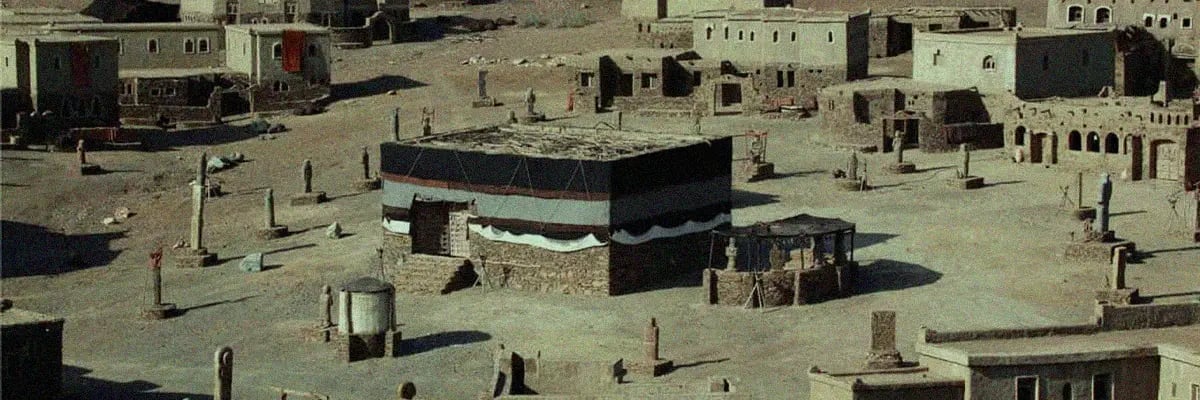
It was the end of the sixth year after the proclamation, in Dhū al-Ḥijjah. Near Mount Ṣafā, the Quraysh notable Abū Jahl assaulted the Prophet ﷺ with brutal blows. The Prophet ﷺ bore it in patience, standing silent, his forbearance unbroken. Not sated, Abū Jahl picked up a stone and struck him; blood streamed from the blessed face.
A slave woman in the household of ʿAbdullāh ibn Judʿān saw everything from her window. Soon after, Hamzah returned from the hunt with his bow slung over his shoulder. He would always pay a visit to the Ka’ba after a hunt. She told him what had been done to his nephew. Rage surged through the lion-hearted warrior. He walked straight to Abū Jahl, stood before him, and declared:
“You vile man! You reviled my nephew. Know this: I am upon his religion!”
Then Hamzah brought his bow down on Abū Jahl with a heavy blow. Clans gathered and tempers flared — Banū Hāshim for Hamzah and Banū Makhzūm for Abū Jahl. Sensing a tribal war, Abū Jahl himself intervened: “Leave Abū ʿUmārah (Hamzah). He struck me because I insulted his nephew.”
Hamzah had already been thinking about Islam; Abū Jahl’s crime pushed the door wide open. With his embrace of faith, his life transformed — he rose to the station later celebrated as “The Lion of Allah.” From then on, his days read like pages lit with courage.
ʿUmar Becomes Muslim
Among Makkah’s boldest men stood ʿUmar ibn al-Khaṭṭāb, side by side with Abū Jahl in stature and fearlessness. The Prophet ﷺ often supplicated:
“O Allah, strengthen this religion through the more beloved of the two to You — ʿUmar ibn al-Khaṭṭāb or Abū Jahl.”
The answer came three days after Hamzah’s Islam — in favor of ʿUmar.
ʿUmar’s path was unlike Hamzah’s. He was a man who bowed to none, fiercely loyal to ancestral rites, and indulgent in drink and diversions. He attacked Islam with severity and dealt harshly with Muslims. Yet somewhere within, tenderness remained.
One day near the Kaʿbah, he watched the Prophet ﷺ pray and heard him recite Sūrat al-Ḥāqqah (69). In those times people slandered the Prophet ﷺ as a poet or a soothsayer. The verses (69:40, 43) that refute such claims struck ʿUmar to the core. Later he would say that Islam entered his heart that very day — though he did not yet declare it. Pride in tradition and the press of public opinion pushed him the other way, until at last he joined those setting out with swords to kill the Prophet ﷺ.
Sword drawn from its sheath, ʿUmar strode into the valley. He was met by Nuʿaym ibn ʿAbdullāh.
“Where to?” Nuʿaym asked.
“To kill Muhammad.”
“And do you think Banū Hāshim and Banū Zuhrah will let you walk away?” Nuʿaym replied, then added, “Shall I tell you something stranger? Your sister and her husband have accepted Islam.”
The news turned ʿUmar’s steps. He rushed to his sister’s house. There sat Khabbāb ibn al-Aratt, teaching them Qur’an, with a written page of Sūrat Ṭāhā (20). Hearing ʿUmar’s approach, Khabbāb hid. ʿUmar burst in: “What was that murmur?”
“Only conversation,” they said — which did not satisfy him.
“You two have changed religion!” he roared, and struck his brother-in-law. When his sister moved to shield her husband, he hit her too. Blood flowed down her face. Then, like a lioness, she cried:
“O ʿUmar! If our faith were not true, would I proclaim it? There is no god but Allah, and Muhammad is the Messenger of Allah!”
Her defiance — and the blood on her cheek — broke him. His anger drained; grief and softness took its place. Humbly he said, “Show me that page so I can read it.”
“You must not touch it impure,” she replied. “Wash first.”
As if a child before a teacher, ʿUmar obeyed, bathed, and returned. He read from the beginning — ‘In the Name of Allah…’ — and continued through the opening fourteen verses. When he reached:
“Indeed, I am Allah — there is no deity but Me. So worship Me and establish prayer for My remembrance” (20:14),
he exclaimed, “How beautiful these words are! Tell me where Muhammad is.”
Khabbāb emerged from his hiding place and said, “Rejoice, ʿUmar! It seems the Prophet’s ﷺ Wednesday-night supplication has reached you.”
There was no delay. ʿUmar went straight to the Prophet ﷺ at the House of al-Arqam. Inside, word spread that ʿUmar stood at the door with his sword. Hamzah said, “Open it! If he comes in peace, we welcome him. If not, we will meet him with his own blade.” The Prophet ﷺ rose, met ʿUmar like a host greets a guest, took him by his cloak and pulled him close, and prayed: “O Allah, here is ʿUmar — strengthen Your religion through him!”
Without pause, ʿUmar said:
“I bear witness that there is no god but Allah, and I bear witness that Muhammad is the Messenger of Allah.”
Voices thundered takbīr so loudly that people in the Kaʿbah’s courtyard heard the cry.
It was a declaration that poured strength into the believers and dread into their foes. Later ʿUmar recalled: “After accepting Islam, I asked, ‘Who is the bitterest enemy of Islam in Makkah?’ They said, ‘Abū Jahl.’ I went to his door, knocked, and told him I had become Muslim. He slammed it in my face with a curse.”
ʿUmar then went to Jameel ibn Maʿmar, the man who spread Quraysh’s news. “I’ve accepted Islam,” ʿUmar told him. Jameel strode straight to the assembly and announced, “ʿUmar has left the religion!”
From behind him ʿUmar called out, “No — I have entered Islam.” The crowd surged over him; they fought till midday. Exhausted, ʿUmar proclaimed, “Do as you will — but if we number three, it will be either you or us who prevail.”
Quraysh resolved to kill him, and ʿUmar stayed home a few days. Then al-ʿĀṣ ibn Wāʾil al-Sahmī, an old companion from the Jāhiliyyah, came wrapped in his winter cloak and asked, “Why hide?”
“They mean to kill me,” ʿUmar said.
“I grant you my protection,” al-ʿĀṣ replied, and walked out with him. When people learned al-ʿĀṣ had given his pledge, they fell back.
ʿUmar’s arrival brought palpable strength. In a report from Ibn ʿAbbās, ʿUmar was asked how he came to be called al-Fārūq (the Distinguisher of truth from falsehood). He said: “Three days before me, Hamzah had accepted Islam. When I became Muslim, I asked the Prophet ﷺ, ‘Are we not upon the truth in life and death?’ He said, ‘By Him in Whose hand is my soul, you are indeed upon the truth in life and death.’ I said, ‘Then why do we hide?’ By Allah who sent you with the truth, we will go forth.”
So they formed two ranks: one led by ʿUmar and the other by Hamzah, and marched straight into the Sacred Mosque. Quraysh faces blanched at the sight. That day, the Prophet ﷺ called him al-Fārūq.
It was Islam’s first open procession. ʿAbdullāh ibn Masʿūd said that before this, the poor believers could scarcely pray openly at the Kaʿbah. “We became mighty,” Ibn Masʿūd later added, “with ʿUmar’s Islam.” And Ṣuhayb the Roman said: “When ʿUmar entered Islam, Islam triumphed; the call went public; we sat around the Kaʿbah and made ṭawāf openly — and we met whoever came to attack us.”


_1777358421433.webp&w=3840&q=75)