
By the time the Prophet Muhammad ﷺ reached the age of twenty-five, he was known in Makkah as its most handsome and dignified young man. Thoughts of marriage were naturally being discussed among his relatives, including his guardian Abū Ṭālib.
It was then that a proposal came to him from Khadījah, daughter of the noble merchant Khuwaylid. Khadījah was a woman of remarkable character, widely respected for her virtues. She was also wealthy, and after the death of her husband Abū Hālah, she lived as a widow with children. At the time of this proposal, she was forty years old.
Though many prominent men of Quraysh had sought her hand in marriage because of her wealth and stature, she had turned them all away. Khadījah was an astute businesswoman. She would invest her wealth by entrusting caravans to traders, who would conduct commerce on her behalf. Profits were shared with those who carried her goods. Most often, her caravans traveled north to Syria.
On one such occasion, Muhammad ﷺ had traveled as her representative to Syria. On that journey, the Prophet’s extraordinary qualities had been witnessed by Khadījah’s servant Maysarah, who later shared everything with her in wonder. The trade itself was more successful than usual, and as a token of appreciation, Khadījah rewarded Muhammad ﷺ generously. This experience deepened her esteem for him and inspired her to send a proposal of marriage.
The proposal was first conveyed to the Prophet ﷺ by his uncle Ḥamzah. Soon after, under the leadership of Abū Ṭālib, the notables of Makkah gathered. There, Muhammad ﷺ and Khadījah were married. The marriage sermon (khuṭbah) was delivered by Abū Ṭālib himself.
Thus it was that the twenty-five-year-old groom and the forty-year-old bride began a married life together — a union that became an everlasting model for the world. Until Khadījah’s passing, the Prophet ﷺ never married another woman, nor did he entertain such thoughts. Of the Prophet’s children, six were born to Khadījah; only Ibrāhīm was from another wife.
Mediation of Justice
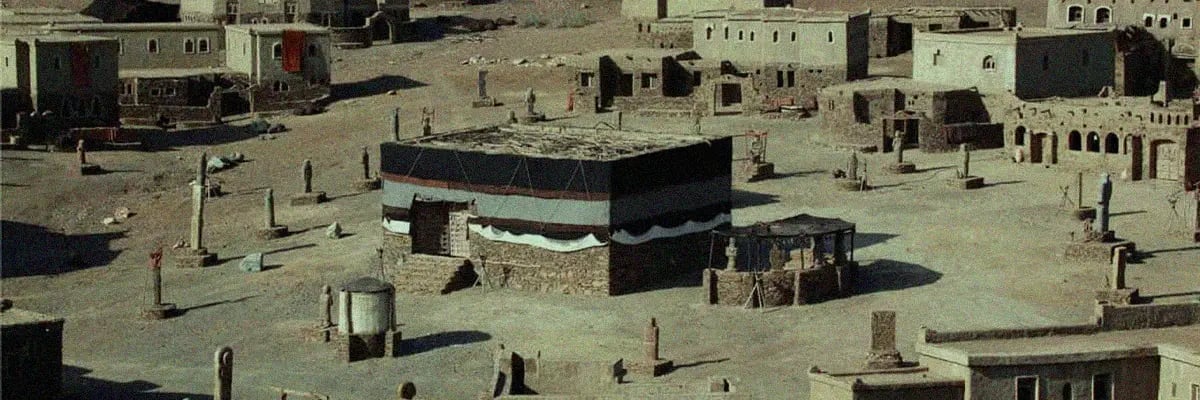
When the Prophet ﷺ was thirty-five years old, an incident occurred that highlighted his wisdom and leadership. At that time, discussions arose about rebuilding the Ka‘bah. The structure then standing was a simple construction of stones stacked without mortar. Though they wished to renovate it, the Quraysh feared dismantling it. At last, with courage, they began the work.
The reconstruction proceeded until it was nearly complete. Then arose the critical issue of who should have the honor of restoring the ḥajar al-aswad — the Black Stone — to its place in the southeastern corner. Each clan claimed the right. None would yield. The dispute grew so fierce that war threatened to erupt.
The Banū ‘Abd al-Dār, in a gesture of declaring war, brought forth a bowl of blood. They dipped their hands in it, signaling their readiness to fight to the death. The Banū ‘Adiyy did likewise. Makkah trembled under the shadow of looming civil war.
After days of stalemate, the clans finally sought a resolution. They agreed: the next person to enter the sanctuary would be appointed as arbiter. With tense anticipation, all eyes turned to the entrance. And then Muhammad ﷺ appeared.
A cry of relief swept through the crowd. “Here comes al-Amīn — the Trustworthy!” they shouted, welcoming him with joy. His reputation for honesty and fairness was undisputed; all accepted him without hesitation.
The Prophet ﷺ devised a simple and elegant solution. He spread out a cloak, placed the Black Stone upon it, and invited each clan leader to hold the edge of the cloth together. They lifted it jointly to the corner of the Ka‘bah. Then Muhammad ﷺ himself set the stone into its place.
Thus, what had threatened to engulf Makkah in bloodshed was resolved in peace. In the eyes of all, Muhammad ﷺ stood out as a wise peacemaker, a sign of the leadership he would one day assume for all humankind.
Explanatory Notes
- Khadījah (may Allah be pleased with her): The Prophet’s first wife, and the first to believe in his message. She is remembered as “the Mother of the Believers.” Their marriage lasted twenty-five years until her passing.
- Maysarah: Khadījah’s servant who accompanied the Prophet ﷺ on the Syrian trade journey. His testimony about Muhammad’s honesty, miraculous signs, and conduct deeply impressed Khadījah.
- Ḥamzah ibn ‘Abd al-Muṭṭalib: The Prophet’s uncle, later a great warrior of Islam known as “Asad Allāh” (the Lion of God). He first conveyed Khadījah’s proposal to Muhammad ﷺ.
- Hajar al-Aswad (Black Stone): A stone of heavenly origin, placed in the corner of the Ka‘bah by Prophet Ibrāhīm and his son Ismā‘īl. It is revered as part of the rites of pilgrimage.
- Banū ‘Abd al-Dār and Banū ‘Adiyy: Prominent Qurayshi clans. Their swearing by blood to fight shows how dangerously close Makkah came to civil war over the honor of placing the Black Stone.
- Al-Amīn: The Prophet’s title, meaning “the Trustworthy.” This reputation, earned long before prophethood, made him the natural choice to resolve disputes.
- The Arbitration: This event is significant in Sīrah because it foreshadowed Muhammad’s role as a leader who would unite divided peoples and establish peace where conflict seemed inevitable.


_1777358421433.webp&w=3840&q=75)