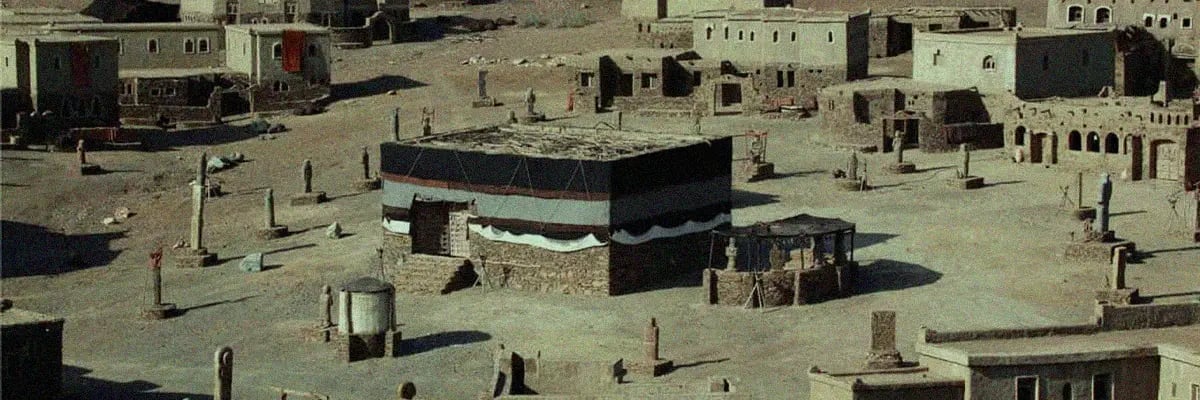

Imam Ibn Ishāq relates an episode from the Prophet’s ﷺ early mission. One day as he was circling the Kaʿbah, several leading men of Quraysh—Walīd ibn al-Mughīrah, Umayyah ibn Khalaf, and ʿĀṣ ibn Wāʾil—approached him with a proposal of “compromise”
“Muhammad, worship what we worship, and we’ll worship what you worship. We will share in one another’s devotions: if your god proves superior, we will have our share; if ours proves superior, you will have yours.”
The Prophet’s ﷺ answer came as revelation itself: Sūrat al-Kāfirūn (Q 109), a clear refusal of syncretism—
Say: O disbelievers! I do not worship what you worship… To you your way, and to me mine.
Faith allows no bartering. Frustrated by his firmness, they pressed for “adjustments” to the message. The Qur’an replied again (Q 10:15): bring a different Qur’an, or change it. Say: It is not for me to change it of my own accord. I only follow what is revealed to me; if I were to defy my Lord, I fear the punishment of a tremendous Day. And again (Q 17:73–75): they nearly lured you away from what We revealed, hoping you would fabricate something else. Had We not made you firm, you might have inclined to them a little—then We would have made you taste double punishment in life and death, and you would find no helper against Us.
These verses were a recitation of resolve. The tactic of “conciliation by alteration” collapsed, and Quraysh went hunting for new angles.
One agitator was Naḍr ibn al-Ḥārith, a persistent tormentor of the Prophet ﷺ. He told the people:
“Quraysh, we face a serious crisis with no obvious escape. Muhammad grew up among us—honest, trustworthy. Then, in midlife, he brought something new. You called it sorcery—yet it bears none of sorcery’s marks. You called it soothsaying—yet its cadence is unlike theirs. You called it poetry—by God, it is not poetry; we know poetry’s meters and ornaments. You called it madness—by God, it is not madness; we know the signs of derangement. This is something momentous—you must decide what to do.”
Naḍr would attend the Prophet’s ﷺ gatherings—then stand to counter them with tales of Persian kings and legends he had learned in Ḥīrah: “These stories are the same as Muhammad’s stories,” he would claim, sowing confusion. The Qur’an addressed his ploy in Sūrat al-Qalam.
Quraysh eventually dispatched Naḍr and ʿUqbah ibn Abī Muʿayṭ to Yathrib (Madīnah) to consult the Jewish scholars: “Ask them about Muhammad and judge his claim by their scriptures.” The rabbis listened carefully and said:
“Put three questions to him. If he answers truly, he is a prophet; if not, he is an impostor.
- Who were the young men of old who traveled and performed a wonder (the youths of the cave)?
- Who was the man who journeyed to the far reaches of the earth, seeing the places of sunrise and sunset (the world-traveling ruler)?
- What does he say about the nature of the spirit (the soul)?”
The envoys returned to Mecca and posed the questions. The Prophet ﷺ replied, “I will tell you tomorrow,” but—by divine design—he did not add “in shāʾ Allāh” (“if God wills”). Fifteen days passed with no revelation. The scoffers taunted, “Where are the answers you promised?” The Prophet ﷺ grieved inwardly—until Jibrīl came with revelation, both correcting the etiquette—never say of a future deed, “I will do it tomorrow,” without in shāʾ Allāh—and unveiling full replies in Sūrat al-Kahf (Q 18):
- The story of the People of the Cave (Aṣḥāb al-Kahf).
- The account of Dhū l-Qarnayn, the just ruler who ranged to the ends of the earth.
- And elsewhere, the teaching on the Spirit—its reality known to God, and humans given but little knowledge of it.
This is how Islam met debate: with patient, open engagement—and with revelation that spoke to reason and conscience. No other worldview contested so beautifully with ideas. When argument failed, the idolaters turned to force: they harassed those praying by the Kaʿbah, and they brutalized Qur’an-learners. Many believers learned verses from hearing the Prophet ﷺ recite during prayer. The opposition found this intolerable.
God then instructed His Messenger ﷺ regarding recitation in prayer (Q 17:110): do not recite so loudly as to draw needless harm, nor so softly that followers cannot learn—take a middle course. It was protection from harassment without depriving the faithful of their learning.
Yet the Qur’an’s spell could not be contained. It seized hearts. The believers had to hear it. They met and proposed: “Let someone recite publicly by the Kaʿbah.” ʿAbdullāh ibn Masʿūd volunteered. Friends warned him: “They will attack you. Let a man with powerful clan backing do it.” He answered, “I will go. Allah will protect me.”
At dawn he stood near Maqām Ibrāhīm and began Sūrat al-Raḥmān: “Which of your Lord’s favors will you deny?” The Quraysh in their club heard the voice. “What is the son of Umm ʿAbd reciting?” “Passages revealed to Muhammad,” came the answer. They rushed him and beat him, striking even his face. Still he recited on, then returned to his companions bloodied. “This is what we feared,” they said. Ibn Masʿūd, undaunted, replied, “By God, their assault seemed light to me. If you wish, I will do it again tomorrow.” Thus he became the first to recite the Qur’an publicly in Mecca.
Meanwhile the Qur’an’s power was a subject of heated whisper among Quraysh. Even diehard foes felt compelled to listen. Three leaders—Abū Jahl, Abū Sufyān, and Akhnaṣ ibn Sharīq—independently slipped out at night to eavesdrop on the Prophet’s ﷺ recitation in prayer. Returning before dawn, each was startled to find the other two on the same errand. Embarrassed, they admonished one another: “Do not do this again. If our followers see us, they will misunderstand.”
But the next night—and the next—they could not stay away. Such was the pull of the Revelation they publicly denied.


_1777358421433.webp&w=3840&q=75)