
The reactions in Makkah had grown unbearable. Seeking a fresh avenue to present the values of this new way of life, the Prophet ﷺ considered appealing to the tribe of Thaqīf in Ṭā’if—where some kin still lived, and where his foster-mother Ḥalīma’s people were from.
In Shawwāl, the Prophet ﷺ set out for Ṭā’if with Zayd ibn Ḥāritha. He carried a hopeful confidence that Thaqīf would receive him well. He met their three leading brothers—ʿAbd Yālīl, Ḥabīb, and Masʿūd, sons of ʿAmr ibn ʿUmayr (one of whom was married to Safiyya, a Quraysh woman and mother of Ṣafwān ibn Umayya). He presented Islam and sought their support against the hostility in Makkah. Their replies were scornful: one sneered, “If God has sent Muhammad as a prophet, I’ll tear the covering of the Kaʿbah to shreds.” Another asked, “Couldn’t God find anyone else?” The third said, “If you are truly a prophet, then I should not speak to you; and if you are lying, then it is not fitting that I speak to you.”
The Prophet ﷺ rose, heartsore. “Keep what you have said and done to yourselves—do not spread it,” he requested. He remained in Ṭā’if about ten days (some say a month), meeting other notables—none accepted. They urged him to leave, set the street rabble upon him, and drove him out with jeers and stones. Children, slaves, and fools mobbed him. His blessed feet bled; Zayd shielded him until his own head was gashed. At last they escaped to an orchard owned by ʿUtbah and Shaybah, sons of Rabīʿah—both bitter foes—where the Prophet ﷺ sat under a tree, aching in body and soul.
There he prayed from the depths of a broken heart:
“O Allah, to You I complain of my weakness, my lack of resource, and my lowliness before men. O Most Merciful of the merciful! You are the Lord of the weak and You are my Lord. To whom do You leave me? To a distant stranger who will insult me, or to an enemy whom You have empowered over me? So long as You are not angry with me, I do not care. Yet Your easing is more expansive for me. I seek refuge in the light of Your Face by which all darkness is illuminated and every matter of this world and the next is set aright, lest Your anger descend upon me or Your displeasure befall me. Yours is the right to reproach until You are pleased. There is no power nor might except through You.”
Seeing his state, ʿUtbah and Shaybah felt a flicker of pity and sent their servant ʿAddās with a tray of grapes. The Prophet ﷺ took one, saying “Bismillāh.” ʿAddās stared—“The people of this land don’t say that.” The Prophet ﷺ asked where he was from and his faith. “From Nineveh; I am a Christian.” The Prophet ﷺ said, “From the town of the righteous man Yūnus ibn Mattā?” ʿAddās was astonished: “You know of Yūnus? When I left Nineveh hardly ten people there knew him; how do you—among an unlettered people—know him?” The Prophet ﷺ replied, “He was a prophet, my brother; and I am the Messenger of Allah.” ʿAddās fell, kissing the Prophet’s head, hands, and feet. His masters scoffed when he returned, but he told them, “No one on earth today is nobler than this man; he told me what only a prophet would know.”
Not a single man or woman of Ṭā’if accepted his call. He turned back, heavy with grief. Khālid al-ʿAdawānī later recalled hearing the Prophet ﷺ reciting Sūrat al-Ṭāriq in a Ṭā’if street—verses he memorized on the spot even while then a polytheist.
Years later, ʿĀʾishah asked: “Was there a day more severe for you than the day of Uḥud?” He ﷺ answered, “Yes—the day of ʿAqabah at Ṭā’if, when I presented myself to Ibn ʿAbd Yālīl and they rejected me. I left, overwhelmed, until I reached Qarn al-Thaʿālib. I looked up and there was a cloud shading me. Jibrīl called: ‘Allah has heard what your people said and how they replied to you. He has sent the Angel of the Mountains; command him as you wish.’ The Mountain Angel greeted me and said, ‘If you wish, I will crush them between the two mountains.’ I said, ‘No—rather I hope that Allah will bring forth from their progeny people who worship Him alone, associating nothing with Him.’”
On another narration, Jibrīl conveyed Allah’s greetings and permission for the Mountain Angel to act; the Prophet’s ﷺ clemency drew the praise, “As Allah has named you ra’ūf and raḥīm (kind and merciful), so indeed you are.”
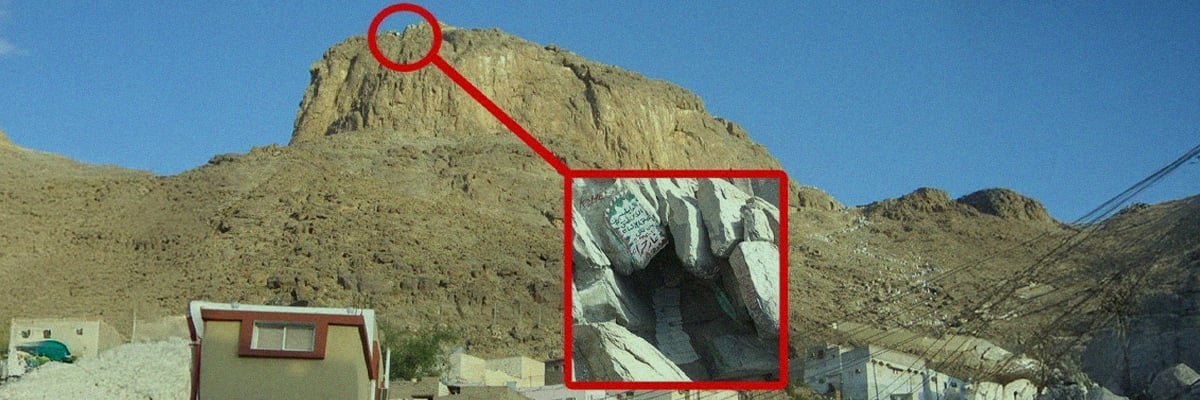
Approaching Makkah, Zayd asked how they could re-enter when they had been driven out. The Prophet ﷺ said, “O Zayd, Allah will grant relief and a way. He will support His religion.” Near Ḥirā’, they sought the protection customary for safe entry. A messenger went to Aḥnas ibn Sharīq—he declined. Then to Suhayl ibn ʿAmr—he refused, citing tribal constraints. Finally to Muṭʿim ibn ʿAdī—who agreed. At dawn Muṭʿim arrived armed with six or seven sons, escorted the Prophet ﷺ to the Kaʿbah, and announced his protection. Abū Sufyān asked, “Is he your follower, or under your protection?” “Under my protection,” Muṭʿim replied. “Then we too respect your protection,” Abū Sufyān said, and sat until the Prophet ﷺ completed his ṭawāf. (Muṭʿim died before embracing Islam; the Prophet ﷺ later said, “Had Muṭʿim ibn ʿAdī been alive to intercede for the captives of Badr, I would have released them for him.”)
To have to enter one’s own birthplace under another man’s protection; to be barred from circling the Kaʿbah without a guarantor; to hear the cries of persecuted believers; to watch families driven to exile—these were the days that pressed upon his ﷺ soul. And the Prophet ﷺ listened for the next command from Allah—awaiting the opening to a new chapter.


_1777358421433.webp&w=3840&q=75)