
Safiyyah—may God be pleased with her—was of Jewish lineage. She once recalled: “My father, Ḥuyayy, and his brother Abū Yāsir were very fond of me. When the Messenger ﷺ arrived at Qubāʾ, the two of them went to see him. They stayed from morning until evening and returned drained, downcast. I ran out to greet them, eager to share their excitement, but when I saw their faces I shrank back. I heard my uncle ask my father, ‘Is it him?’ ‘Yes,’ my father replied. ‘Are you certain?’ ‘Yes.’ ‘Then what will be your stance toward him?’ My father answered: ‘Hostility—until the end.’”
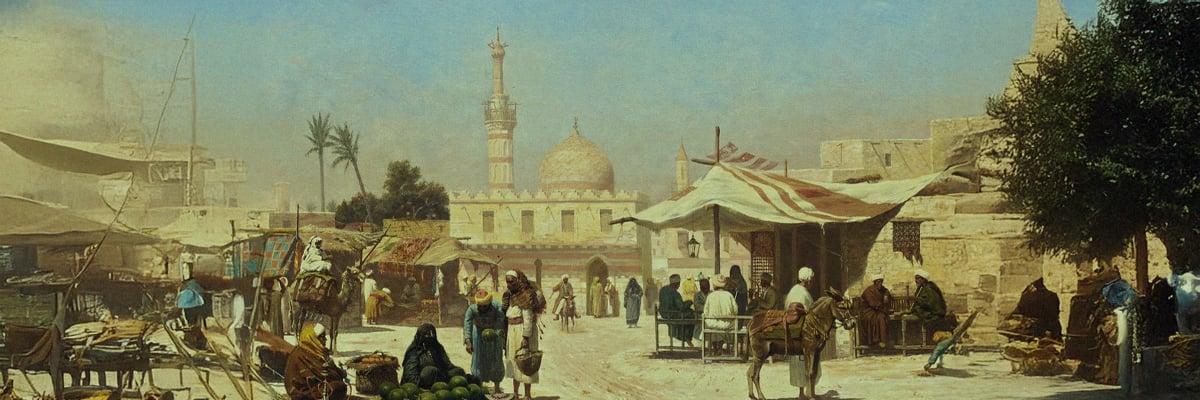
The Jews of Madinah had come to the Ḥijāz seeking refuge from the persecutions of Rome and Assyria. Over generations of living among Arabs, their dress and daily rhythms had become Arabized, and marriage ties linked the communities; yet at heart they held fast to their tribal pride. In their view, Jews were a higher people and the unlettered Arabs lesser; taking the Arabs’ wealth, they argued, was no sin, for supremacy in property belonged to them. Soothsaying and sorcery shadowed their trade. Pride and a claim to superiority shaped their dealings. Commerce was their stronghold: exporting produce, importing vessels, grain, wine; lending at interest and gradually absorbing the properties of many locals.
They also found sport in sowing discord. Where tribes moved in unity, they teased out schism; where quarrels flared, they profited. They armed the sides, financed their feuds, and watched the fires grow.
Three Jewish tribes dominated Madinah’s scene. Banū Qaynuqāʿ lived within the city. Banū Naḍīr held strongholds on its outskirts. Both were allied with the Khazraj. Banū Qurayẓah were allied with the Aws. In truth, these were the hands forever stoking enmity between Aws and Khazraj—openly so at the Battle of Buʿāth.
The advent of Islam and the Prophet ﷺ in Madinah unsettled these tribes most of all. Outward courtesy veiled an inward rancor; Islam and the Muslims they regarded as enemies by birthright.
Thus the Prophet ﷺ met a distinct social weave: his devoted companions who welcomed him and hoped for guidance at his side; the old-line Arab polytheists; and the Jewish clans. Though the Sacred House and the earliest believers were in Makkah, conditions there had never permitted a full society to be built. Makkan revelation had focused on creed and on cleansing the soul of vain attachments. In Madinah, the picture changed: the ground was ready for a complete order—law, worship, and daily practice. Verses came shaping ritual and communal life. The Emigrants (Muhājirūn) from Makkah and the Helpers (Anṣār) of Madinah stood as one body, each soul a strength for the Prophet’s ﷺ mission. They shared their goods with those who had left everything; tightness came, but they counted it fortune. Even partial blockades could not bend them; faith had trained them to bear.
The Madinan idolaters, for their part, held no special dominance over the Muslims; living beside the believers, many hearts softened. They raised no grand stratagems as in Makkah, and no open, numbered enemy emerged among them. Yet hypocrisy took root. Some professed friendship while harboring spite; their leader was ʿAbdullāh ibn Ubayy. He smarted at lost precedence and—after Badr—postured as an ally of the believers, then turned against the Prophet ﷺ whenever chance allowed. For all his maneuvering, he could not stall the Prophet’s ﷺ advance nor crown his own cause.
Another scene laid bare the hardness many Jews carried. ʿAbdullāh ibn Salām—renowned among them for knowledge—heard that the Prophet ﷺ had entered Madinah and went to meet him. He asked questions that only a true prophet could answer; when the answers came sure and straight, he recognized the truth and embraced Islam at once. Then he confided: “Jews are a people who level false charges. If I announce my Islam and you ask them about me, they will lie.” The Prophet ﷺ summoned their elders while ʿAbdullāh stood inside the house. “What place does ʿAbdullāh ibn Salām hold among you?” he asked. “Our best,” they said, “our most learned, noblest of lineage, a leader son of a leader.” “What if he accepts Islam?” “God forbid,” they repeated. Then ʿAbdullāh stepped out and proclaimed the testimony aloud. Their praise turned to venom in an instant: “The worst of us, son of the worst!” He appealed to them—“O Jews, fear God! There is no god but He. You know this man bears truth from God”—but they shouted him down: “You lie!”
Such was the first reception the Prophet ﷺ met from those who called themselves People of the Scripture and followers of Moses. And beyond this mixed society within Madinah stood the enmity of Quraysh in Makkah—five hundred kilometers away yet relentless. They would not let the Prophet ﷺ and his companions rest; sieges, strangling of supplies, mischief by every means.
Through that junction of strength and mercy, love and firmness, care and defense—through patience and diplomacy—the Messenger ﷺ led his community forward.


_1777358421433.webp&w=3840&q=75)