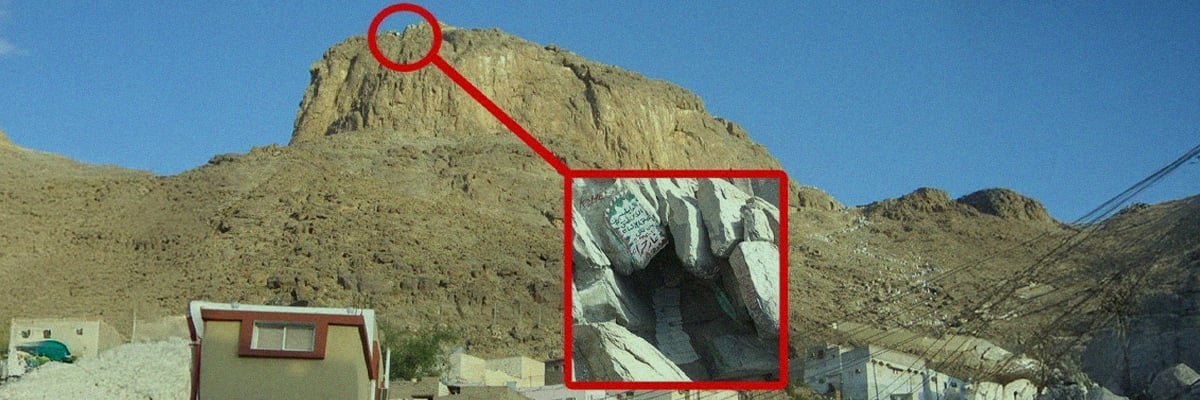

The Prophet ﷺ and his loyal companion Abū Bakr pressed on with their journey. From the valley of Qudayd, they entered the black lava fields of al-Mushallal, a route once used by caravans traveling between Yemen and Damascus. Today this region is known as al-Qudaydiyyah. They did not linger long in al-Mushallal; soon they turned into the valley of Kulayyah. Some traditions place the fateful encounter with Surāqah here, in the afternoon of September 13th.
No one else managed to reach the Prophet ﷺ. Abū Bakr recalls: “When I saw a horseman galloping towards us, I cried out, ‘Messenger of God, one of them is coming for us!’ But the Prophet ﷺ, unshaken, replied, ‘Fear not. God is with us.’”
From there, the caravan veered eastward, entering Wādī al-Kharrār, skirting the volcanic ridges of al-Aswariyyah. Turning slightly left, they came to Juhfah, where the Prophet ﷺ received a revelation that carried a promise:
“He Who has ordained the Qur’an for you, O Muhammad, will surely return you to your place of return” (Q 28:85).
The assurance that he would one day return to Makkah soothed the pain of exile.
The landscape now began to resemble Madinah’s terrain—springs and streams dotted the path, low hills gave way to valleys. They reached the stony heights of al-Murra, where a brook called Maʿ Ahyā flows westward. Crossing this hill-country, they descended into the valley of Lakhf. Travelers of old noted many side-paths here, such as Rīʿ Abū Duqaym and Rīʿ al-Humayyah, as well as the valley of Saʿd. They passed by al-Musaydir’s stream and pressed through the outer ridges of Khushūm. Along these shaded hillocks—known as Mustasillāt Khushūm—the Prophet ﷺ and his companion found moments of rest.
The road narrowed to a passage of just six hundred meters, standing at 108 meters above sea level. From there, the Prophet ﷺ rode through the valley of Saʿd, continuing four kilometers along Wādī Farʿ until they reached Likhf. They then turned westward, climbing Mount Mulaissā, famous for its smooth, sharp rocks, and from there traveled seven kilometers to the well of Riʿl Wān. On the night of September 14th, corresponding to the third of Rabīʿ al-Awwal, they halted here for rest.
At dawn on Thursday, the fourth of Rabīʿ al-Awwal, they resumed. They followed the banks of Lakhf’s stream, crossing the brooks of Dhū al-Asawiyyān and Mījāh, until they entered the rugged pass of Umm Qashd. From there, they rode through the valley of Sakhīb (Wādī Takhīb), then north-west into the mountain pass of ʿUjayrid, before cutting across to link with the valley of Dhī Salam through the route of Batn Niry or Rīʿ.
For six kilometers they pressed through the rocky bed of Dhī Salam, reaching the dry channel of Madlaj al-Tihīn, then on into Wādī Tihīn and the valley of al-Qahh. This very valley, rich with salam trees, is remembered in al-Būṣīrī’s famed Qaṣīdat al-Burdah. Even today, its plains are carpeted with salam shrubs.
Beyond Dhī Salam, they crossed another dry streambed, nestled between Mount al-Kabsh to the east and Mount al-Qamrā to the west, before arriving at al-Ghusriyyān. This wide plateau, linking Wādī Tihīn with al-Qahh, was known as Darb al-Anbiyāʾ—the Path of the Prophets. Nearby stood the well of al-Ṭālūb, later called al-Ḥaf.
Here the road forked. One path led through al-Munṣarif (later known as al-Musajjid), while the other joined the ancient caravan route through Shiʿb Fayḍ and Rīʿ al-Akhanqhal. The Prophet ﷺ chose the northern path, shorter and more direct.
On Friday, September 16th (the fifth of Rabīʿ al-Awwal), the travelers reached the village of al-Arj. From there they continued into the valley of Rīʿm, where Abū Maʿbad, the husband of the woman who had hosted the Prophet ﷺ earlier, met him and embraced Islam. His given name was Aktham ibn ʿAbd al-ʿUzzā.
As they drew closer to Madinah, a thought weighed heavily on Abū Bakr. “People will soon recognize who you are,” he said. “If they ask, what should I say? I cannot lie.” At last he found a way. “If they ask who you are, I will say: ‘He is a traveler astray.’ And if they ask who is with me, I will say: ‘He is my guide.’ For I am but a man astray, and he is guiding me to salvation.” Thus, without falsehood, he concealed the truth from the hostile.
Imām al-Bukhārī relates that when they neared Madinah, Abū Bakr sat at the front of the mount while the Prophet ﷺ rode behind. To onlookers, Abū Bakr seemed like an elder with a young man in tow. When someone asked, “Who is this?” Abū Bakr gave the prepared reply.
The Hijrah was nearing its end. On Monday, September 19th, at al-Jathjāth, they stopped for a morning meal, then took the road towards Qubāʾ. This path, known as Ṭarīq al-Ṣābiʿ, wound through the district of al-ʿUsbah and the dwellings of Banū ʿUnayf. By evening, the Prophet ﷺ had reached the outskirts of Madinah.
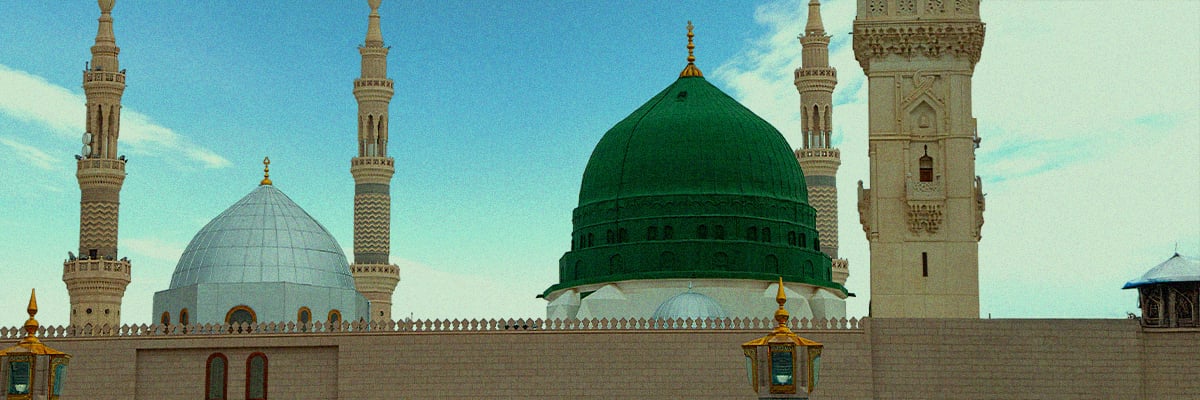
Passing east of Mount ʿĀʾir, the caravan entered Qubāʾ. Here, on the blessed soil where the first mosque of Islam would be raised, the journey of exile came to its radiant conclusion.


_1777358421433.webp&w=3840&q=75)