
When all other schemes failed — slander, mockery, persecution, and attempts to lure believers back — Quraysh turned to a darker thought: if Muhammad ﷺ himself were killed, the whole affair would end at once. They began planning his assassination.
At this time, Muslims in Makkah were still very few. Some lived under the protection of influential clans; others concealed their faith. But the Prophet ﷺ pressed forward openly, reciting Qur’ān aloud, praying in public, and proclaiming what Allah had commanded: “Proclaim openly what you are ordered, and turn away from the idolaters” (Qur’ān 15:94).
The enemies could, in theory, have confronted him directly, but several things held them back. First was the sheer majesty of his character: his luminous presence and noble conduct disarmed even the harshest foes. Second was the protection of his uncle Abū Ṭālib, respected elder of Banū Hāshim. To attack Muhammad ﷺ would mean war with his whole clan. Yet Quraysh did not abandon their murderous intent.
One day, ʿUtbah ibn Abī Lahab, son of the Prophet’s ﷺ uncle, mocked him by reciting verses of Sūrat al-Najm: “By the star when it sets, your companion is neither astray nor deluded…” Twisting the words in ridicule, he tore at the Prophet’s ﷺ clothes and spat at his blessed face. Overcome, the Prophet ﷺ supplicated: “O Allah, send one of Your creatures against him.”
Later, when ʿUtbah joined a caravan to Syria, he camped one night in the region of Zarqāʾ. A lion appeared in the darkness. Terrified, ʿUtbah cried to his companions: “Woe to me! This is the prayer of Muhammad. He asked his Lord against me, and I am lost!” His companions placed him in the middle of their ranks to guard him. But in the night the lion broke through and killed him alone. Thus the supplication of the Prophet ﷺ was answered.
Attempts in the Sanctuary of the Kaʿbah
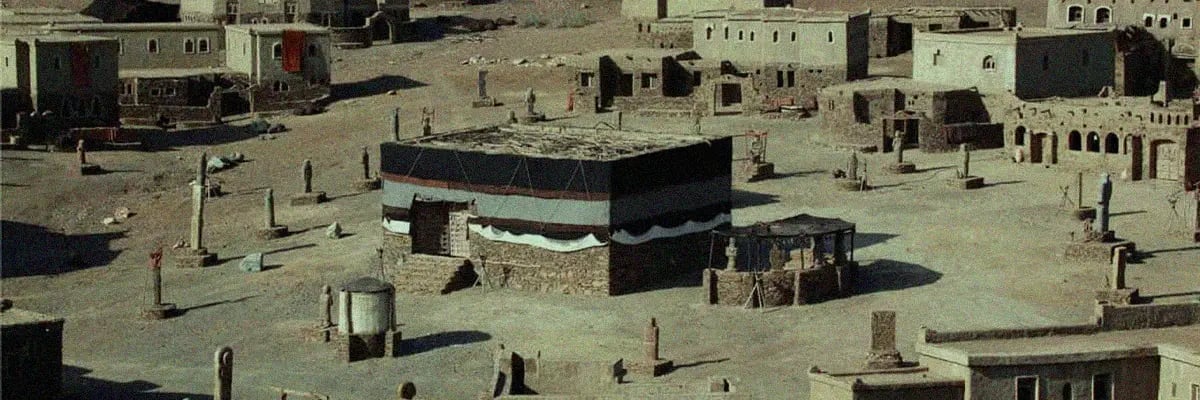
According to ʿAbdullāh ibn ʿAmr, one day Quraysh gathered inside the semi-circular wall of the Kaʿbah known as Hijr Ismāʿīl. They said among themselves: “Never have we endured from a man what we endure from Muhammad! He has insulted our gods and torn apart our community.” At that moment the Prophet ﷺ approached, performing ṭawāf around the Kaʿbah. Each time he circled, they hurled insults. By the third round, his face changed and he declared:
“By the One in Whose hand is my soul! O Quraysh, you shall be cut to pieces one day!”
His words struck them with dread. Even their most violent men fell silent. One of them pleaded: “Do not say that, for you have never lied.” They knew his prayer would not go unanswered.
The following day, as the Prophet ﷺ walked again near the Kaʿbah, they rushed at him all together. One man seized his cloak and tried to strangle him. Abū Bakr ran forward crying: “Would you kill a man because he says, ‘My Lord is Allah’?” At this, the aggressors retreated. Ibn ʿAmr later said: “This was the harshest assault Quraysh ever made on the Prophet ﷺ up to that point.”
The Attempted Strangulation
Among the ugliest incidents was when ʿUqbah ibn Abī Muʿayṭ pressed his foot upon the Prophet’s ﷺ blessed neck while he was in prostration, forcing him down with such cruelty that his eyes bulged. On another occasion, as narrated in Ṣaḥīḥ al-Bukhārī, ʿUqbah threw a cloak around his neck and tightened it, trying to choke him to death. Again, Abū Bakr intervened, striking the attacker away and crying aloud: “Would you kill a man for saying, ‘My Lord is Allah’?”
These were not passing insults, but real attempts upon his life. And yet, in every case, Allah protected His Messenger ﷺ until the appointed time.


_1777358421433.webp&w=3840&q=75)